What happens to a society when the newspaper no longer lands with authority at the doorstep, and the television no longer commands silence in the living room?
Read More





What happens to a society when the newspaper no longer lands with authority at the doorstep, and the television no longer commands silence in the living room?
Read More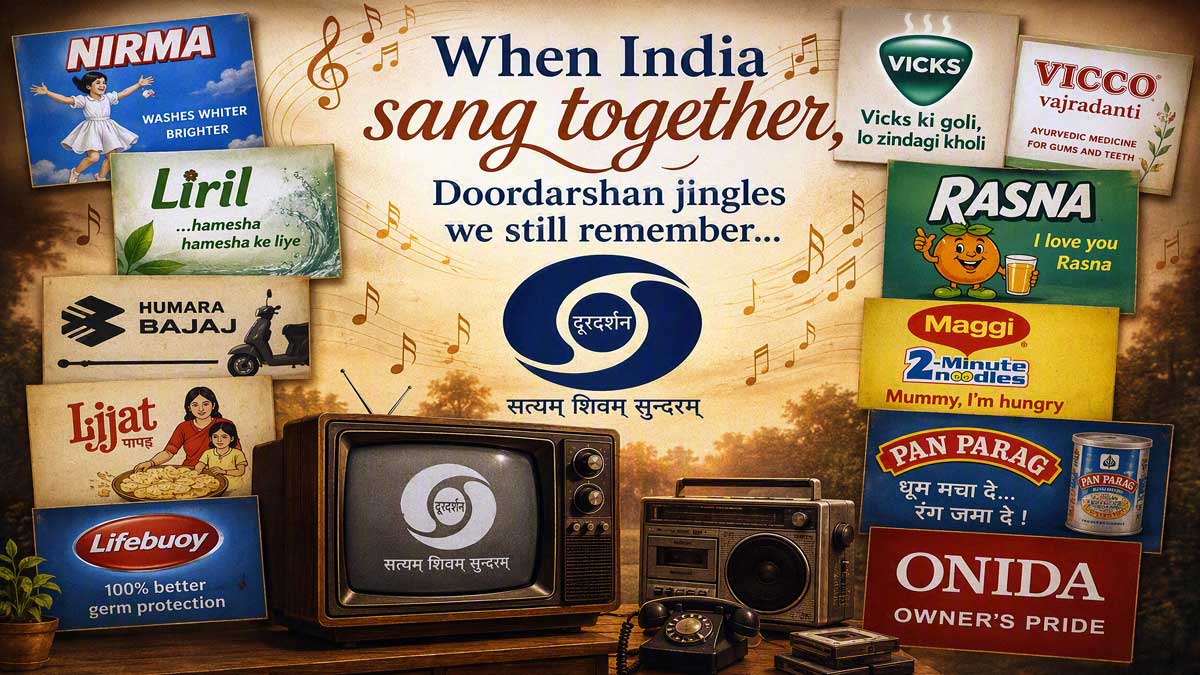
Once upon a time, India had only one television channel, one national conversation and, almost miraculously, one collective memory.
Read More
The book cover itself tells a story. A young man walks along a garden path beside Krishna, seemingly engaged in an ordinary conversation. But this is no ordinary walk. It is a symbolic journey from confusion to clarity, from anxiety to inner peace, and from questions to wisdom. That idea captures the essence of Tarun Garg’s Kuch Kadam Krishna Ke Saath.
Read More
The biggest story in India is not what television debates shout about every night. It is what they carefully avoid.
Read More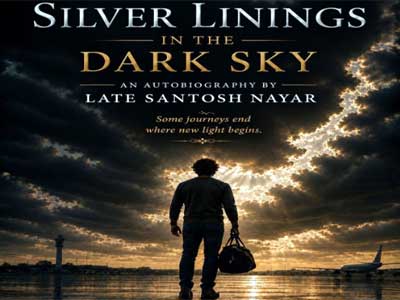
The American Dream comes with fine print. Santosh Nayar discovered it the hard way. He went to America with ambition, professional qualifications and hopes of building a better life. What he got was a package nobody would willingly order: career success, three marriages, bipolar disorder, alcohol, broken relationships, courtrooms and prison. Hollywood might have turned it into a blockbuster.
Read More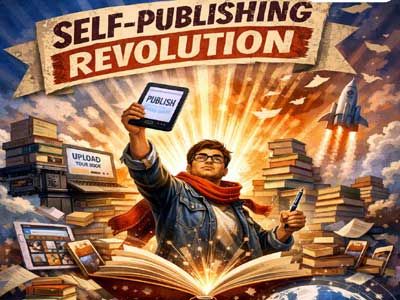
When Johannes Gutenberg invented the movable-type printing press in 1455, he could hardly have imagined a future where publishing a book would become so simple that almost every writer could become their own publisher.
Read More
It is eight on a warm summer morning. At a dusty road junction in a village of Govardhan tehsil in Mathura district, a group of boys and girls waits for the school bus. Their uniforms are spotless. Their shoes shine. Colourful school bags hang from their shoulders.
Read More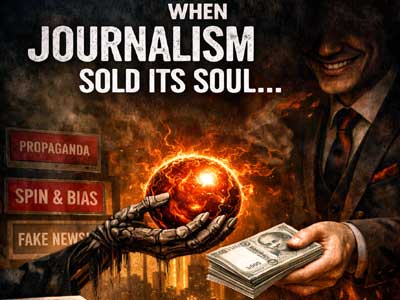
Who keeps watch on the watchdog? That uncomfortable question hangs over modern journalism like a dark cloud. The profession that once challenged kings, exposed scams and rattled governments is itself standing in the dock. The watchdog has not merely stopped barking. In many places, it has learned to wag its tail.
Read More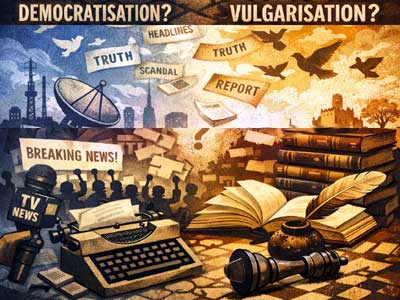
Journalism is often described as literature written in a hurry. The dividing line between the two is thin, sometimes almost invisible, because both share several features of expression, narration, and engagement with readers. Yet, despite these similarities, the differences in content, style, purpose, and permanence are too obvious to ignore. Literature tends to possess an enduring, timeless quality, while journalism is often immediate, transient, and at times superficial. What appears in a newspaper today may become outdated tomorrow.
Read More
How many more children must die for a "like"? This question is heartbreaking. But India will have to face it.
Read More