
 Dharmendra Kumar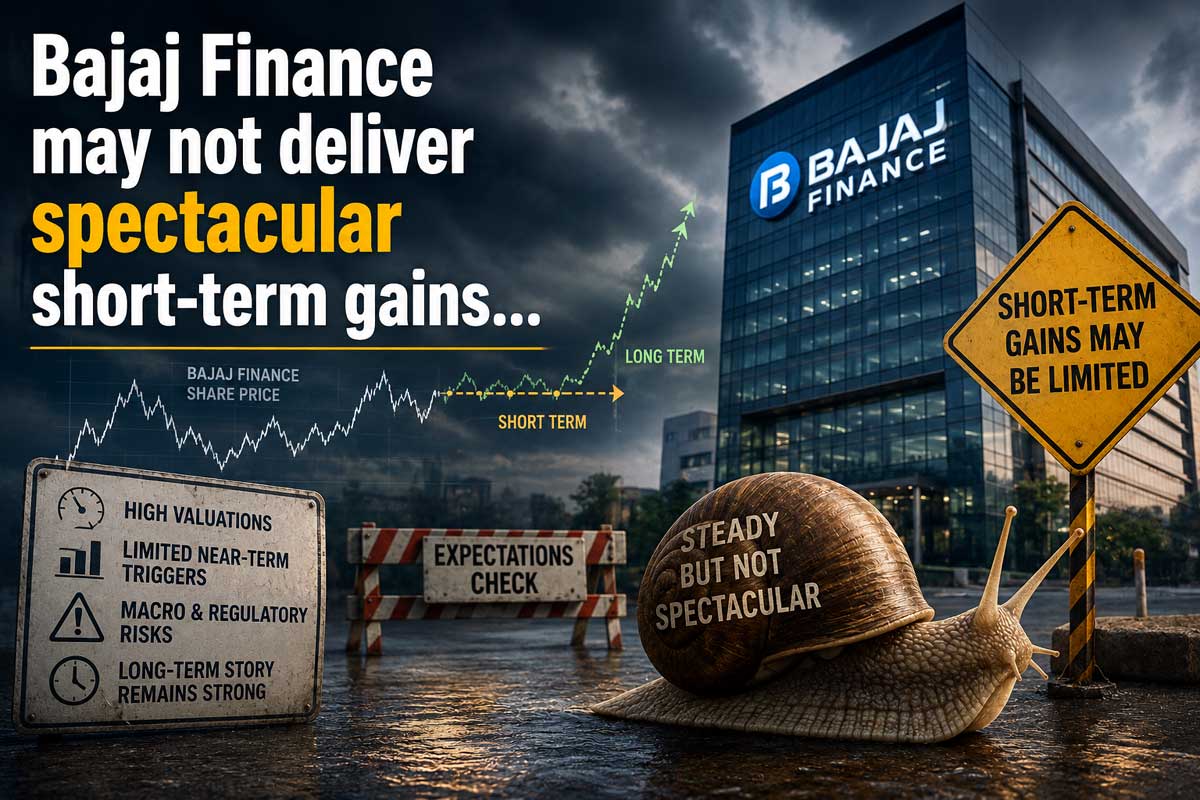
Bajaj Finance has established itself as one of India's most successful non-banking financial companies, consistently delivering strong growth in loans, profits, and shareholder returns over the past decade. Its ability to expand across consumer lending, SME finance, rural finance, commercial lending, and digital financial services has made it a favourite among both institutional and retail investors.
For investors seeking long-term wealth creation rather than short-term speculation, Bajaj Finance deserves serious consideration. However, like every quality business, it should be evaluated not only on its strengths but also on the risks attached to its premium valuation.
One of the biggest advantages of Bajaj Finance is its diversified lending portfolio. Unlike many NBFCs that rely heavily on a single segment, the company has built a broad franchise spanning consumer durable financing, personal loans, business loans, gold loans, rural lending, mortgages, and payments. This diversification reduces dependence on any one business and provides resilience during economic slowdowns.
The company has also invested heavily in technology, artificial intelligence, cloud infrastructure, and digital customer acquisition, allowing it to scale operations efficiently while improving customer experience.
The company's recent financial performance has reinforced investor confidence. Its latest quarterly results showed strong growth in profit, net interest income, and assets under management while asset quality continued to improve. Lower loan delinquencies and disciplined underwriting indicate that the management is balancing growth with prudent risk management. Several brokerages subsequently upgraded their earnings estimates and target prices following these results.
India's structural growth story also supports Bajaj Finance's long-term outlook. Rising disposable incomes, increasing financial inclusion, rapid digitisation, expanding middle-class consumption, and greater access to formal credit continue to create significant opportunities for lenders. Bajaj Finance is particularly well-positioned because it already has one of the country's largest customer franchises and continues to cross-sell multiple financial products to existing customers, thereby reducing acquisition costs and increasing profitability. Its digital ecosystem, EMI card network, and extensive physical presence further strengthen its competitive advantage.
Another positive factor is the quality of management. Under its leadership, Bajaj Finance has built a reputation for disciplined capital allocation, conservative provisioning, and a willingness to moderate growth if credit quality is at risk. This long-term approach has helped the company navigate economic cycles better than many peers. Investors generally place a premium on businesses that prioritise sustainable profitability over aggressive expansion.
However, prospective investors should also recognise the challenges. Bajaj Finance has historically traded at higher valuation multiples than most financial companies because the market expects consistent high growth. A premium valuation means that even a small disappointment in earnings, slower loan growth, regulatory changes, or deterioration in asset quality can lead to sharp corrections in the share price. Investors entering after strong rallies should therefore be prepared for periods of volatility despite the company's solid fundamentals.
Another important risk arises from the nature of the lending business itself. Higher interest rates, economic slowdowns, rising unemployment, or stress in unsecured lending segments can increase loan defaults and reduce profitability. Although Bajaj Finance has managed these risks effectively so far, no lender is completely immune to changes in the credit cycle.
Competition is also intensifying. Traditional banks, fintech companies, digital lenders, and other NBFCs are aggressively targeting the same customer segments. Bajaj Finance will need to continue innovating in products, technology, and customer service to maintain its leadership position.
For long-term investors with an investment horizon of five years or more, Bajaj Finance remains one of the strongest businesses in India's financial services sector. Its proven execution, diversified business model, expanding customer base, digital capabilities, and consistent earnings growth provide a strong foundation for future compounding. Nevertheless, investors should avoid investing solely because the share price has been rising. A disciplined approach, such as investing gradually through staggered purchases or systematic investing during market corrections, may be more prudent than making a lump-sum investment at elevated valuations.
In conclusion, Bajaj Finance continues to offer attractive long-term prospects backed by strong business fundamentals and favourable structural trends in India's economy. While the stock may not deliver spectacular short-term gains after recent appreciation, it remains a high-quality compounder capable of creating significant shareholder value over the long run, provided investors remain patient and are comfortable with interim market volatility. As always, investment decisions should be aligned with one's financial goals, risk tolerance, and portfolio diversification strategy rather than relying solely on the reputation of a single company.
If we consider the company’s ‘Pros’, it has delivered good profit growth of 34.2 per cent CAGR over the last five years. The company has been maintaining a healthy dividend payout of 18.6 per cent. The company's median sales growth is 29.4 per cent over the last 10 years.
On the other hand, as per the ‘Cons’, the stock is trading at 6.33 times its book value. The company has a low interest coverage ratio, and it might be capitalising the interest cost.
* Disclaimer: This article is intended for general information purposes only. Investments in securities and Mutual Funds are subject to market risks, and past performance is not a guarantee of future results. Any Stock, Mutual fund, trading calls or information is for informational purposes only and is not an offer to buy or sell securities or investment advice. It emphasises that all investment decisions are at the user's own risk and may result in the loss of capital. Users should not rely solely on this information but conduct their own independent research before making any investment decisions. Mediabharti and the author are not registered with the Securities and Exchange Board of India (SEBI) as authorised investment advisers or consultants. People associated with the Mediabharti family may have these equities in their personal portfolio. The views, reports, and recommendations shared are for informational and educational purposes only. They should not be construed as investment, legal, or tax advice. Users are advised to carefully consider their financial situation and consult before making any investment decisions. While due care is taken in preparing recommendations, we don't guarantee accuracy, completeness, or returns. Neither SEBI nor we shall be responsible for any losses incurred. Investors must exercise their own judgment and due diligence before acting on any advice. Decisions remain the sole responsibility of the user.
Related Items
An Indian traveller’s eye-opening lessons in the ‘Art of Living’
Are Indian borders just lines on a map!
How the 'Indian Solar Revolution' is transforming rural lives…