
 Brij Khandelwal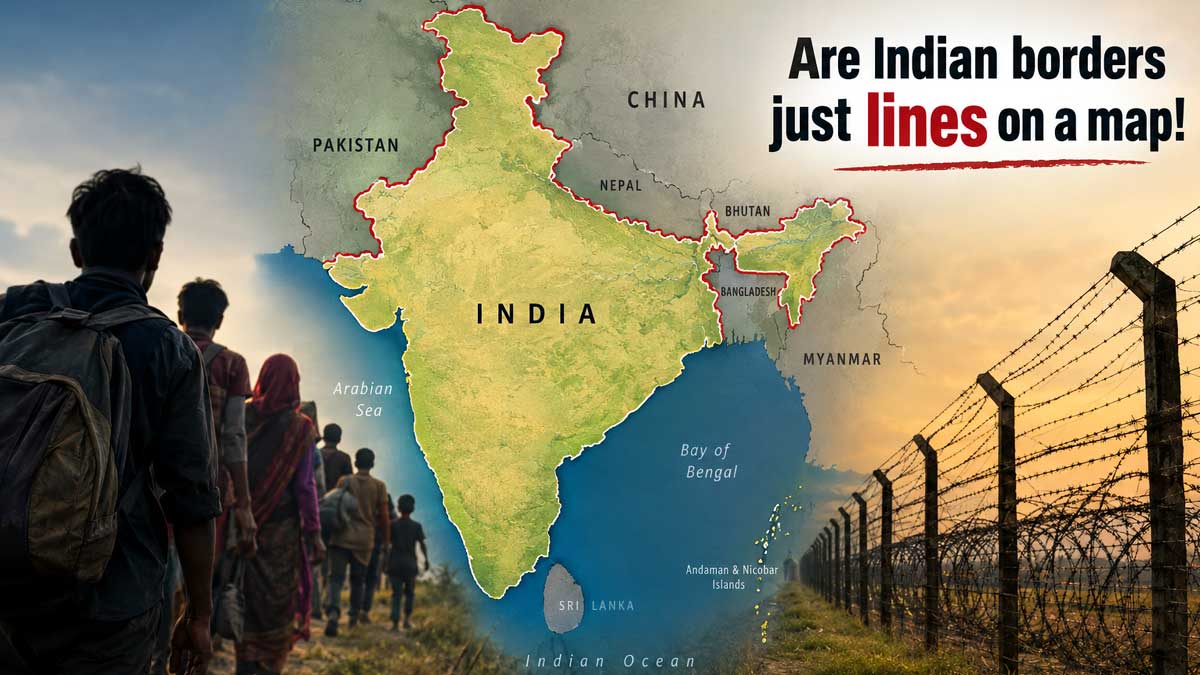
If one day you find out that your city’s population has increased by millions, with school seats running out, long waits at hospitals, falling wages and increasing pressure on government programs, would you call it just a coincidence?
This question is not only for border states. It concerns every taxpayer, every unemployed young person, every farmer, and every citizen who hopes for a better life, better services, and a secure future. The issue of illegal immigration has been raised in politics for years, but its social, economic and demographic effects are now slowly being felt across the country.
Public commentator Prof Paras Nath Chaudhary says, “India is counted among the fastest-growing economies in the world today. But along with this race for development, one problem keeps growing; one that is talked about a lot in politics but rarely solved. That problem is illegal entry and unauthorised migration.”
This topic is not only about border security. It is also linked to jobs, resources, population balance, social harmony, and national security. It is hard to know the exact number of illegal migrants because they are not in government records. Still, various official statements over time have estimated their numbers anywhere from millions to tens of millions. Most illegal migrants have been identified as people coming from Bangladesh, while a significant number of Rohingya refugees from Myanmar also live in different Indian states.
The northeastern states of India, especially Assam, Tripura and West Bengal, have felt this pressure for decades. The history of the Assam movement is connected to this concern. Locals have long claimed that continuous infiltration has not only changed the population mix but also affected land, jobs and political representation.
Imagine a small city whose population suddenly increases by millions in a few years. Hospitals will become crowded, schools will face pressure, demand for water and electricity will rise, and the availability of cheap labour may affect local workers’ incomes. This is what many border areas and big cities are experiencing.
In cities like Delhi, Mumbai, Jaipur, Bengaluru and Hyderabad, large numbers of migrant workers are employed in construction, domestic work, rickshaw driving and the informal sector. Fake Aadhaar cards, bogus ration cards and forged identity documents make the problem more complicated. In urban clusters across Noida, Greater Noida, Ghaziabad and Gurugram, thousands of outsiders work as domestic help. In South India’s tea and coffee plantations, outside intruders work as cheap labour.
According to sociologist TP Srivastava, “This challenge is not small economically either. India already struggles to provide better education, health services and jobs to its millions of citizens. If a large number of illegal people use public services, extra pressure on government resources is natural. There is also a risk that benefits paid for by taxpayers may reach fewer genuine eligible citizens.”
The issue is not only economic. Demographic changes in many places have caused social tension. Local communities begin to feel their cultural identity, language and traditional way of life are under threat. History shows that when resources are limited and population grows rapidly, the chance of social conflict increases.
India must find a balanced and practical solution to this challenge. Better border monitoring, modern technology-based surveillance, stronger identity systems, and effective extradition and verification arrangements with neighbouring countries are necessary.
Illegal immigration is not the issue of any one state or political party. It is a matter tied to national resources, social stability, and future development plans. If not taken seriously in time, its burden may fall on future generations.
The dream of a developed India can be achieved only when its borders are secure, citizens’ rights are protected, and migration is managed according to law and humanitarian values. Sensitivity is necessary, but sovereignty is equally important.
Related Items
How the 'Indian Solar Revolution' is transforming rural lives…
'Chitthi Aayi Hai...', a song that made millions long for home...
Tata stocks under pressure, Is this the right time to 'buy'...!