
 Brij Khandelwal
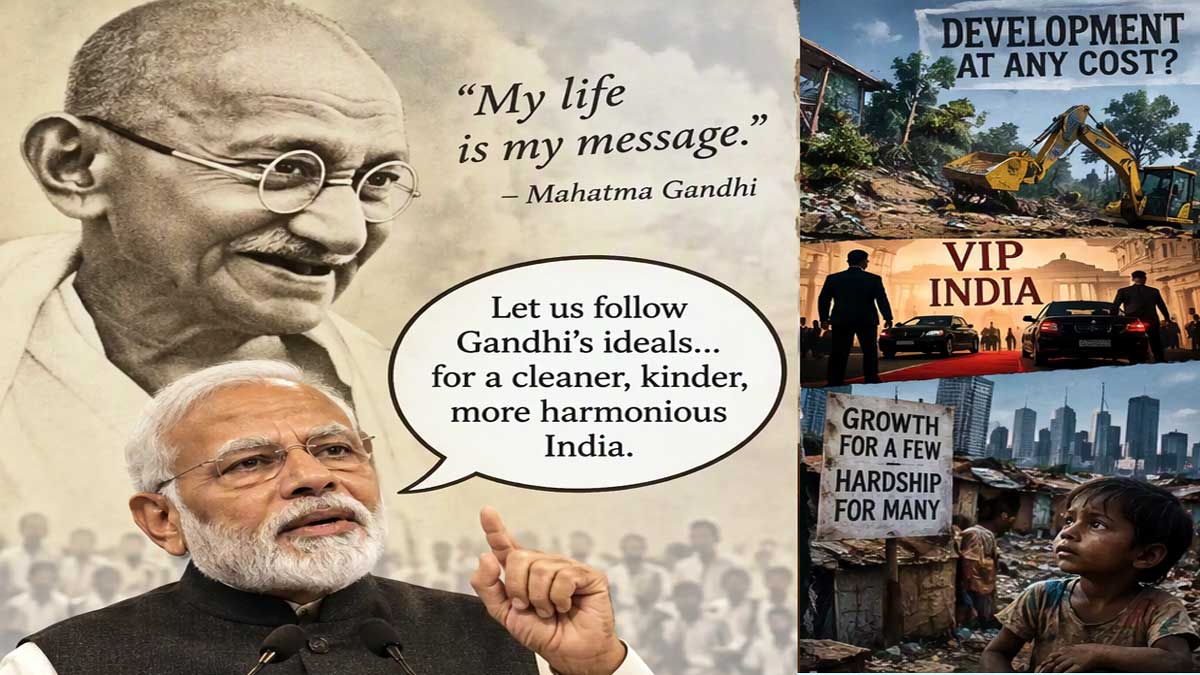
They promised to change the country. Yet the streets show the same scene: red lights ahead, wailing sirens behind. Ordinary people sweat in traffic while leaders’ convoys slice through, no longer kings on elephants but rulers in SUV caravans.
VIP culture has stopped being merely about security. It is now a public display of power: roadshows, flower showers, dozens of cars, closed streets, special lounges, separate queues, and blatant use of government resources. In the name of democracy, a new hierarchy is forming: ‘special citizens’ on top, the rest pushed aside.
The irony is stark. Politicians campaign as ‘servants of the people’, then build physical walls once in office. Roads get cleared, hospital wards kept free, police become bodyguards. Citizens pay taxes and then endure the inconvenience that those taxes create. This is not change; it is elite feudalism in a modern guise. Democracy lives in equality, not privilege. When a leader’s convoy gets stuck in the same traffic as everyone else, that day real democracy will be visible on our streets.
In Mahatma Gandhi’s land, simplicity, self-reliance and restraint were cultural ideals. Prime Minister Narendra Modi’s recent call for austerity is both necessary and deeply ironic. With turmoil in West Asia and rising oil prices, Modi urged people to work from home, save petrol and diesel, use public transport and electric vehicles, avoid foreign travel and gold buying, reduce edible oil use, and buy local.
Those appeals are sensible: India depends heavily on crude oil imports. Yet they ring hollow given a decade of government policies that promoted a high-consumption, machine-dependent, car-centric lifestyle Gandhi warned against. Gandhi’s austerity was more than crisis advice; it was a life philosophy. He opposed destructive machinery and championed tools that served people, not enslaved them. He valued physical labour, village self-sufficiency and harmony with nature.
Instead, the push for a $3 trillion economy prioritised mega-projects, bullet trains, and sprawling expressways that accelerate mobility for the wealthy. Luxury car sales are rising while middle-class families struggle with expensive petrol, diesel and LPG. The rich continue to travel abroad, throw lavish weddings and buy gold largely unaffected; ordinary people bear the burden.
Most worrying is how human mobility has been ignored. Roads have become kill zones for the vulnerable. Every year over 175,000 people die in road accidents, mostly pedestrians, cyclists and two-wheeler riders. Footpaths are absent or obstructed. Cycle lanes are nearly non-existent. Expressways are designed for speed, not safety. Gandhi, who walked everywhere and revered physical work, would be pained by this car-first model.
The government has turned from Gandhian restraint toward a glittering modernity that privileges speed and spectacle. Now, in crisis, it preaches thrift. But words alone are not enough. Real change requires infrastructure and policy that prioritise people over vehicles.
Start with safe streets: continuous footpaths, protected cycle lanes, slower urban speeds and safer intersections. Rebalance transport investment from highways and luxury mobility to affordable public transit, last-mile connectivity and non-motorised transport. Tax incentives and urban planning should favour compact, walkable neighbourhoods and local production rather than promoting unchecked consumption and long-distance commuting.
If austerity stays askew, an exhortation only during crisis, those appeals will be performative. To make Gandhian principles meaningful today, India must weave simplicity, restraint and shared prosperity into daily life, not only into speeches. Equity, not extravagance, should be the goal.
Modi’s words recall Gandhi; his policies and infrastructure must follow. Until then, the call for simplicity risks remaining a showpiece while the roads keep running a new elite feudalism. Real democracy will reach the streets only when ordinary people find safety, dignity and equal access in public life.
Related Items
Yamuna carries sewage, Government watches in silence
Liechtenstein: A 'tiny' country and a 'giant' surprise...
Menopause can drain women leaders yet deepen their empathy