
 Brij Khandelwal
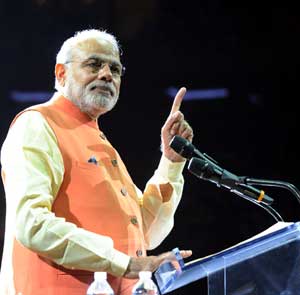
Does Prime Minister Narendra Modi expect industrialists to open their vaults and build a socialist society? Will business houses suddenly abandon profits and start distributing jobs? Can companies, driven by competition and commercial interests, be expected to become champions of social justice?
One does not need an economics professor to understand the difference between capitalism and socialism. Industrialists enter business to make money, not to perform charity. Their priorities are profits, protecting investments and surviving market competition. There is nothing wrong with that. But expecting them to deliver social equality after handing out generous concessions, without attaching conditions, is a political contradiction.
The government's job is not to beg industrialists to promote socialism. It is to create policies that ensure economic growth benefits every section of society.
At the FICCI conference on November 19, Prime Minister Modi raised some uncomfortable questions before India's business leaders. Who actually benefited from the massive cut in corporate taxes? How many new jobs did companies create? How much did employee salaries increase? He also referred to income tax relief for people earning up to Rs.12 lakh. These are legitimate questions. But the problem is not the questions. It is their timing.
The cheque was handed over seven years ago. Why is the government asking for an account now? asks public commentator Prof Paras Nath Choudhary.
Let us go back to 2019. The government reduced corporate tax from 30 per cent to 22 per cent. The idea was simple. Lower taxes would encourage investment, bring new factories, increase production and create millions of jobs.
Industry received a handsome benefit. But was there any binding condition attached? Did the government tell companies that tax relief would come with more employment? Did it demand better wages for workers? Were businesses asked to share the benefits of tax cuts with their employees? If no such conditions were imposed, what exactly is the government complaining about seven years later?
The available corporate figures present an uncomfortable picture. Company profits reportedly increased by 22 per cent last year. The previous year also saw an 11 per cent rise. Yet employee numbers grew by just 2.8 per cent.
In engineering, manufacturing, processing and infrastructure, average annual wage growth between 2019 and 2023 was reportedly only 0.8 per cent. Corporate profits marched ahead. Workers' earnings crawled behind. Inflation continued eating into household budgets.
Critics argue that much of the tax relief went towards repaying loans and accumulating cash rather than creating fresh investment. Corporate balance sheets became stronger, but the employment market did not experience the expected boom. In simple words, the owners' coffers kept filling, while workers' plates remained almost empty.
There is another side to this economic story. Demonetisation dealt a severe blow to small and medium businesses. These enterprises provide employment to millions of Indians. They needed cheaper credit, modern technology, skilled workers and simpler regulations.
Instead, many struggled to recover. Supporting big companies is relatively easy. Strengthening small businesses requires patience, planning and serious policy support.
Economic power became increasingly concentrated in fewer hands. Meanwhile, ordinary families struggled with rising expenses and limited purchasing power.
Here is the bigger question: How will the market survive if ordinary people cannot afford to buy? Reduce corporate taxes. Offer income tax relief. Cut GST wherever possible. But if household budgets remain under pressure, who will buy the goods produced by factories? Who will keep shops running? For whom will businesses manufacture their products?
China's experience offers an important lesson. Strong domestic demand supports industrial growth. When wages and household incomes rise, people spend more. Markets expand, production increases, and businesses find new opportunities.
India needs the same economic logic. Sustainable growth cannot depend only on corporate profits. It must put more money into the hands of ordinary citizens.
The Prime Minister's questions come at a time when millions of young Indians are desperately searching for jobs. They need employment, not impressive GDP statistics. They need decent salaries, not motivational speeches.
The Opposition has dismissed Modi's remarks as political theatre. Its argument is straightforward. After granting generous concessions to industrialists for years, the government is now pretending to demand accountability.
But the industry's arguments also deserve consideration. Supporters of corporate tax cuts say they have made India more attractive for investment. Global uncertainty, weak demand and unused manufacturing capacity have also affected private investment. It would be unfair to blame industrialists for every economic problem.
However, this does not absolve the government of responsibility. Tax concessions and other incentives must be linked to measurable outcomes.
Companies receiving major benefits should disclose employment growth and wage increases. Small and medium enterprises need stronger support. Labour rights and social security must receive greater attention.
Socialism does not arrive through speeches. It requires fair taxation, strong public services, decent wages and a more equitable distribution of resources.
Ultimately, one question demands an answer: Who is benefiting from India's economic growth? Can a country celebrate rising corporate profits while millions of young people struggle to find work? Can economic success be measured only by the wealth accumulated by a handful of businesses?
Remember, low wages may increase corporate profits for some time. But in a country of nearly 1.5 billion people, weakening purchasing power will eventually damage the market itself.
Prime Minister Narendra Modi, by all means, question industrialists. But first, examine your own policies. You issued the cheque. You failed to attach the conditions. Why should the entire burden of accountability now fall on business houses? And what kind of economic model gives capitalism a free hand but expects socialism in return?
Related Items
Has Modi’s ‘railway revolution’ forgotten the common man?
‘Mother of All Deals’ or Modi's Masterstroke!
Indira Gandhi’s declared 'Emergency' vs Modi’s ‘Undeclared'