
 Brij Khandelwal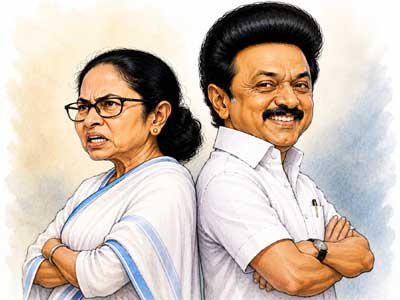
Defeat is a peculiar beast. It wises some, enrages others. One loser quietly rebuilds amid the rubble. Another lingers at the crossroads, cursing the world.
Recent elections unveiled two such figures in India; cases where post-loss conduct outshone the defeat itself. In Tamil Nadu, MK Stalin. In West Bengal, Mamata Banerjee. Voters toppled both from power. Yet their responses diverged sharply.
Read in Hindi: दो हारने वालों की कहानी : एक ने हार पचाई, दूसरे ने हार से की लड़ाई
Stalin declared: "The mandate is accepted." Mamata countered: "No mandate; this was a conspiracy." There, their paths split.
Tamil politics follows a timeless creed: Power ebbs and flows; the organisation endures. Dravidian politics transcends Tamil pride slogans; it's a decades-long fight for social justice, linguistic honour, and reining in central overreach. Stalin, his heir, didn't unleash street tears post-loss. He mobilised cadres for the next poll.
Call it chess, not mere politics. The king falls; the game persists. Stalin knows voters swap regimes in fits of rage but rarely discard a steady opposition. Graceful defeat builds political capital.
In Bengal, Mamata rejected the verdict for vendetta. She targeted the Election Commission, institutions, and shadowy plots: fanning supporter flames.
This playbook is familiar. Indian leaders often look for martyrdom after loss; victimhood trumps defeat.
The peril? If every setback pins blame on machines, commissions, or foes, introspection dies. Politics' cruellest mirror gets smashed.
Mamata's career thrives on street battles: toppling the Left, defying the BJP, bonding as "Didi". But agitators in power cling to protest mode; a Bengal tragedy. Her sword stays unsheathed.
Stalin prioritises institution over ego. Mamata, personality over party. A subtle divide, yet democracy-defining.
Tamil Nadu thrives on ideology; parties outlast faces. The Dravidian legacy elevates organisation above individuals: why DMK stands firm in defeat.
Bengal's Trinamool is its leader's reflection. Wound the face, unsettle the party.
This mirrors India's regional politics: Battling Delhi is simple. Self-scrutiny? Brutal.
Stalin plots opposition resurgence. Mamata litigates the last loss. Voters watch.
"We'll return," says one. "We weren't beaten," insists the other. Democracy values silence's strategy over noise.
Indian politics' old saw: True losers don't drop elections—they drop learning.
Both fell in 2026. The verdict? Who rose above the fall.
Related Items
Congress at crossroads, RG leading or pushing it into the abyss…
India’s foray into the world of silicon…
How self-publishing is redefining the world of books…