
 Brij Khandelwal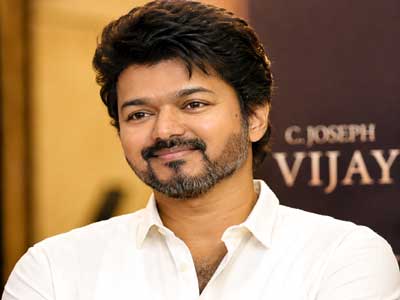
There is a clear difference between the political shifts witnessed in West Bengal and Tamil Nadu. In Bengal, Hindutva became the engine of political change. In Tamil Nadu, however, the winds carried a different message. It was not religion, caste, or identity alone that drove the transformation. It was the hunger for a fresh political direction. In many ways, this change has strengthened Indian democracy by proving once again that voters can still surprise the political establishment.
Tamil Nadu politics has always had a cinematic flavour. Giant cutouts towering above streets. Emotional speeches echoing through packed grounds. Slogans that sound like movie dialogues. Hero worship that often borders on devotion. From the days of CN Annadurai defeating K Kamaraj in the 1960s, to the eras of MG Ramachandran and J Jayalalithaa, cinema and politics have walked hand in hand in the state. Yet, the rise of Vijay has unfolded differently.
Just two years ago, Vijay was known mainly as a superstar actor with a massive fan following. Today, he stands at the centre of Tamil Nadu’s political landscape. His dramatic rise shook the foundations of both the DMK and the AIADMK, parties that had dominated the state for decades. Many observers dismissed him initially as “just another actor entering politics.” Tamil Nadu had seen many such experiments before. Some stars vanished midway. Others failed to connect beyond urban fans and television cameras. But Vijay understood the public mood with remarkable timing.
People were exhausted with old political rivalries and recycled promises. Allegations of corruption and dynastic politics had damaged the image of the DMK. The AIADMK, after Jayalalithaa’s death, appeared weak and directionless. The public, especially young voters, wanted a new face untouched by the baggage of the past. Vijay carefully projected himself as that new possibility. His greatest strength was not merely stardom. It was communication.
Unlike traditional politicians, Vijay avoided lengthy speeches filled with statistics and ideology. He spoke in short, sharp, emotional sentences. His words sounded less like political lectures and more like the frustrations of an ordinary citizen. That simplicity became his weapon.
One of his most quoted lines was: “Power is not the property of any family. The government belongs to the people.” The line resonated deeply in a state where family-driven politics had become a growing concern. Vijay sensed that public frustration and turned it into political energy. In another speech, he declared, “I did not enter politics for a chair. I entered because remaining silent has become dangerous.”
The statement carried cinematic drama, but it also reflected the anxiety many young people felt about unemployment, inflation, corruption, and shrinking opportunities. Vijay’s speeches gave them the feeling that someone was finally speaking their language. His most applauded line, perhaps, was: “People should not fear politicians. Politicians should fear the people.” Simple words. But powerful words.
Retired Chennai schoolteacher Krishnaswamy explains, “Young voters struggling with jobs, rising costs, and uncertainty felt Vijay understood their anger. For the first time, millions of first-time voters became emotionally invested in politics.”
One of Vijay’s smartest moves was leaving the cinema completely after entering politics. That decision sent a strong signal. People felt he was serious about public life and not treating politics as a weekend hobby or publicity stunt.
His fan clubs also became a ready-made grassroots organisation. For years, these groups had been conducting blood donation drives, flood relief campaigns, food distribution programmes, and social welfare activities. Long before entering politics, Vijay had unknowingly built a disciplined social network across Tamil Nadu. When elections arrived, those fan clubs transformed into political workers almost overnight.
The obvious question remains: why did stars like Rajinikanth and Kamal Haasan fail to achieve the same breakthrough? Political activist Gopal Krishnan from Coimbatore believes Rajinikanth lost momentum because of hesitation. “He had enormous star power, perhaps even greater than Vijay. But he delayed his political entry too long. For years, he hinted at entering politics and then stepped back. The public became confused. In politics, uncertainty can destroy credibility.”
Kamal Haasan faced a different problem. He appeared intellectual, serious, and informed, but often disconnected from ordinary voters. His speeches appealed more to the urban middle classes than to rural and small-town Tamil Nadu. People admired him, but admiration alone does not create mass political movements.
Public commentator Prof Paras Nath Chaudhary sums it up neatly: “Vijay succeeded because he did not project himself as a philosopher or ideologue. He came across as an ordinary citizen demanding change. His language was simple, emotional, and accessible. Most importantly, he arrived at exactly the right political moment.”
Tamil Nadu has witnessed film stars entering politics before. But Vijay combined star power, youth energy, organisational strength, a clean public image, and widespread public frustration into one unstoppable wave. This was not merely an election victory.
It was the story of a society waiting for a new hero to walk out of the cinema screen and into real life.
Related Items
An Indian traveller’s eye-opening lessons in the ‘Art of Living’
Are Indian borders just lines on a map!
How the 'Indian Solar Revolution' is transforming rural lives…