
 Brij Khandelwal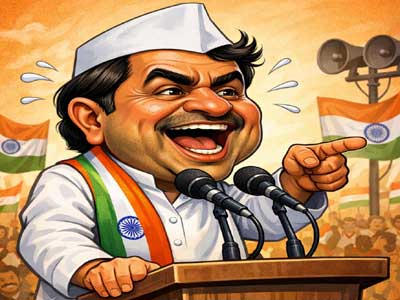
India is not merely the world’s largest democracy; we are also the world’s largest open-air theatre.
In our beautiful country, elections arrive like weddings, cricket finals, and mythological serials rolled into one giant circus. Loudspeakers scream. Helicopters rain petals. Anchors lose their voices. And politicians distribute promises like halwa-poori at a bhandara. For tourists, India offers the grand spectacle called ‘The Great Jumla Olympics’.
Read in Hindi: जब सबसे बड़ा लोकतंत्र बन जाए एक खुला रंगमंच...
Every five years, leaders from every party gather for this sacred sporting event. No stadium needed. Any rally ground with dust, plastic chairs, and free lunch packets will do. The contestants compete in several difficult categories: Speech Marathon, Blame Relay, Emotional Wrestling, U-Turn Gymnastics, and the toughest of all, Synchronised Forgetfulness.
The undisputed grandfather of the competition was Indira Gandhi with her immortal slogan: “Garibi Hatao”. Poverty heard the announcement, smiled politely, and continued renting permanent accommodation in India. Fifty years later, poverty is still alive, healthy, and occasionally contesting elections itself.
Then came the modern classic: “Achhe Din Aane Wale Hain”. Ah yes. The most awaited guests in Indian history. Indians wait for Achhe Din the way railway passengers wait for trains running six hours late. Every year, someone announces, “बस आने ही वाले हैं!” and the crowd claps again.
Another gold-medal performance came from the glorious “India Shining” campaign. Urban India nodded proudly while rural India scratched its head and asked, “Shining कहाँ हो रहा है भाई?” The slogan sparkled so brightly that voters switched off the lights at the ballot box.
No Olympics can survive without individual brilliance. Mulayam Singh Yadav stunned the nation with his legendary “Boys will be boys” remark on rape convicts. That statement did not merely lower the bar; it buried it underground beside common sense.
Then there was the scientific breakthrough from certain leaders and khap philosophers: chowmein causes rapes. Finally! The country had discovered the true villain. Not patriarchy. Not criminal mentality. Not failed policing. Noodles! Somewhere in China, a noodle manufacturer probably fainted.
Meanwhile, politicians kept promising to clean the Ganga and Yamuna Rivers. The Yamuna River has now heard so many speeches that even the fish can predict election slogans. The Ganga and Yamuna are perhaps the only rivers on earth cleaned daily in speeches and dirtied hourly in reality. All parties have their own set of jumlas, a box full of rosy promises, like the Aam Admi Party's corruption mukt Bharat or Mamata's खेला होवे। Democracy thrives on elections, needs emotional hype, a stormy wave that sweeps away logical common sense. Often, tales have only sound and fury, no substance.
And what about the magical “one lakh rupees” promised from black money recovery? Millions of Indians checked their bank accounts like schoolchildren checking exam results. Some even refreshed passbooks more frequently than WhatsApp statuses. Banks remained calm. Mosquitoes remained richer.
The real Olympic champions, however, belong to the U-Turn Gymnastics team. One day, a leader says something with chest-thumping confidence. The next week comes clarification. Then reinterpretation. Then blame the media. Finally, the classic Indian political yoga pose: “Mera matlab woh nahin tha”.
Indian politicians possess spinal flexibility that would make circus acrobats cry with jealousy. Yet voters also deserve participation medals. We complain endlessly, forward political jokes, laugh at memes, abuse leaders over tea, and then return to rallies for free caps, biryani, and emotional speeches. Democracy in India is not merely governance. It is mass entertainment.
And so the Jumla Olympics continue. New slogans will come. Old promises will return with fresh paint. Manifestos will fly like confetti. Television debates will resemble vegetable markets during monsoon sales.
But one thing is certain. In India, governments may change, parties may collapse, ideologies may somersault, but jumlas are eternal. The sun may one day cool down. The moon may retire. But somewhere, on some stage, under some giant cutout, a politician will still be shouting: “Mitron… bas paanch saal aur!”
Related Items
Western Media is ‘tough’ on India but ‘soft’ on China!
From 'Beacons' to 'Landmarks', India’s changing ‘Lighthouse’ story…
“Only five minutes…” has shaken France and forced India to think…