
 Samiksha Bharti News Service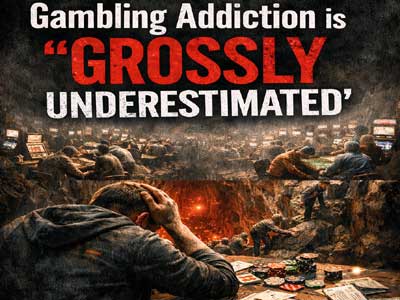
Smarmore Castle, an addiction treatment centre in County Louth, is warning that gambling addiction remains one of the most underestimated and least visible forms of addiction, often going undetected until significant personal, financial and psychological harm has already occurred.
Keith Cassidy, Executive Director at the centre, says the public narrative around gambling continues to focus too heavily on how much someone spends, rather than whether they can afford to spend at all. “People think, ‘I’m not a gambler if I’m only spending €20 a week,’ but you can’t put a figure on it. It’s about the loss of control and the impact on a person’s life, not the amount.”
Unlike substance use, gambling can remain almost entirely invisible. “It is one of the most secretive addictions,” Cassidy says. “People can be deeply entrenched in it with no outward signs. By the time it is discovered, the consequences can be far more severe.”
Cassidy emphasises that gambling can become a constant mental process, even in the absence of money. “Gambling doesn’t always need money. People start gambling on outcomes in their own heads - who will walk in next, what will happen on television. They are constantly pitching outcomes, even when nothing financial is involved.”
This ongoing mental preoccupation can have a profound effect on daily functioning. “The gambler always struggles to be present,” Cassidy notes. “Their mental processing is tied up in the gamble itself. It’s draining, exhausting, and often misinterpreted by others as disinterest when something much more complex is going on underneath.”
Smarmore Castle says this lack of visibility contributes to delayed intervention, making recovery more complex. By the time individuals seek help, they are often dealing with multiple layers of harm, including strained relationships, workplace issues and significant psychological distress.
The clinic also points to a broader cultural shift that may be reinforcing gambling behaviours. “There has been a societal move towards thinking in terms of odds,” Cassidy explained. “Whether it’s politics, entertainment or sport, everything is framed through betting language. For someone in recovery, that constant exposure can be a trigger.”
This normalisation is occurring alongside changes in how gambling is marketed and accessed. Younger adults are increasingly exposed to gambling through digital platforms, social media and sports sponsorship. Additionally, gambling advertising often mirrors tactics historically used by the alcohol industry, embedding products into lifestyle, identity and entertainment rather than presenting them as standalone risks.
While only a minority of people meet clinical criteria for problem gambling, a much larger group experiences ‘at-risk’ behaviours, including preoccupation, loss of control and chasing losses. Clinicians warn that focusing only on severe cases risks missing a growing population who are already experiencing harm.
Castle is calling for greater recognition of gambling as a complex psychological addiction, as well as improved access to treatment pathways that reflect its unique challenges. “If we continue to underestimate gambling, we will continue to miss it,” Cassidy says. “And by the time we do see it, the damage is often far more advanced.”
Related Items
Data centre capacity increased five times in last five years
Financial sectors robust despite uncertain global geopolitical scenario
Reclaiming forgotten financial assets is now easy…