
 Brij Khandelwal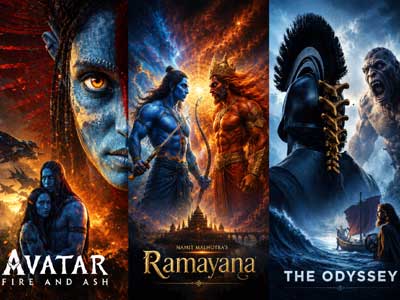
The cinema hall falls silent. On the giant screen, gods and demons clash in a battle that shakes the heavens. Divine weapons streak across the sky, conch shells roar, and armies collide in a spectacle of fire and thunder. Then comes the decisive moment. Evil is vanquished. The demon falls. The audience erupts in applause. Some wipe away tears. Others leave the theatre with an unexpected sense of relief, as though justice has finally prevailed. It is more than entertainment. It is an emotional catharsis, as old as humanity itself.
Long before movie screens and special effects, the same emotions were stirred beneath the shade of village trees and around flickering campfires. In a small village in Karnataka, an elderly storyteller gathers children beneath a sprawling banyan tree and recounts how Lord Vishnu took the form of a fish to warn the righteous King Manu of a great flood. The tale echoes the Biblical story of Noah's Ark and the ancient Mesopotamian account of Utnapishtim. Thousands of years and thousands of miles apart, the stories remain strikingly alike. The names change, but the human longing for hope, justice, and meaning does not. This simple scene reveals a profound truth: humans have always been drawn to stories, and that shared love of narrative connects us across continents and centuries.
Read in Hindi: रुपहले पर्दे पर लुभाती रही हैं पौराणिक कहानियां...
Mythology is far more than dusty old tales of gods and monsters. Myths are powerful stories that help people make sense of life and death, good and evil, and the mysteries of existence. Long before science offered explanations, myths provided meaning. Every culture has created them to grapple with fundamental questions that empirical knowledge alone cannot fully resolve: Why are we here? What happens after death? How should we live?
Myths form the emotional and moral core of a culture’s beliefs and values. For most of human history, they were passed down orally around campfires before being written down. Though filled with imagination and symbolism, they contain deep truths about human nature and society. They also profoundly shaped religions. Psychologist Carl Jung proposed that myths arise from the ‘collective unconscious’: shared psychological patterns common to all humanity. This is why myths resonate so universally, feeling less like mere fantasy and more like profound symbols of lived human experience, notes public commentator Paras Nath Jha.
One of mythology’s most important roles is moral instruction. Through the adventures of gods and heroes, myths model virtues such as courage, honesty, and compassion, while also exposing flaws like greed, jealousy, and hubris. Tales of heaven, hell, and the afterlife encourage people to lead ethical, purposeful lives.
What continues to astonish scholars is how similar myths are across distant cultures that had no direct contact. The great flood motif appears worldwide: Hindu texts describe Vishnu saving Manu; the Bible tells of Noah; Mesopotamian epics feature Utnapishtim. Parallel flood narratives exist in Greek, Chinese, Australian Aboriginal, and Mayan traditions. These may stem from memories of real ancient catastrophes or from humanity’s shared awe and fear of water: life-giving yet destructive.
Another universal theme is creation emerging from chaos. Egyptian myths speak of a primordial ocean from which the sun god rises. Babylonian stories describe a goddess whose body forms the earth. Greek and Hindu cosmogonies similarly depict order arising from primordial disorder. These narratives mirror the human journey from confusion to clarity.
Gods in myths often mirror human social structures. Just as societies have rulers, warriors, and labourers, pantheons have specialised deities. Zeus governs the sky, Poseidon the seas, and Hades the underworld in Greek mythology. In the Hindu tradition, Indra commands rain, Agni embodies fire, and Vishnu preserves cosmic order. Such stories helped ancient people understand hierarchy, authority, and social organisation.
Many myths dramatise the eternal battle between order and chaos: gods versus demons, light versus darkness. These conflicts are not merely thrilling; they symbolise the internal and societal struggles between good and evil, harmony and disorder.
Today, we no longer forge grand, collectively sacred myths as our ancestors did. Instead, we have fragmented mythic fragments: superhero sagas, Star Wars, space exploration lore, and tales of artificial intelligence. Yet these modern stories still echo ancient archetypes. Science has diminished some of mythology’s explanatory power: thunder is now understood as atmospheric electricity rather than divine anger, and floods are studied through climate science. Globalisation and the internet further fragment shared narratives, replacing fireside storytelling with personalised algorithm-driven content.
Mythological films have emerged as one of the most powerful vehicles for this enduring fascination. Blockbuster adaptations of ancient epics, such as those drawn from the Ramayana, Mahabharata, or Greek legends, regularly draw massive global audiences. Their popularity stems from spectacular visuals, larger-than-life heroes, and timeless themes of duty, sacrifice, and destiny.
James Cameron’s Avatar stands out as a prime example, creating the awe-inspiring world of Pandora with its bioluminescent forests, majestic creatures, and profound spiritual connection to nature. The film’s immersive mythology evokes a deep sense of wonder, blending environmental reverence with epic conflict in ways that feel both ancient and futuristic, reminding viewers of humanity’s primal yearning for harmony with the cosmos.
Even in our scientific age, people crave meaning. Jung’s collective unconscious remains alive. In times of climate anxiety, rapid technological change, and uncertainty, we turn to stories: of inspiring astronauts, whistleblower heroes, or Earth as a living organism, to find purpose and hope.
That old storyteller under the banyan tree intuitively understands this. His flood tale links today’s children to ancestors from millennia ago. Science explains how the world works, but stories help us understand why it matters. As long as humans exist, we will keep telling and retelling myths, because storytelling is fundamental to who we are.
Related Items
Fight is for ‘Justice’, not ‘Samosas’ and ‘Kachoris’
When the ‘Hanuman Chalisa’ resounded on the silver screen...
Vanishing newspaper, Fading TV, and the tyranny of tiny screen…