
 Dharmendra Kumar
In Indian cinema, certain compositions are used in ways that completely transform the impact of a scene the moment they appear on screen. The ‘Hanuman Chalisa’ is one such composition. In Hindi films, it has sometimes been used to evoke faith amid fear and adversity, while at other times it has been employed to portray the awakening of a character’s inner strength. In some films, its recitation becomes an important part of the storyline, while in others, its melody turns an otherwise ordinary scene into a memorable cinematic moment.
Filmmakers have used the ‘Hanuman Chalisa’ in a variety of situations and in different ways. In the 2005 film 'Wah! Life Ho Toh Aisi!', the 'Hanuman Chalisa' is sung by Shankar Mahadevan and Ajay and filmed on Arshad Warsi and Shahid Kapoor. Whenever this scene appeared in theatres, it created an atmosphere of its own. The musical composition was credited to Ajay–Atul.
Vikram Bhatt’s '1920', released in 2008, is one of the most noteworthy examples in this context. In this horror film, starring Rajneesh Duggal and Adah Sharma, the character Arjun Singh Rathod encounters extraordinary and terrifying circumstances. In a crucial scene, he recites the entire Hanuman Chalisa. Here, the Hanuman Chalisa is not merely used to create a religious atmosphere; it becomes a symbol of the protagonist’s faith and resistance in the face of adversity. The film’s opening credits also show the protagonist reciting the Hanuman Chalisa.
Horror films often rely on darkness, mysterious sounds and unseen forces to instil fear in audiences. In '1920', the Hanuman Chalisa introduces the presence of faith in the face of this fear. Its familiar verses evoke a cultural association in which faith offers hope for courage and protection amid a crisis. Its use fits naturally into the film’s atmosphere, making the scene particularly memorable.
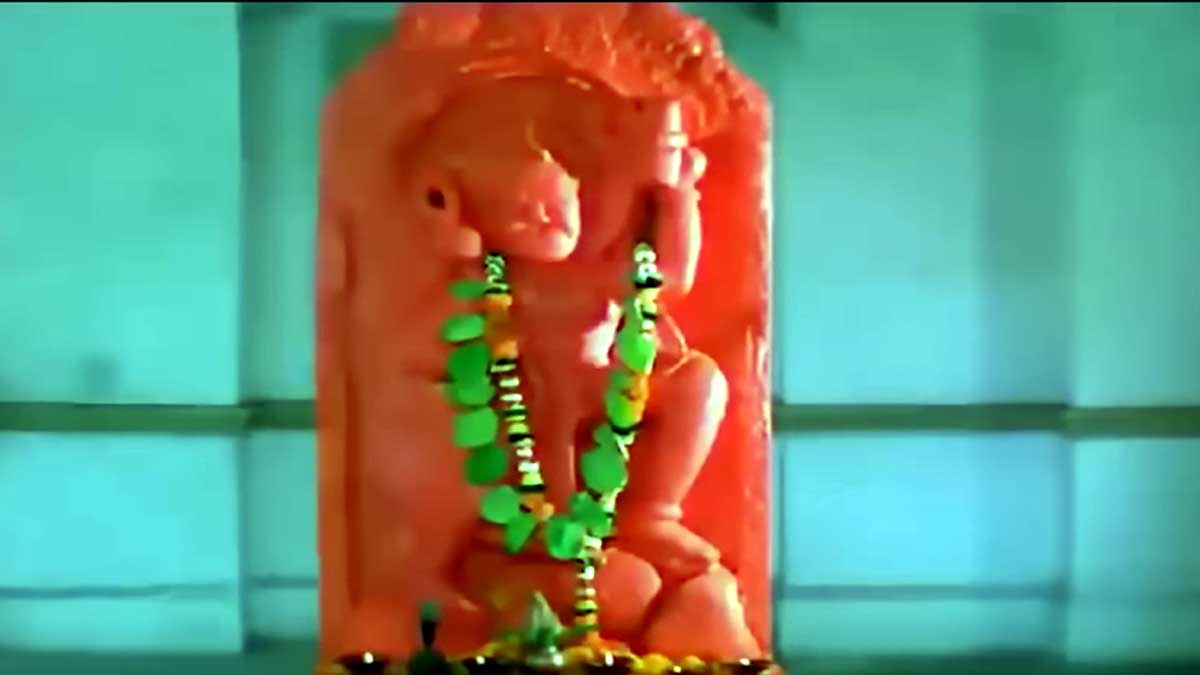
The opening credits of Ekta Kapoor’s 'Ragini MMS 2', released in 2014, also feature the sounds of the Hanuman Chalisa being sung in the background. The recitation at the very beginning creates an additional sense of curiosity and intrigue.
In 'London Dreams' (2009), the Hanuman Chalisa appears just before the interval. Salman Khan’s character sings it as part of his stage performance. The rendition, coming just before the interval, dramatically elevates the narrative and intensifies the film’s impact. Starring Ajay Devgn and Salman Khan, the film revolves around music, ambition and the changing relationship between two friends.
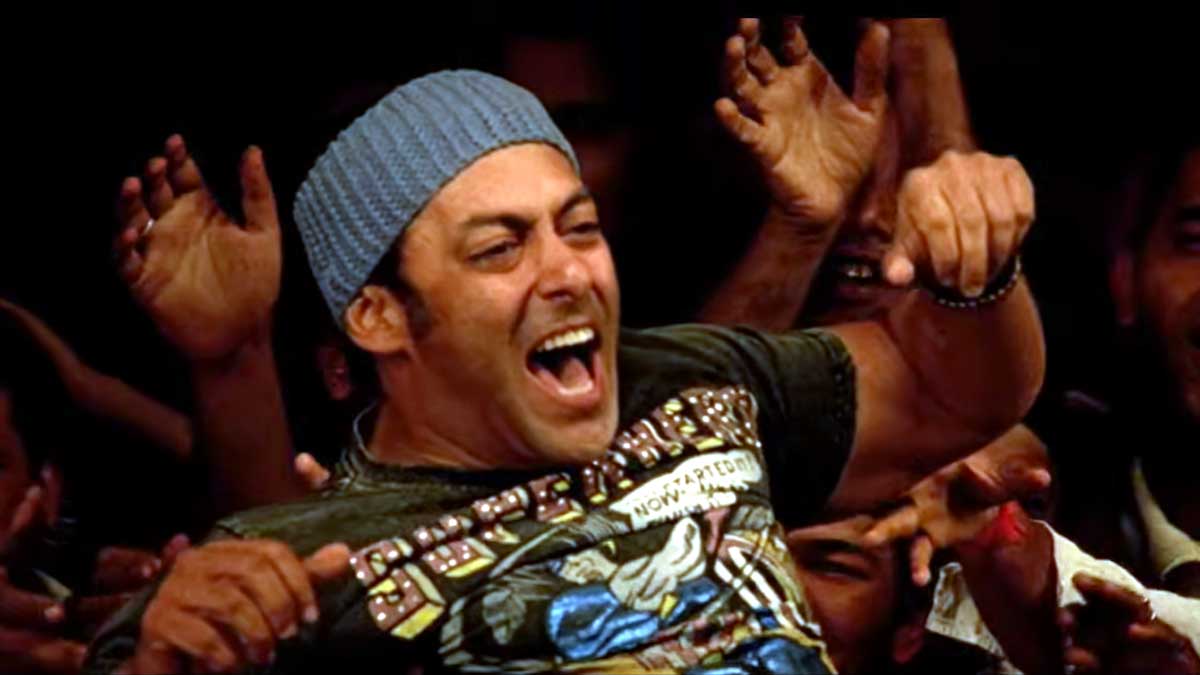
In Kabir Khan’s 'Bajrangi Bhaijaan' (2015), the Hanuman Chalisa creates a distinctly different impact. Pavan Kumar Chaturvedi, played by Salman Khan, is a devoted follower of Lord Hanuman. His religious faith is not confined to worship and rituals; it is also reflected in his conduct, honesty and the decisions he makes in difficult circumstances.
In a widely discussed action sequence, Pavan confronts human traffickers to rescue a young girl. The energetic and spirited rendition of the Hanuman Chalisa heightens the intensity of the scene. Salman Khan’s aggressive demeanour, his efforts to save the girl from danger and the Hanuman Chalisa playing in the background combine to create a powerful effect in which religious faith, courage and physical strength come together.
Another important aspect of the Hanuman Chalisa in this film is its role in shaping the protagonist’s character. Pavan’s devotion is a natural part of his personality. Rather than imposing his beliefs on others, he takes responsibility for reuniting a young girl with her family. Thus, religious identity and human compassion do not stand in opposition to each other; instead, they coexist harmoniously. The use of the Hanuman Chalisa reinforces the character’s identity and draws audiences into his emotional world.
In 'Hanu-Man', a film originally made in Telugu and released in 2024, the Hanuman Chalisa is featured in a sequence starring Teja Sajja. Sung by Saicharan to music composed by Gowra Hari, it enhances the emotional impact of the moment when the protagonist acquires the powers of Lord Hanuman. The Hanuman Chalisa lends a heightened sense of devotion and grandeur to this transformation.
In '1920', 'Bajrangi Bhaijaan' and 'Hanu-Man', the Hanuman Chalisa is clearly connected to the characters’ faith and the decisive circumstances they face. In '1920', it becomes a symbol of resistance and belief amid fear, while in 'Bajrangi Bhaijaan', it reinforces courage, protection and the determination to rescue a young girl. In 'Hanu-Man', it directly connects the protagonist with the strength of Lord Hanuman. The action sequence in 'Bajrangi Bhaijaan' received particular appreciation for its use of the Hanuman Chalisa, while its role in '1920' remains memorable for the way it combines the film’s horror atmosphere with the protagonist’s faith.
One reason for the cinematic power of the Hanuman Chalisa is that its verses are already familiar to many Indian viewers. When filmmakers incorporate its recitation or music into a scene involving danger or adversity, audiences can immediately connect with its meaning and emotional resonance. This shared cultural familiarity allows a character’s faith, fear or courage to be conveyed without lengthy dialogue.
Also read: जब रुपहले पर्दे पर गूंज उठा 'हनुमान चालीसा'...
The Hanuman Chalisa is not merely an expression of religious devotion; it is also part of India’s cultural memory. On the silver screen, it sometimes becomes a source of strength in the face of fear, sometimes gives voice to a character’s courage, and sometimes reminds audiences that the most effective use of a religious composition in cinema is one that connects naturally with the emotions and spirit of the story.
Related Items
Vanishing newspaper, Fading TV, and the tyranny of tiny screen…
Are Indian borders just lines on a map!
How the 'Indian Solar Revolution' is transforming rural lives…