
 Samiksha Bharti News Service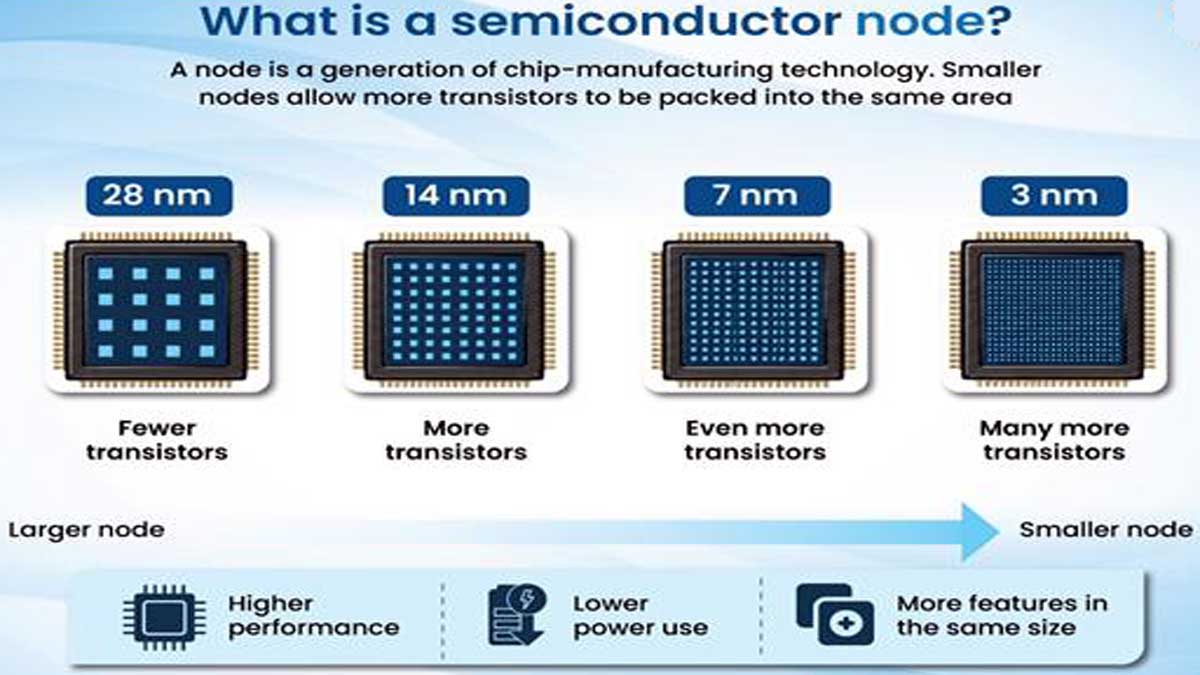
Semiconductors are the building blocks of modern technology and a foundation of economic power. They power Artificial Intelligence, telecommunications, electric mobility, defence and advanced manufacturing. Technologies such as the Internet of Things, 5G/6G, data centres and autonomous vehicles are further driving chip demand. Their availability and technological capabilities will increasingly shape innovation, competitiveness and national technological strength.
This growing importance is reflected in the rapid expansion of the global semiconductor market. The global semiconductor market grew at a compound annual growth rate of 6.5 per cent between 2014 and 2024. It is projected to grow at 8.5 per cent over the next 5–10 years. However, recent disruptions have exposed vulnerabilities in the interconnected global semiconductor value chain. Geopolitical tensions have further highlighted the risks of supply dependence. Major economies are therefore strengthening domestic semiconductor capabilities to secure their technological and economic interests.
India is also witnessing rapidly rising semiconductor demand. It is projected to reach USD 110 billion by FY2030 and exceed USD 200 billion by FY2035, while domestic manufacturing remains at a nascent stage. India spent almost USD 150 billion on semiconductor product imports during FY17–FY25. Imports grew at a CAGR of 23 per cent during this period. If this trend continues, annual imports could reach USD 240 billion by 2035. Building a comprehensive semiconductor ecosystem is therefore an urgent national priority.
Silicon is the most widely used semiconductor material. It is obtained from silica, which occurs abundantly in sand. Chip manufacturing begins with highly purified silicon, which is formed into cylindrical ingots. These ingots are sliced into thin wafers and polished. Inside fabrication plants, wafers undergo hundreds of carefully controlled processes. These include deposition, photolithography, etching and ion implantation.
Together, these processes create the intricate structures that form billions of transistors and other components. During photolithography, patterns are transferred onto the wafer using light. These patterns define structures that ultimately form transistors, interconnects and other parts of a chip. Transistors are the microscopic electronic switches on the chip that control the flow of electrical current. The process is repeated across multiple layers to build complex integrated circuits.
Finished semiconductor devices then undergo Assembly, Testing, Marking and Packaging or Outsourced Semiconductor Assembly and Test processes. Packaging protects the chip and enables it to connect with other electronic components. Testing ensures that the finished devices meet required performance and quality standards.
A semiconductor node identifies a generation of manufacturing technology. Historically, labels such as 90 nm, 45 nm and 28 nm tracked particular physical dimensions. Today, node names function mainly as shorthand for a process generation. A smaller node can enable higher transistor density, better performance or lower energy use, but the result also depends on circuit design, materials, packaging and the intended application. Advanced nodes attract attention because they support high-performance computing and leading-edge processors. Mature nodes remain essential for automobiles, industrial electronics, telecommunications, power systems and many consumer products. India is now building capabilities that extend from established nodes towards more advanced semiconductor technologies.
Semiconductors have emerged as a strategic resource for economic growth, technological leadership and national security. Today, Taiwan, South Korea, Japan, China and the United States dominate global semiconductor manufacturing. Taiwan alone accounts for over 60 per cent of global chip production and nearly 90 per cent of advanced chips. This concentration has highlighted the need for secure, diversified and resilient semiconductor supply chains.
For India, domestic semiconductor capabilities are more than an industrial opportunity. They are essential for reducing import dependence, strengthening national security and creating high-value employment. They can also deepen technological self-reliance and reduce vulnerabilities across strategic sectors. No single country controls the complete semiconductor value chain. Different economies lead in chip design, fabrication, equipment, materials, memory and packaging. This specialisation has improved efficiency, but it also creates concentration risk. India’s policy therefore focuses on trusted partnerships alongside stronger domestic capacity.
Semiconductor Laboratory in Mohali develops flight-grade chips for satellites and launch vehicles, designed to withstand extreme space conditions. Chandrayaan-3’s lander carried an Indian-made camera chip, supporting the lander’s imaging systems. SCL’s Vikram processor is used in satellite launch vehicles and rockets. Aditya-L1, India’s mission to study the Sun, uses radiation-hardened ADC chips developed by SCL.
India’s semiconductor journey has evolved from building strategic capabilities to creating a broader domestic ecosystem. Early institutions such as the Semiconductor Laboratory laid the groundwork, while recent policy interventions have accelerated investment, innovation and talent development. These efforts are positioning India to participate across the semiconductor value chain.
India’s semiconductor ambitions are supported by a progressive policy ecosystem spanning manufacturing, infrastructure, investment, research and talent development. These measures have steadily strengthened the electronics value chain and created a foundation for semiconductor self-reliance.
Overall, India’s semiconductor story has advanced rapidly in a short period. In 2021, the country had no commercial chip plant. By 2026, twelve units stand approved, and five are in production. Students across hundreds of colleges are now designing chips. Machines, materials, design, research and talent now join fabs and packaging.
The road ahead is demanding. Chip manufacturing ranks among the most complex industries in the world. It requires patience, precision and steady policy support. Devices will be manufactured more fully within India. Critical systems will depend less upon distant supply chains. Young engineers will find high-value work closer to home. A small chip carries a large promise. India has resolved to build it at home.
Related Items
From 'Beacons' to 'Landmarks', India’s changing ‘Lighthouse’ story…
Rival firms make the best partners when developing new technology
“Only five minutes…” has shaken France and forced India to think…