
 Brij Khandelwal
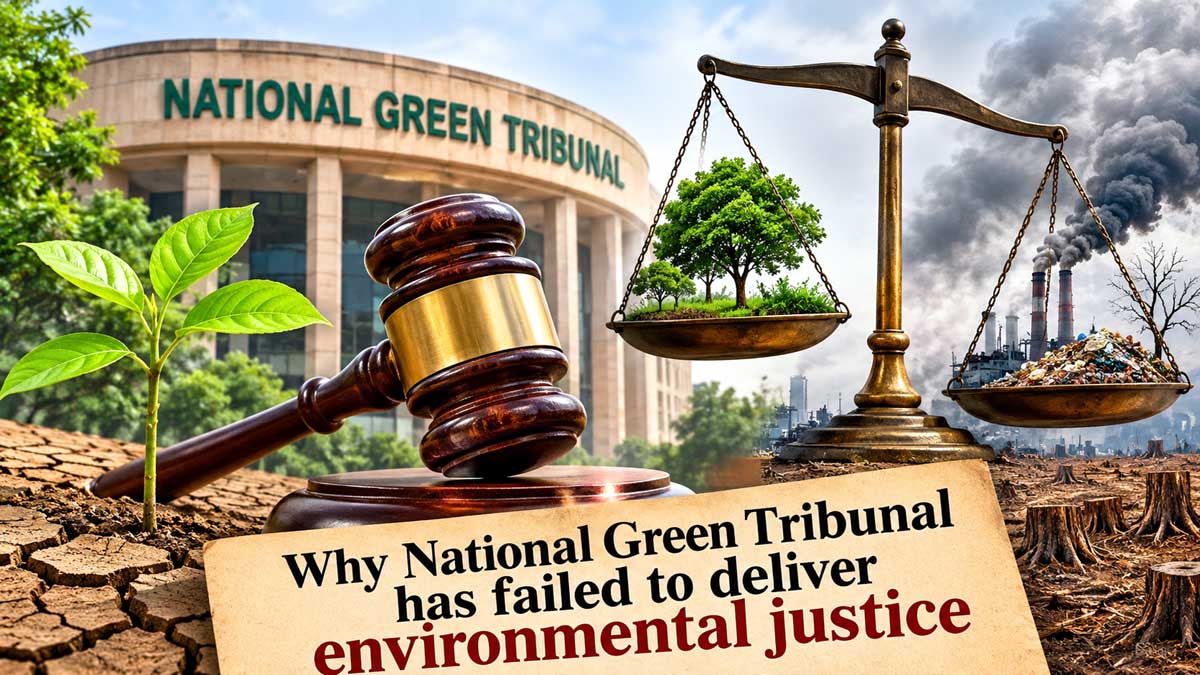
India's environmental crises- choking urban air, poisoned rivers, and sprawling waste dumps- demand swift, expert justice.
Recognising the need for early action and swift disposal of disputes, the National Green Tribunal was established in 2010 under the NGT Act as a specialised body to deliver speedy resolutions through judicial and technical expertise.
Modelled after successful tribunals elsewhere, it promised to cut through bureaucratic delays and prioritise ecological imperatives.
Yet, sixteen years on, the NGT stands as a cautionary tale of institutional promise undermined by structural flaws, procedural lapses, and operational paralysis. Systemic environmental degradation persists, with the Supreme Court often forced to intervene where the NGT falters.
At its heart, the NGT's failures stem from a lack of true institutional independence. Funded and staffed through the Ministry of Environment, Forest and Climate Change, the very entity it oversees, the tribunal risks executive influence. Appointments follow similar channels, breeding bias concerns, exacerbated by amendments like those in the Finance Act 2017, which critics say erode autonomy.
Resource constraints compound this. Chronic vacancies in judicial and expert members, inadequate infrastructure, and sparse regional benches (leading to closures in Chennai and Kolkata) create backlogs and deny access, especially in remote areas. Limited jurisdiction excludes key laws like the Wildlife (Protection) Act, 1972, and the Indian Forest Act, 1927, fragmenting adjudication. A rigid six-month filing window ignores slow-burn damages, while inconsistent rulings, often person-centric, arbitrary, or overreaching, erode credibility. Compensation assessments lack scientific rigour, and funds rarely reach the mandated Environmental Relief Fund, enabling misuse.
Procedurally, the NGT violates natural justice principles, as censured by the Supreme Court in cases like Grasim Industries. It delegates adjudication to unscrutinized expert committees, sidelining affected parties and over-relying on outsourced reports. Enforcement is the starkest gap: orders go unmonitored, with no robust follow-up. Landmark directives on Delhi's air or river cleaning yield paper victories amid worsening pollution metrics.
Frequent appeals to higher courts quash NGT actions for jurisdictional overreach (e.g., ordering Enforcement Directorate probes) or lapses, stripping finality. While it disposes of cases efficiently on paper, on-ground realities- rising PM2.5, faecal coliform in rivers, unprocessed waste- betray its impotence.
The NGT's abstract flaws manifest in concrete disasters, where interventions promised salvation but delivered delays, partial fixes, or escalation. These "glorious failures" highlight a pattern: bold orders without teeth, often rectified only by Supreme Court oversight.
Delhi Air Pollution Crisis: Bans on construction, vehicles, and stubble burning offered fleeting dips in PM2.5, but spikes (e.g., post-Diwali) persist due to non-implementation. The Supreme Court has driven what little progress occurred.
Ganga River Pollution: Decades of effluent treatment mandates and tannery closures in Kanpur failed to curb toxic discharges or faecal coliform. River health deteriorates, with Supreme Court monitoring providing the real momentum.
Yamuna Pollution and Encroachment: Fines for drains, waste, and events like the Art of Living festival yielded incomplete cleanups and persistent foam. Revival hinges on higher judicial pressure.
Nationwide Solid Waste Management Collapse: Slams on legacy dumps and segregation rules in Bihar and urban landfills changed little; waste volumes swell unabated.
Summary Dismissal of Climate Change Litigation (Ridhima Pandey, 2019): The NGT curtly rejected a child's plea on Paris Agreement gaps, deeming laws sufficient. The Supreme Court revived it, exposing the NGT's aversion to emerging threats.
Illegal Mining and Sand Extraction: Bans in Uttar Pradesh and Rajasthan couldn't halt riverbed devastation; Supreme Court scrutiny was needed for any compliance.
Procedural Overreach in Industrial Cases: Directions in Grasim Industries and Singrauli power plants drew Supreme Court rebukes for breaching natural justice and powers.
Great Nicobar Island Project: NGT upheld clearances despite risks to forests, corals, mangroves, and tribes, prioritising "strategic needs" amid scrutiny gaps.
Non-Utilization of Compensation Funds: Crores awarded bypass the Relief Fund, leading to untracked, misused sums in pollution and mining cases.
Operational Paralysis from Vacancies: Bench closures and delays forced litigants to Delhi, stalling time-sensitive disputes.
These cases underscore a tribunal that excels at headlines but falters in follow-through, allowing crises to fester.
The NGT's legacy is one of squandered potential: efficient on dockets, ineffective on the ground. India's grim metrics- deteriorating air, rivers, and waste- reflect enforcement voids, with the Supreme Court as the de facto enforcer for high-stakes matters. Reforms demand urgent attention: insulating appointments and funding from executive sway, mandating enforcement mechanisms, filling vacancies, expanding jurisdiction, and ensuring procedural rigour. Without these, the NGT risks remaining a well-intentioned relic in a nation where environmental justice is as polluted as its skies and waters.
Related Items
Those unheard screams of Indian men…!
‘Green Crusaders’ or ‘Growth Killers’ of India!
When rivers gave cities their soul and colour…