
 Brij Khandelwal
If I had to describe my recent journey through Europe in one word, it would be water. I saw more than half a dozen rivers, canals and lakes up close. Sometimes I was on a cruise, sometimes on a ferry, sometimes looking down from a bridge, and sometimes simply sitting beside the water. I spoke with boatmen, ferry operators, cruise managers and gondoliers. I also watched ordinary people sitting along the banks in the golden afternoon light, chatting, watching the water or simply allowing life to slow down for a while.
Gradually, one thought settled in my mind: A river does not remain alive merely because water flows through it. A river remains alive when people love it. Also read: नदियों के पानी की लहरों में छिपा है यूरोप का दिल!
The River Thames caught my attention first. The moment I boarded a cruise, it seemed as if London was opening its entire story before me. Parliament, historic buildings, bridges, museums, the London Eye and the modern city appeared one after another.
People walked along the banks. Ferries moved briskly across the water. Tourists clicked photographs. Others simply sat quietly, lost in the rhythm of the river. The Thames is not merely a river. It is London’s highway, promenade, history book and open courtyard.
Then came the Seine. If the Thames is London’s doorway, the Seine is Paris’s mirror. Seeing Paris from the river was almost magical. From the Eiffel Tower, looking down at the Seine was an unforgettable sight. But the river itself offered another perspective. Boats slipped beneath historic bridges, and moments later a magnificent building, museum or monument appeared.
People walked, sat, laughed and talked along the banks. Paris has not pushed its river into the background. It has given the Seine a place at the very heart of the city. The Seine does not merely flow through Paris. Paris lives with it.
Amsterdam gave the story another colour. Here, water is not an obstacle. Water is the road. Small boats and larger vessels move through the canals. Bridges connect neighbourhoods. Old houses seem to lean towards the water. People sit beside the canals while tourists discover the city from boats.
The Dutch seem to have made a charming peace treaty with water. Instead of trying to defeat it, they learned to live with it. The canals are transport routes, promenades, history books and places of quiet pleasure.
Venice was something else altogether. Here, there often seems to be more water than road. Gondolas, boats and water taxis are part of everyday life.
A gondolier does not look like merely a boatman. He seems like a travelling storyteller. As the gondola glides between palaces and old buildings, history appears to breathe again. Venice taught me a simple lesson: Sometimes it is wiser to live with nature than to try to conquer it.
In Heidelberg, Germany, famous for its university and higher education, the Neckar River created its own magic. The old castle stood on the hill, while the river flowed below. Historic bridges, old buildings and green valleys completed the picture.
From a boat, the city looked like an old book slowly opening page by page. That, perhaps, is the real magic of travelling by river. You do not merely see a city. The city reveals itself to you.
The Rhine showed me another face of Europe. It is beautiful, but it is much more than a scenic river. For centuries it has been an important artery for trade, transport and communication. Cargo ships, tourist cruises, riverside towns, castles and historic buildings add layer after layer to its story.
I began to understand something important: Europe’s rivers are not decoration. They are part of the economic and cultural bloodstream of its cities.
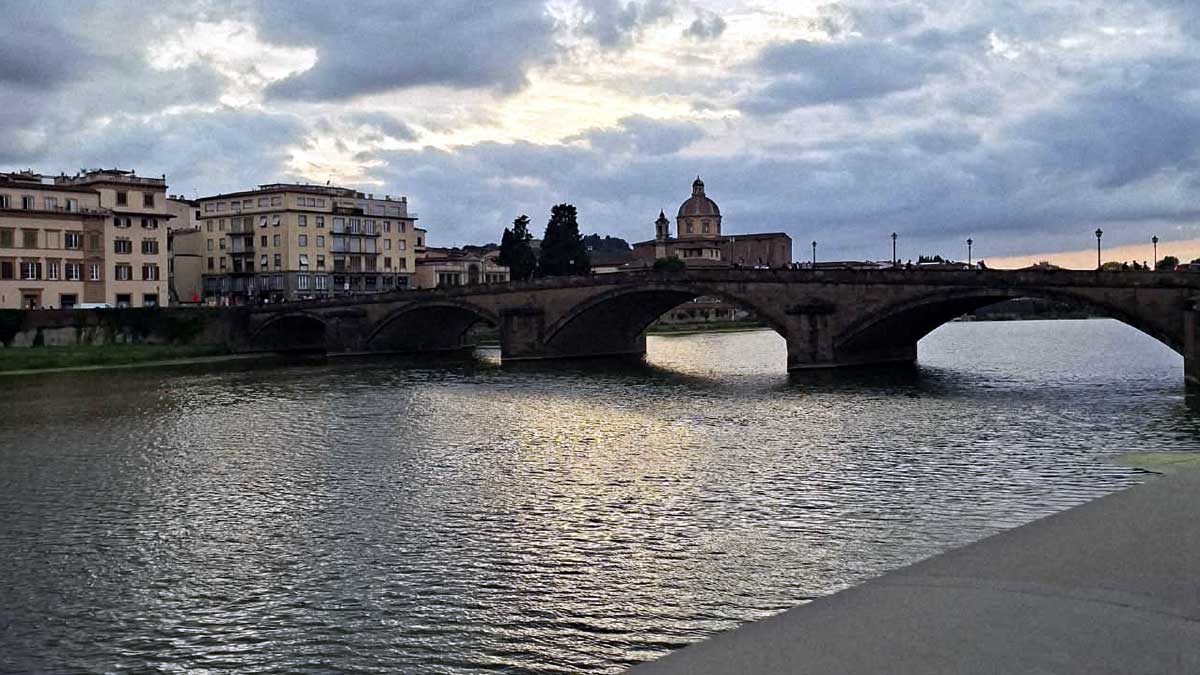
In Florence, the River Arno offered a different mood. Flowing beneath the famous Ponte Vecchio, with historic buildings rising around it, the Arno seemed to carry Florence’s past in its waters. Here, the river is deeply connected with art, culture and history.
Then came the Inn River, flowing through the Alpine landscape and past Innsbruck in Austria. Between the mountains, it often looked like a silver ribbon. The scenery was so magnificent that the river seemed to become the heartbeat of the landscape itself. Here, the river spoke less about commerce and more about nature and life.
In Switzerland, the lakes around Interlaken left perhaps the deepest impression. Lake Thun and Lake Brienz stretch beneath the Alps, their blue waters surrounded by mountains and greenery. It looked as if the mountains had placed two enormous mirrors before themselves. There was little noise. Just water, mountains, wind and green landscapes stretching into the distance.
Sometimes a journey gives you a view that even a camera cannot properly capture. The eyes take the picture. The heart keeps it forever.
During these journeys, one observation kept returning. In most places, I did not see piles of plastic or rubbish along the rivers. People and cattle were not bathing in the water. Ducks and birds, however, seemed perfectly happy to claim their share of it. Many riverbanks had strong embankments, stone-paved paths, wide pedestrian areas, lawns, flowerbeds and attractive boulevards. But the most important thing was something else.
There was life around the river. Music. Theatre. Boats. Ferries. Restaurants. Museums. Tourism. Community events.
People came to the river because they considered it part of their lives. A river remains protected when people come to it.
When people come, they see. When they see, they care. When they care, they ask questions. And when people start asking questions, governments eventually have to answer.
Suddenly, I remembered the Nile I had seen some years ago. Amid all these European rivers, another journey suddenly came back to me: a cruise on the Nile in Cairo.
The boat moved gently across the water. The city stretched along the banks. Evening descended slowly. Cairo looked different from the river. The Nile gave me the same feeling I experienced in Europe: A river can become the soul of a city.
But while watching these beautiful European rivers, my thoughts repeatedly returned to the Yamuna in Agra.
The Yamuna beside the Taj Mahal. The river that has witnessed centuries of Agra’s history. The river that once helped define the city.
Today, when we look at the Yamuna, we often see more garbage than water. Plastic, sewage, foul smells and neglect have pushed the river to the margins of public life.
So the question is simple: Can a river be saved only through cleaning drives and government schemes?
Europe offered me a different answer. Perhaps we first need to bring the river back into people’s lives.
Imagine a Yamuna with clean walking paths, safe ghats, greenery and flowers. Imagine boats moving on the river again. Imagine places where appropriate fishing is permitted. Imagine music and cultural programmes along the banks. Imagine local communities becoming guardians of the river and children growing up knowing the Yamuna not as a dirty drain but as a living river.
Imagine Agra’s evenings becoming brighter because people say: “Let’s go and spend the evening by the Yamuna.” Perhaps that one sentence could begin to change the river.
I returned from Europe with one conviction stronger than before: It is a mistake to think of a river merely as a stream of water.
A river is an economy. It is culture. It is history. It is tourism. It is recreation. It is memory. Above all, a river is a place where people come together.
Unfortunately, in Agra, we have allowed the Yamuna to be reduced to something resembling a sewage channel and forgotten drain.
Europe showed me what can happen when cities treat rivers differently. Rivers have given European cities identity, tourism, business and public spaces. They have also provided a stage on which history continues to live.
So why not the Yamuna? Why can’t the river become Agra’s greatest open cultural space? Why shouldn’t music play along its banks in the evening? Why shouldn’t children play, elderly people sit, tourists explore the city by boat, and local residents proudly say:
“This is our river.” Perhaps the simplest way to save a river is also the most human one: Make people fall in love with it again. Rivers do not merely pass through cities. When cities learn to value them, rivers give those cities a soul.
Related Items
Unveiling the impact of black hole spin on flickering of emitted light
Land of Lord Krishna crying for every drop of water
Big stories of transformation in the journey of cleanliness