
 Brij Khandelwal
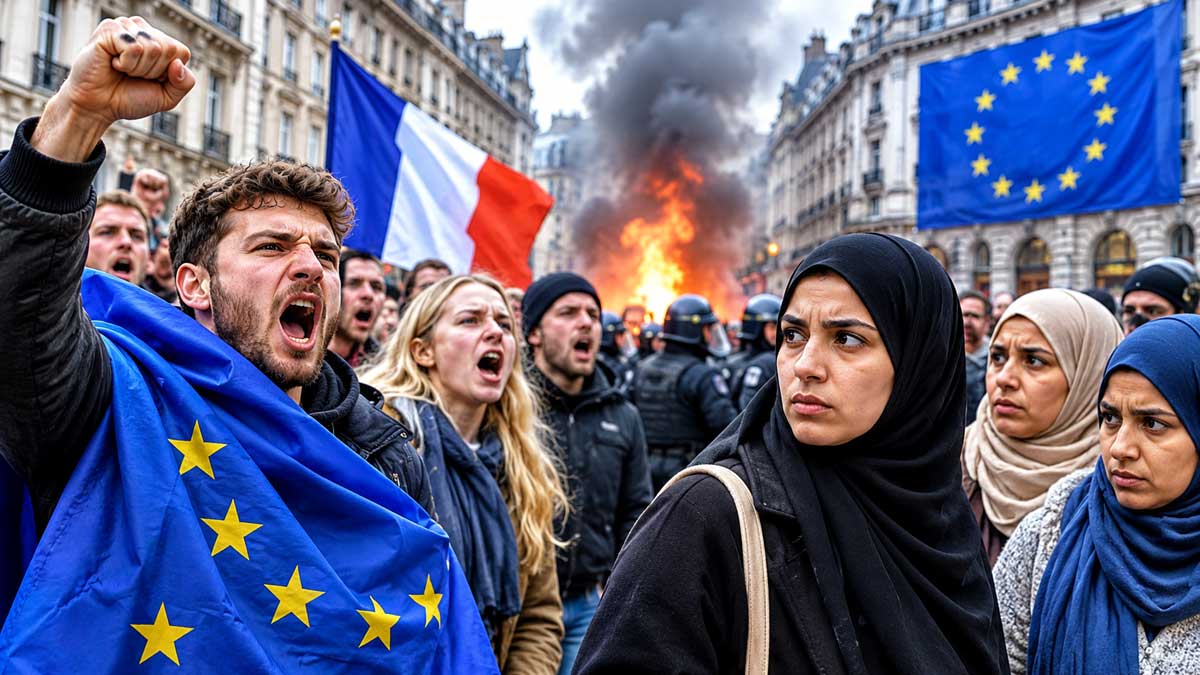
The smoke rising from Europe’s streets is no longer just about inflation, unemployment or failing public services. Violent unrest in France and Belgium, involving young people from Muslim backgrounds, has reignited a fierce debate over immigration, religious identity and integration. Attacks on police, arson and looting have deepened fears of a widening divide between immigrant communities and their host societies. The questions are unavoidable. Where did multiculturalism go wrong? Is religious discontent fuelling the unrest, or have governments failed to integrate newcomers? And how can Europe restore order without sacrificing its democratic values?
The glitter of Western civilisation is beginning to show visible cracks. From America to Britain, France, Italy and Germany, immigration has become a political powder keg. The debate has moved far beyond border controls and asylum seekers. It now dominates neighbourhoods, marketplaces, election rallies and everyday conversations. A growing section of the public wants tougher policies, stricter enforcement and a restoration of respect for the rule of law.
During a recent trip to Europe, I witnessed glimpses of this changing mood. Conversations with residents in Venice and other cities revealed an unease rarely captured in glossy tourism brochures. Immigration, for them, was not an abstract political issue. It touched jobs, housing, cultural identity and anxieties about the future.
In some places, I heard deeply insulting remarks about Bangladeshis. The contempt was unmistakable. Such hostility cannot be justified, and collective blame solves nothing. Yet dismissing the anger altogether would be equally foolish. Beneath the ugly language lies a growing resentment that political leaders can no longer afford to ignore.
The West is confronting a crisis of identity, with immigration emerging as its most visible battleground. Have governments underestimated the challenges of rapid demographic change? Have they celebrated diversity while neglecting the difficult business of integration? These questions deserve honest answers, not political evasion.
In America, Donald Trump has made border security and deportations central to his political agenda. His supporters argue that uncontrolled immigration threatens national sovereignty, strains public services and undermines the interests of ordinary citizens. His critics warn that indiscriminate crackdowns can tear families apart, violate human rights and punish innocent people alongside offenders.
Across the Atlantic, Britain is experiencing a similar political shift. Reform UK and Rupert Lowe's Restore Britain Party have channelled public anger over immigration into demands for tougher action. Lowe advocates stricter border controls and an expanded system of detention and deportation. His proposals also seek major changes to existing legal frameworks governing human rights and asylum seekers.
Ideas once associated mainly with the far-right are increasingly entering mainstream political debate. Governments that championed diversity and inclusion now face uncomfortable questions. What do national borders mean if they cannot be effectively controlled? How can public confidence survive when immigration rules appear unenforced? And why should citizens feel ignored when their concerns about housing, jobs and public services remain unresolved?
Right-wing leaders argue that governments have prioritised newcomers over their own citizens. They blame liberal immigration policies for creating pressures that ordinary people must now bear. Their arguments may sometimes be exaggerated for electoral gain, but the underlying questions cannot simply be dismissed.
Calling every criticism of immigration racist is neither reasonable nor democratic. Citizens have a legitimate right to debate how many newcomers their countries can accommodate, which skills their economies need, how asylum claims should be processed and how those without a legal right to remain should be returned.
Integration, however, cannot be a one-way street. Governments must provide fair opportunities, education and pathways into employment. Newcomers, in turn, must respect the law, make reasonable efforts to learn the local language and accept the fundamental democratic principles of their host societies.
Gender equality, religious freedom and tolerance are non-negotiable foundations of a democratic order. No religious or cultural identity should become an excuse for violence, intimidation or discrimination against others.
Religious identity has become an especially sensitive part of this debate. The involvement of some young people from Muslim backgrounds in violent incidents raises legitimate questions about alienation, radicalisation and failed integration. But the distinction between individuals responsible for violence and entire religious communities must remain clear. Blaming millions for the actions of a few would deepen precisely the divisions Europe needs to overcome.
Prof Paras Nath Chaudhary argues that Western governments must enforce the law, control illegal entry and settle asylum claims promptly. Those without a legal right to remain should be returned in accordance with applicable laws and necessary safeguards. The coming years, he warns, will test Europe's democratic values and social cohesion.
The storm has not passed. Europe faces a choice between sensible reform and deeper polarisation. Governments must acknowledge policy failures, strengthen integration, enforce immigration laws fairly and address citizens' genuine anxieties. They must also resist the temptation to turn immigrants into convenient scapegoats for every economic and social problem.
Europe can no longer afford to look away. But neither can it afford to abandon its humanity. Ultimately, a society's strength lies not merely in protecting its borders, but in upholding the principles that give those borders meaning: justice, freedom, equality and the rule of law. The challenge is to restore public confidence without surrendering democratic values. Failure on either front could prove costly.
Related Items
A journalist is someone whose reporting people can trust…
Why are young people running out of patience…!
The law that gave the right to ask questions…