
 Brij Khandelwal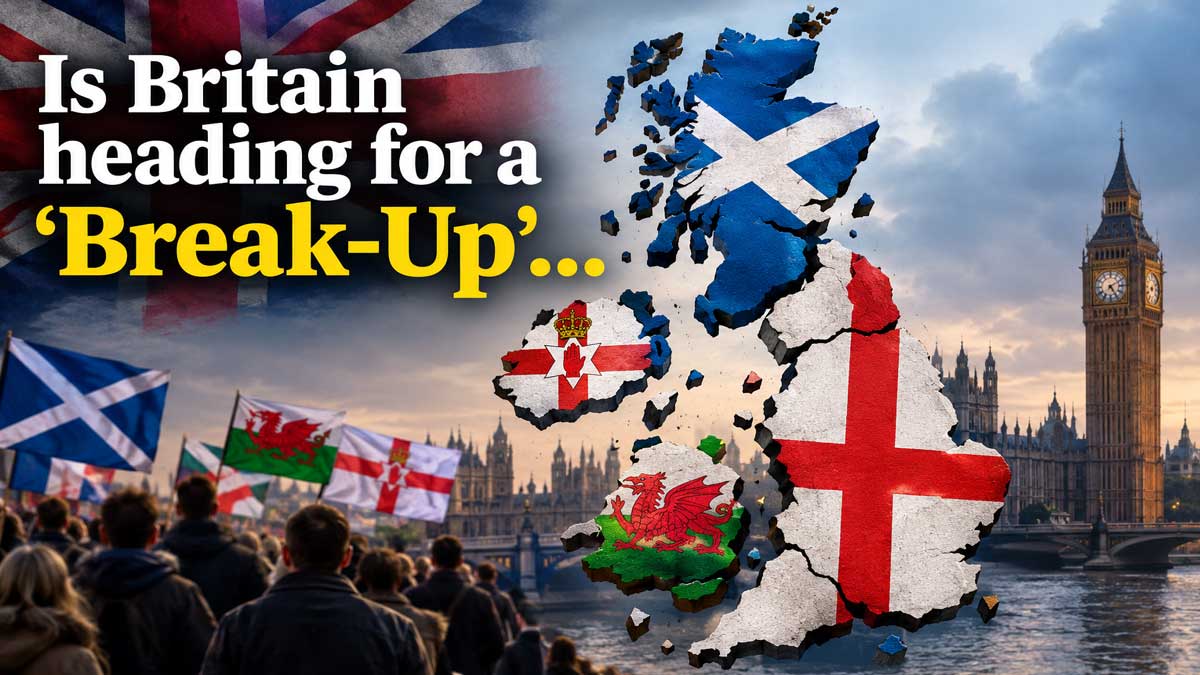
It may sound far-fetched. Yet the question is no longer confined to political circles. In a London coffee house, a casual conversation about Britain’s future soon turned into a serious discussion about its unity.
Leaders from Scotland, Wales and Northern Ireland are preparing to meet at a time when the pressures holding the United Kingdom together are becoming harder to ignore.
Scotland is at the centre of the debate. The demand for independence is not new. In the 2014 referendum, Scottish voters chose to remain in the United Kingdom. But that did not close the chapter.
Economic problems, policies from London and political dissatisfaction continue to bring the independence question back. It is like an old wound that refuses to heal.
Journalist James says the new Labour government faces a difficult test. Prime Minister Andy Burnham will have to decide how much freedom Scotland should be given.
Give too much ground and independence supporters may gain confidence. Take too hard a line and public anger could grow. It is, as the saying goes, a case of being caught between a rock and a hard place.
Brexit has made the situation even more complicated. Trade, currency, government spending and relations with Europe have all become difficult questions.
If Scotland moves towards another independence referendum, the debate will be much tougher than it was in 2014. The political and economic stakes are now far higher.
Wales presents a different picture. There is no strong independence wave there comparable to Scotland. But Welsh national identity remains strong, along with demands for greater powers.
If Scotland takes a serious step towards leaving the UK, Wales could also see a fresh debate about its own future. Then comes Northern Ireland, perhaps the most sensitive issue of all. Under the Good Friday Agreement, a referendum on Irish reunification can be held if circumstances suggest that a majority may favour it. Changing population patterns, identity politics and new trading arrangements across the Irish Sea have kept the question alive.
US President Donald Trump’s support for a united Ireland has added an international dimension to the debate. London and Dublin, however, continue to maintain that the future must ultimately be decided by the people concerned.
Outside political comments can sometimes add fuel to an already sensitive fire. That is why the meeting of leaders from Scotland, Wales and Northern Ireland matters. It is more than another political meeting. It reflects a changing Britain and the growing debate over how the Union should work in the future.
London has two broad choices. It can offer more powers to the nations and regions and try to strengthen the Union. Or it can take a tougher position against demands for greater autonomy and independence.
Neither option is easy. Britain’s economy, defence system and common institutions still bind its four nations closely together. But laws and institutions alone cannot hold a country together forever.
Trust matters. So does the willingness of people to live together. History has a simple lesson. Multi-national countries can change with time. Borders that look permanent today may not always remain so. When trust begins to crack, even the strongest walls can start to crumble.
The debate in London, therefore, is not merely about politics. It is about a much bigger question: what will Britain look like a decade from now?
Related Items
India building its semiconductor future…
London for a ‘few days’ with a ‘Global Family’
Indian Ayurveda ensures a healthy future…