
 Brij Khandelwal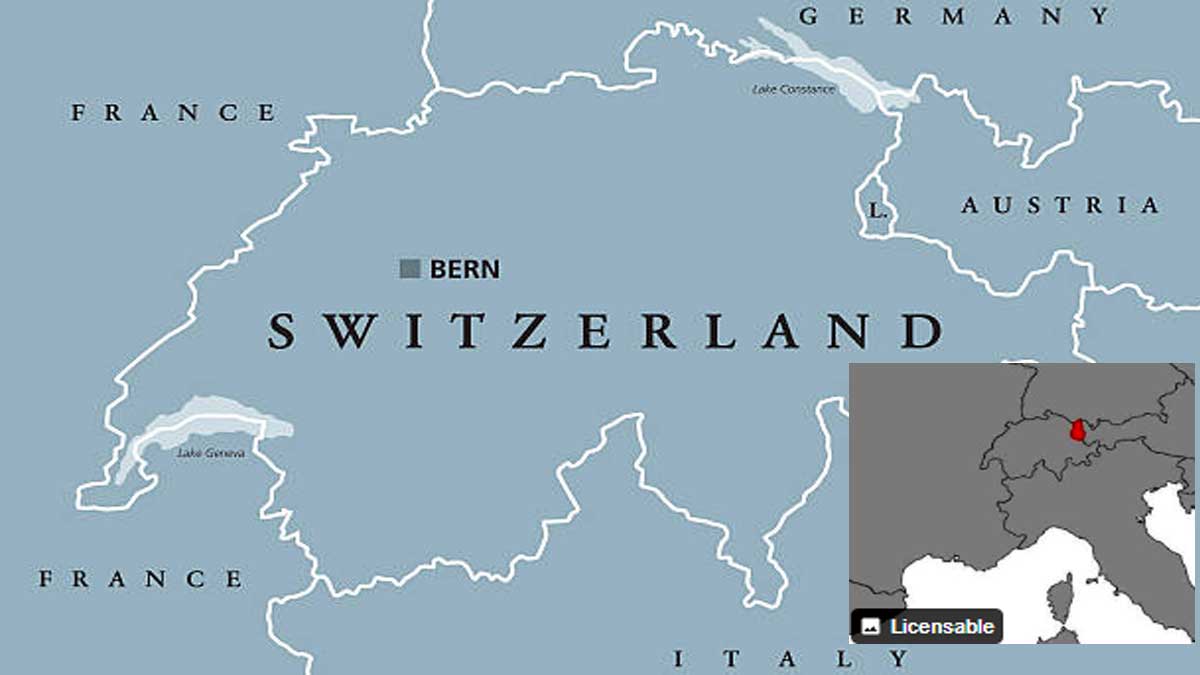
How can a country be smaller than a Delhi neighbourhood and still have its own prince, its own borders, its own administration and enough national pride to make a full-sized flag look slightly embarrassed?
That was the question buzzing through our Indian tourist group as the bus rolled into Liechtenstein, a postage-stamp principality squeezed between Switzerland and Austria.
Also read: दिल्ली के ‘मालवीय नगर’ जितना देश है लिकटेंस्टाइन
With a population of just under 40,000, the place looked, to our Delhi-trained eyes, roughly the size of Malviya Nagar on a quiet Tuesday. We peered out of the windows, slightly bewildered. Where were the crowds? Where were the traffic jams? Where were the roadside vendors yelling “Sir, original maal, best price”? And the biggest mystery of all: what do these people do all day, and how does this country actually survive, Padmini wondered.
Fortunately, Lady Martha, our cheerful philosopher, historian and human GPS, was ready. She didn’t just recite history; she served it with the confidence of a professor, the patience of a grandmother and the timing of someone who knows exactly when the next toilet stop is required.
Liechtenstein may be tiny, but its history isn’t. Martha walked us through the usual European chaos: two World Wars, dictators, tanks, and enough political madness to keep historians busy for centuries. Yet this little principality managed to stay neutral. When the big boys were busy flexing military muscles, Liechtenstein specialised in the fine art of staying out of the way. Survival, it turns out, sometimes requires more wisdom than muscle and money laundering.
We listened with a mixture of fascination and mild disbelief. Back home, even a colony association meeting can produce three factions, two walkouts and a demand for a separate committee. Here was a country running smoothly with a population that could fit into one large Indian neighbourhood. The comparison was irresistible and slightly humbling.
Then came the delightful little train ride, a leisurely parikrama of the principality. The toy train rolled past tidy houses, manicured slopes and mountains. No horns. No overtaking manoeuvres. No one racing an invisible enemy.
Padmini Iyer, our unofficial expert in international conquest, announced with a twinkle, “One more country conquered!” We laughed. Our weapons that day consisted of cameras, walking sticks, water bottles and a permanent low-level anxiety about the next restroom. We raised no flags. We occupied no buildings. But we took photographs, bought a few fridge magnets, and left with the quiet satisfaction of tourists who had successfully “done” another nation. In the modern age, this is how peaceful conquests are conducted.
History digested, mountains admired, the next mission was clear: feed the troops. We crossed into Austria. The scenery remained spectacular, but our stomachs had begun issuing their own travel advisories. Martha, ever the strategist, knew the golden rule of senior-citizen tourism: keep them happy, hydrated and adequately fed.
The bus eventually pulled up at an Indian restaurant run by two brothers. The welcome was warm, the menu carried a pleasant Turkish twist, and the food arrived with the comforting aroma of home filtered through European air. A European journey, an Indian appetite and a Turkish accent on the plate; globalisation had finally reached our digestive systems.
Then came the green tea. The fragrance drifted across the table, fresh and slightly superior. It seemed to whisper, “Dear travellers, sit down. The Alps are not going anywhere.” Outside, Austria put on its postcard performance, neat rows of houses standing to attention, green meadows, and clouds that caressed the peaks instead of simply floating past.
For people used to negotiating potholes, improvisational traffic and the occasional buffalo on the road, the orderliness was both amusing and slightly intimidating. Here the roads appeared to know their duties. The houses respected geometry. Even the grass looked disciplined.
No account of our journey would be complete without mentioning the two forces that quietly governed the itinerary: food and toilets. The two had developed a perfect jugalbandi.
First the question: “Where shall we eat?” Shortly afterwards: “Where is the toilet?” Sometimes the order was reversed. A senior traveller would make a quiet announcement, and suddenly the entire group developed a passionate interest in the nearest facilities. Tourism, we discovered, is not only about monuments and mountain views. It is also about logistics, bladder management and the strategic timing of meals.
Martha conducted this delicate orchestra with admirable calm. She knew when the group needed a meal, when it needed a break, and when it needed to be steered towards a restroom without unnecessary drama. The result was a happy group, a well-fed group, and, whenever possible, a relieved group.
And so we left Liechtenstein behind, Austria ahead, and the Alps standing guard above us. We had crossed borders, sampled history, enjoyed international cuisine and collected memories that will outlast any souvenir.
The world, we realised, is not measured only in square kilometres or population figures. Sometimes the smallest countries deliver the biggest surprises.
And sometimes the most unforgettable adventures begin with the simplest question of all, “Is there a toilet nearby?”
Related Items
Vanishing newspaper, Fading TV, and the tyranny of tiny screen…
Are Indian borders just lines on a map!
Song that echoed across South India, but never became ‘National Song’