
 Brij Khandelwal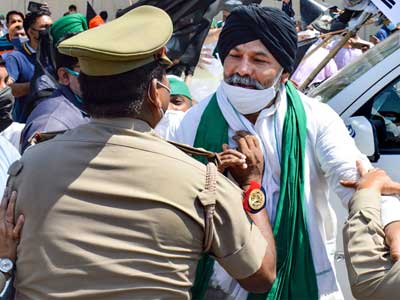
History suggests that revolutions are not born merely from poverty. They emerge when rising aspirations collide with unmet expectations. Political thinkers such as Alexis de Tocqueville, James C Davies, and Samuel P Huntington argued that societies become volatile when people's hopes grow faster than a system's ability to satisfy them. India's freedom movement, as well as the mass protests of the 1960s and 1970s, reflected this dynamic.
Since 2014, however, India's political landscape appears to have changed. The combination of Jan Dhan bank accounts, Aadhaar, mobile connectivity, Direct Benefit Transfers, PM-Kisan, Ujjwala LPG connections, and digital ration systems has delivered government assistance directly to hundreds of millions of citizens. Many analysts believe these welfare measures have eased economic insecurity and strengthened people's connection with the state, reducing the likelihood of widespread public anger.
Read in Hindi: ‘वेलफेयर’ की मिठास ने ठंडी कर दी है जनआंदोलनों की आग
This interpretation, however, remains contested. The year-long farmers' protest forced the government to repeal three agricultural laws, demonstrating that mass mobilisation remains possible. Other scholars argue that the relative decline in nationwide agitations is also explained by stronger state capacity, the fragmenting influence of social media, a weaker political opposition, and the changing nature of unemployment and economic aspirations. The debate, therefore, remains far from settled.
There was a time when launching a protest in India was like opening a bottle of soda water. Twist the cap, and the fizz would shoot into the air. Students poured onto the streets. Farmers occupied highways. Workers went on strike. The opposition needed only a spark to ignite a nationwide movement. Today, the picture looks different.
Public discontent has certainly not disappeared. Protests still erupt. Yet prolonged nationwide agitations capable of shaking governments have become noticeably less common. Why?
The answer may lie as much in economics as in politics. History repeatedly shows that poverty, unemployment, corruption and deep inequality have often fuelled revolutions. When people believe they have nothing left to lose, they challenge the system.
India's struggle for independence, the JP Movement of the 1970s, Gujarat's Nav Nirman movement, the historic railway strike, and the anti-corruption movement led by Anna Hazare in 2011 all emerged from a profound loss of faith in the political establishment. Many believed that the state no longer worked for them but against them.
After 2014, India adopted a different approach. At its core was the fusion of welfare and technology, a model some observers describe as ‘soft capitalism’. The idea combines market-led economic growth with targeted state support for the poor.
The Jan Dhan-Aadhaar-Mobile architecture became the backbone of this transformation. Subsidies and welfare payments began reaching beneficiaries directly, reducing leakages and middlemen. LPG connections, income support for farmers, pensions, scholarships and numerous welfare benefits started flowing straight into bank accounts. The impact was not merely financial. It was psychological.
For millions who opened their first bank account, received electricity, toilets, piped water, subsidised food, or access to healthcare, despair gradually gave way to hope.
The state became more visible in everyday life. That was no small change.
Revolutions are not sustained by slogans alone. They are born from hopelessness. As long as people believe tomorrow can be better than today, they are more likely to pursue opportunity than confrontation.
Over the past decade, millions of Indians have moved out of extreme poverty. Roads have reached remote villages. Digital payments have connected even small shopkeepers to the formal economy. Affordable mobile internet has democratised both information and opportunity. Start-ups, small businesses and self-employment have created new aspirations. As a result, public priorities have shifted.
The question is no longer, "Will the government survive?" Instead, people ask, "How can my son find a job?" "How can my daughter receive a better education?" "When can we own a home?" "How can I expand my business?" Individual ambition has increasingly replaced collective anger.
This does not mean protests have vanished. The farmers' movement demonstrated the continuing power of organised resistance. Demonstrations against the Citizenship Amendment Act and numerous state-level agitations also challenged governments. Yet few of these movements evolved into a nationwide political uprising. Why?
Because a large section of society now seeks opportunity within the system rather than its complete overthrow, explains Prof Sam, an economist. That may be the defining feature of soft capitalism. Markets generate growth. Welfare programmes provide security. Together, they create a minimum level of trust that hard work can still improve one's future.
For politics, this is a profound shift, says social activist Sandeep Lindah. "A citizen who possesses a bank account, a cooking gas connection, a permanent home, subsidised food, health insurance and a digital identity is less likely to see dismantling the system as an attractive option. Reform becomes preferable to revolution."
Leftist critic Amiy Sherawal rightly points out that unemployment remains high, income inequality persists, and farmers and young people continue to face serious challenges. These concerns cannot be dismissed.
However, it is equally true that the explosive social conditions needed for prolonged nationwide revolutions appear less intense than they once were.
Perhaps that is why India's politics no longer resembles a freshly opened bottle of soda water, bursting instantly with pressure. The pressure still exists, but it is being managed differently.
Public commentator Prof Paras Nath Choudhary says, "Whether this represents a permanent transformation remains to be seen. For now, however, one conclusion seems reasonable. If economic growth and welfare continue to reinforce one another, if opportunities expand, and if governments maintain public trust, India's future politics may be driven less by revolution and more by competition, entrepreneurship and aspiration."
After all, societies filled with dreams do not wake up every morning seeking revolution. They wake up determined to build a better tomorrow.
Related Items
An Indian traveller’s eye-opening lessons in the ‘Art of Living’
Are Indian borders just lines on a map!
How the 'Indian Solar Revolution' is transforming rural lives…