
 Brij Khandelwal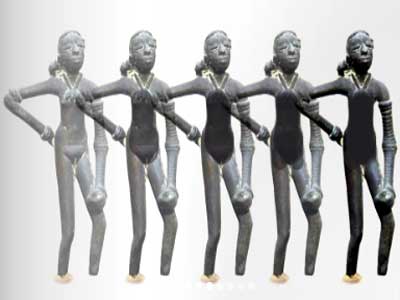
The country is wrestling with big problems: inflation, unemployment, pollution and failing infrastructure. Yet a controversy sparked by Madhurima, a Class 9 art textbook, has opened a fresh debate about education, history and culture.
The issue concerns the world‑famous bronze ‘Dancing Girl’ from Mohenjo‑daro. This 4,500‑year‑old artwork is among Indian archaeology’s most important treasures. For years, it has appeared in textbooks in its original form, but this time the figure’s torso was digitally shaded and partially covered. Historians and educators called that tampering with historical fact. After the outcry, NCERT decided to restore the original image.
Read in Hindi: 'मधुरिमा' विवाद : क्या हम अपने इतिहास से शर्मिंदा हैं…!
One historian said, “It’s like creating a fictional artwork: like pasting a fig leaf on Michelangelo’s David in a cathedral.” That comment was more than a simile; it captured the controversy’s essence.
This is not merely a dispute about a picture. It questions a mindset that hesitates to present history in its authentic form. If we begin altering historical artefacts to fit today’s moral lenses, tomorrow we might erase a statue’s arm, a painting’s face or lines from an inscription. Then history will stop being fact; it will become a story tailored to our convenience.
The world’s experience supports this view. In Europe, many sculptures and paintings were once covered in the name of morality. Later scholars acknowledged that doing so was an injustice to both art and history. Museums reverted to showing original works and concluded that explaining history is better than sanitising it.
It is certainly important to consider children’s age and sensitivities in schoolbooks. But that does not mean authentic historical objects should be altered. If extra context is needed, it can be provided through captions, notes or teacher explanations. Education’s purpose is to acquaint students with truth, not to hide it.
One leading newspaper called the episode ‘Photoshop on History’. That phrase matters because digital editing changes not only an image but also the viewer’s understanding. Students accept as truth what their textbooks show. That makes the duty of accuracy and authenticity in schoolbooks all the more critical.
Indian civilisation never treated the human body as something shameful. Temple sculptures and mural art from places like Khajuraho, Konark and Ajanta testify to a tradition that sees the body not as an object of lust but as a symbol of life, beauty, creativity and nature. That has been one of the greatest strengths of our cultural heritage.
The irony is stark: we proudly promote yoga, Ayurveda and our ancient civilisation abroad, yet feel uncomfortable before the very artistic expressions of that heritage. This contradiction raises questions about our cultural understanding.
As one historian rightly asked, “If a dancing woman cannot be shown in her true form, how will Indian art be studied?” That question is not only about a single statue; it concerns our entire relation to the past.
Textbooks are not merely tools for passing exams. They shape how coming generations think, understand and see the world. A partial or revised history breeds a partial understanding. Our civilisation survived for millennia because it had confidence, curiosity and the courage to confront truth.
So, instead of covering history with a fig leaf, present it in its original dignity. Sensitivity is necessary, but truth is more necessary. An education that averts its eyes from reality will not build a self‑confident society.
Related Items
Building the infrastructure for growth in Jammu and Kashmir…
Liechtenstein: A 'tiny' country and a 'giant' surprise...
Hello to Heidelberg, from money to education and a little romance…