
 Brij Khandelwal
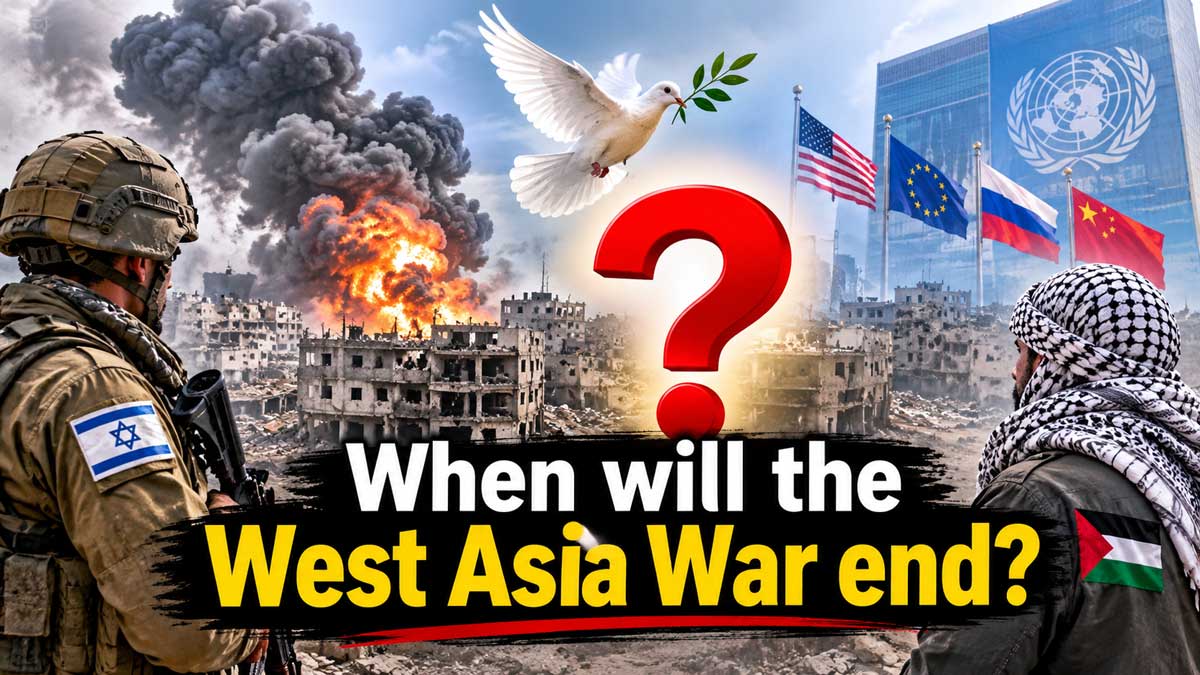
How long can a region burn before the world is forced to act? When the smoke finally clears, will West Asia even be recognisable? These are the questions echoing across a fractured globe today. Cities are gripped by tension, oil markets are shuddering, and millions watch with bated breath as the most dangerous conflict of the decade unfolds.
The eruption occurred on February 28. On that day, the United States and Israel launched a massive, coordinated strike on Iran, an operation dramatically titled "Operation Epic Fury". Within hours, the geopolitical landscape was upended. Reports confirmed the death of Iran’s Supreme Leader Ali Khamenei, alongside several senior military commanders. Key missile sites and command centres were reduced to rubble. But history teaches us that wars rarely end with the opening salvo.
Iran’s response was swift and asymmetrical. Drones darkened the skies, and ballistic missiles targeted Israeli infrastructure and American bases across the region. Then came the blow that rattled the global North: the disruption of the Strait of Hormuz. As the world’s most vital energy artery constricted, oil shipments slowed to a trickle. From Tokyo to Berlin, energy markets trembled, and prices surged to historic highs.
More than 250 days have passed, yet the fire shows no sign of waning. As military strikes continue and diplomacy falters, the world asks: Who will win? In the theatre of modern warfare, "victory" is a slippery concept. The US-Israeli coalition claims to have decapitated Iran’s leadership and crippled its drone and missile manufacturing. Their assessments suggest a military "success".
However, Tehran maintains that the battle has only transitioned. A new leadership core has formed around Mojtaba Khamenei, who has vowed a "protracted resistance". The truth likely sits in a grim middle ground. While Iran’s conventional capabilities are fractured, its power has never rested solely on its regular army. For decades, Tehran has cultivated a "Ring of Fire": a network including Hezbollah in Lebanon, the Houthis in Yemen, and various Iraqi militias. These proxies cannot win a conventional war against a superpower, but they can ensure the region remains an unmanageable volcano for years.
A primary catalyst for this explosion was Iran’s nuclear ambition. Yet, the current reality suggests that the "nuclear threat" may have been functionally neutralised even before Operation Epic Fury. Significant damage to facilities like Natanz and Fordow in 2025, followed by the recent strikes, has reportedly set the program back by a decade. International observers now believe the immediate "breakout" capability has vanished, though the ideological will remains.
This war has also exposed a paradox of global power. The United States has proven it possesses unmatched kinetic reach, the ability to strike deep and reshape a battlefield in hours. Simultaneously, however, the conflict has alienated traditional allies. Several Gulf states are quietly questioning whether their proximity to Washington makes them a "shield" or a "target". In Europe, legal experts and political leaders are increasingly vocal, arguing that the pre-emptive nature of the strikes may have shattered the remnants of international law.
As we look toward an uncertain horizon, four potential futures emerge. Regime Collapse and Integration: If the current system in Tehran implodes, a transitional government might accept intrusive international oversight of its nuclear sites. This would stabilise oil markets and reintegrate Iran into the global economy, though the internal vacuum could lead to years of civil unrest.
The Wounded Phoenix: The regime survives in a diminished state. This leads to a "Grey Zone" reality: intermittent missile exchanges, perpetual proxy harassment, and a permanent "war premium" on oil prices.
Regional Conflagration: A nightmare scenario where Turkey, Iraq, or Lebanon are pulled directly into the vacuum. If Russia or China decide to intervene, even logistically, to check Western influence, the regional war could spark a global economic depression.
Diplomacy of Exhaustion: Eventually, the sheer cost of blood and treasure may force a return to the table. This could result in a "JCPOA 2.0," where a weakened Iran trades its remaining leverage for survival and sanctions relief.
For the Gulf monarchies, this conflict has shattered the "American Security Umbrella" myth. Saudi Arabia, the UAE, and Qatar are no longer looking for a single protector. Instead, we are seeing the rise of a multipolar strategy. In this new Middle East, a nation might buy European interceptors, utilise Chinese telecommunications, and expand trade ties with India, all while maintaining a transactional military relationship with the US.
Economically, the "petrodollar" is facing its greatest test. As the BRICS+ nations, including India, China, and Russia, discuss trading energy in local currencies to bypass sanctions, the long-standing dominance of the US dollar in energy markets is being challenged.
For Asia, the concern is existential. India and China, both heavily dependent on Gulf crude, are scrambling. India is leveraging its strategic reserves and Russian imports while aggressively moving toward renewables. China is doing the same, viewing energy efficiency as a matter of national security.
Perhaps the most haunting lesson of March is how warfare has evolved. Massive tank divisions have been replaced by swarms of $500 drones. Sophisticated air defences, costing billions, are being overwhelmed by sheer numbers of low-tech projectiles. Technology, rather than troop counts, now dictates the rhythm of the march.
Behind the maps and the market tickers, however, lies a staggering human tragedy. Homes are ruins, and families are fleeing into an uncertain night.
The West Asia War of 2026 is more than a regional spat; it is the opening chapter of a new global era. It serves as a violent reminder that no single power can hold back the tides of a changing world forever. As alliances shift and the old order crumbles, we are witnessing the painful birth of a different kind of world.
Related Items
Small families, Fractured bonds! Blame it on family planning!
India’s foray into the world of silicon…
When East and West mix to cook a delicious Biryani!