
 Dharmendra Kumar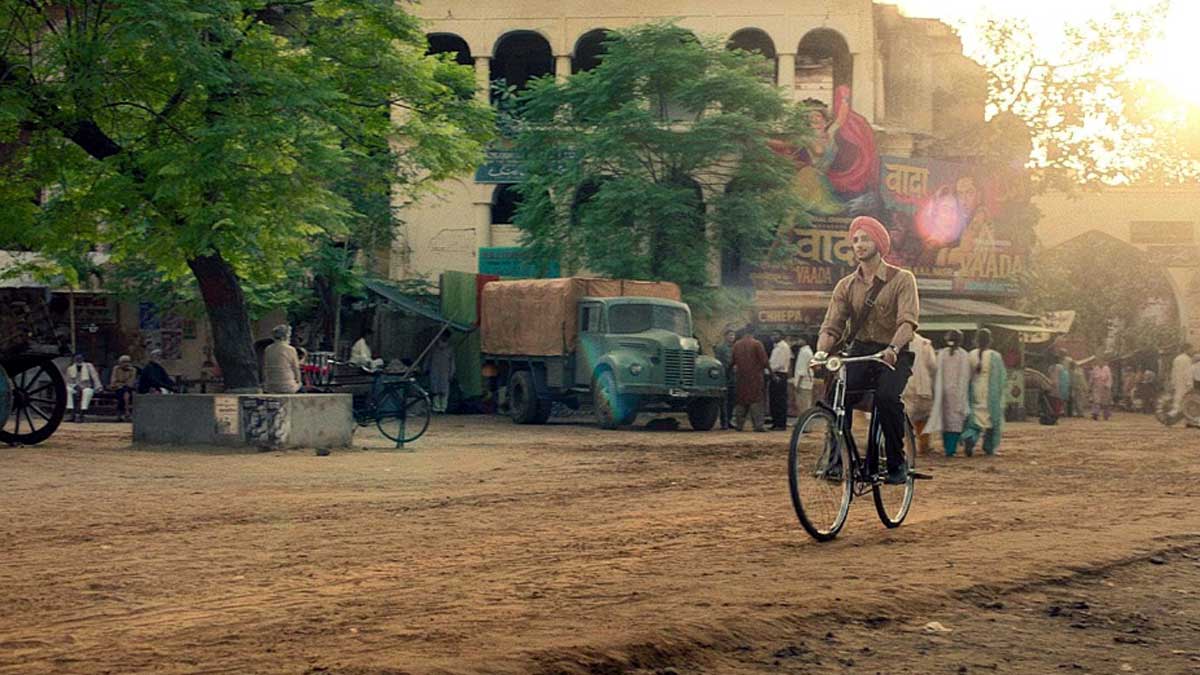
Some films hold the audience with their story, presentation and technical brilliance, while also leaving behind a nagging question: could the film have been far more impactful if different actors had been chosen for some of its characters? 'Main Wapas Aaunga' is one such film. It has a strong story, superb editing and several impressive acting moments, but its casting seems to limit the film's potential in several places.
The casting becomes a point of debate because a subject of such magnitude sometimes demands an equally commanding presence on the big screen. Naseeruddin Shah brings his familiar gravitas and acting prowess to the film. He is an actor whose very presence gives weight to a scene. Yet, that is precisely what raises an interesting question about the film's casting. What if Amitabh Bachchan had been cast in place of Naseeruddin Shah? Would the film's impact not have been broader? Amitabh Bachchan's voice, the pain in his voice, his personality and his screen presence could have taken the emotional and historical dimensions of the story to another level.
Also read: विभाजन की पीड़ा के बीच चुभता है कास्टिंग का कांटा
Similarly, imagine Ranbir Kapoor in place of Diljit Dosanjh. The emotional world of the film's young protagonist might perhaps have acquired greater depth. There must have been reasons behind the casting choices, but surely budget could not have been one of them.
It is possible that stronger casting could have enhanced the film's commercial appeal, added greater star value to the characters and taken the story to a wider audience. However, it is equally possible that the presence of bigger stars might have overshadowed the film's sensitivity. Therefore, the question is not simply about “who is the better actor?” but rather “who is better suited to this particular story?”
This comparison is not intended to undermine the abilities of any actor. Rather, it is about examining the relationship between what a film requires and the screen image of the actor chosen for the role. Good casting is not merely about selecting a good actor; it is also the art of putting the right actor in the right role. What was going through casting director Mukesh Chhabra's mind when these choices were made is difficult to know.
Still, Vedang Raina displays the ease and promise that could prepare a young actor for a long journey ahead. He may not appear completely mature in every scene, but his potential is clearly visible. Sarvari, too, makes an impact in several scenes and fits her character convincingly.
The real strength of the film, however, lies in its story. As the film progresses, the tragedy of Partition ceases to remain merely a historical event and gradually emerges as a story of personal suffering and human displacement. Many films have been made about Partition before, but what sets this film apart is its attempt not to view the tragedy merely through the lens of a major political upheaval. Instead, it tries to capture the fear, separation, longing to return and the memories buried within that tragedy.
The way the film moves from the 'present' to the 'past' and then from the 'past' back to the 'present' keeps the audience connected to these two timelines. The editing does not remain merely a technical process of putting scenes together; it becomes an important storytelling device in itself. This is why Aarti Bajaj's editing deserves special praise. Had the movement between the past and present been even slightly uneven, the narrative could easily have become confusing. But the film largely succeeds in maintaining this balance. The editing never makes the viewer feel that they are watching two separate stories unfolding in two different periods; instead, the two timelines gradually become part of the same emotional experience.
Bringing the horrors of Partition to the screen is not an easy task. There is a fine line between emotional intensity and emotional manipulation. When the film manages to maintain that balance, it leaves a deep impact. In some scenes, history ceases to be something found in textbooks and becomes a matter of personal memory and human pain. That is one of the film's strongest aspects.
The film’s story had ample scope for a couple of melodious songs, but AR Rahman couldn’t create even one memorable number.
Overall, 'Main Wapas Aaunga' is a film whose story and technical execution appear considerably stronger. Above all, its attempt to make the tragedy of Partition felt through the movement between the present and the past gives the film a strong emotional foundation.
Related Items
From 'Beacons' to 'Landmarks', India’s changing ‘Lighthouse’ story…
Kishore’s voice and the story of ‘Sargam’ in ‘Pag Ghungroo Baandh’
When a classical melody wove an immortal love story on screen…