
 Brij Khandelwal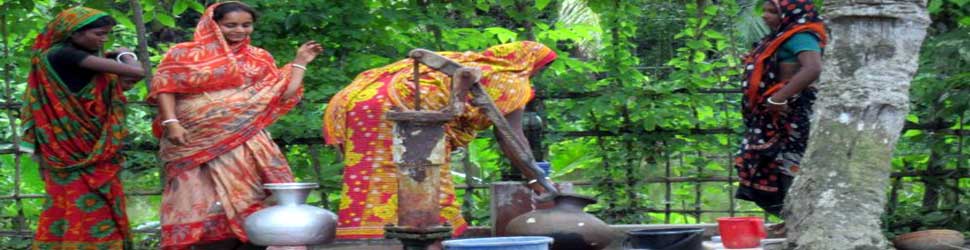
One morning, the tap will open… and nothing will come out. No warning. No apology. Just a hollow cough of air. That day has a name. Day Zero. And, don’t be fooled; it isn’t a dystopian story anymore. It is quietly circling India.
We still turn the tap and breathe easy. But beneath our feet? Silence. Cracks. A slow theft of the future. Are we truly a land of rivers? Or just living a convenient illusion? We worship water. Then we poison it. What kind of devotion is this? India stands at the edge of a water cliff. Not tomorrow. Today. Right now. Look at one side of the story. The Jal Jeevan Mission. A remarkable push.
Read in Hindi: प्यासा भारत, सूखती नदियां; ‘डे ज़ीरो’ अब कहानी नहीं, दस्तक है…
In 2019, just 17 per cent of rural homes had tap water. Today, over 81 per cent. Nearly 158 million families connected. A big win. Proof that intent can deliver. Now flip the coin.
Cities are thirsty. Fields are cracking. And Day Zero, when taps run dry, is no longer a distant headline. Bengaluru. Chennai. Delhi. Hyderabad. These are not exceptions. They are warnings.
NITI Aayog spells it out. By 2030, demand will outstrip supply. 820 million people at risk. By 2050, per capita water availability will fall to 1,140 cubic meters. The line of absolute scarcity.
The cost? Up to six per cent of GDP. So what are cities doing? Firefighting. Patchwork fixes. Pipelines here. Tankers there. Desalination somewhere else. But the real drama is underground. Groundwater. Our silent lifeline. Our most abused reserve.
The Ministry of Jal Shakti’s 2025 report claims improvement. Over-exploited zones have decreased from 17 per cent to 10.8 per cent. Sounds comforting. But half-truths are dangerous.
Over 730 regions still sit in the ‘red zone’. India extracts 247 billion cubic meters of groundwater every year. Far beyond safe limits. More than 60 per cent overdrawn. Some states have crossed all red lines. Punjab at 156 per cent extraction. Rajasthan 147 per cent. Haryana, Karnataka, and western Uttar Pradesh have the same script.
Like a man withdrawing only the principal from his bank account. No interest. No balance. Just an empty vault waiting to happen. Experts warn of a tipping point. Cross it, and recovery becomes a myth.
Meanwhile, the climate has turned unpredictable. Rising heat. Faster evaporation. The monsoon has lost its rhythm. Floods one year. Droughts are next. Nature’s recharge system is breaking down. And the cities? They killed their own safety nets. Lakes. Ponds. Wetlands. Once the lungs of urban India.
Between 1973 and 2016, Bengaluru lost 79 per cent of its water bodies. Punjab buried half of its traditional sources under concrete and cash crops. These weren’t ornaments. They were lifelines. They absorbed water. Recharged aquifers. Prevented floods. Cooled cities. We erased them. Now we chase water tankers like refugees.
It’s April 2026. Summer hasn’t even peaked. Yet only 56.7 per cent of water remains in 166 major reservoirs. In southern and central India, many dams are already below half capacity.
The message is loud. As heat rises, the crisis will deepen. Farmers will suffer. Crops will fail. Factories will slow. And in cities, queues for water will grow longer. A water crisis doesn’t come alone. It brings hunger with it.
India feeds 18 per cent of the world’s population. With just four per cent of its water resources. A fragile balance. Now cracking. Estimates are alarming. Rising temperatures could slash wheat yields by up to 50 per cent. Rice by 40 per cent.
Think about it. No water. No irrigation. No irrigation. No food. No food means inflation, hunger, and malnutrition. And what little water do we have? Often unsafe. Nearly 70 per cent of groundwater is contaminated with arsenic, fluoride, and bacteria. Diarrhea. Cholera. Typhoid. Millions fall ill every year. Thousands die. So even survival comes with risk. What is the way out?
Rain. Yes. But not as a slogan. As policy. Rainwater harvesting. Everywhere. Rooftops. Streets. Communities. Recharge pits. Revived wells. Restored stepwells. Living ponds. Chennai showed it works. Law enforced. Systems built. Results visible. Now replicate it. Every city. Every building. No exceptions.
Protect lakes. Save wetlands. Regulate groundwater like a precious currency. It won’t be easy. But it is still possible. The picture is clear. Falling groundwater. Shrinking reservoirs. Vanishing lakes. Uncertain climate. Threatened food security.
The warnings are not new. Only the urgency is. Time is slipping. The question is blunt. Do we have the will? Governments must rethink priorities. Cities must look below the surface.
Laws must move from paper to practice. And we? We must stop treating water as infinite. Because of that flowing tap? It lies. The Jal Jeevan Mission proved that change is possible. Now India needs an Urban Water Revolution. Or else Day Zero will not remain a headline. It will become a habit.
Water is not just a resource. It is the pulse of civilisation. Save it. Let it flow. Or be ready for a question from the future: “Where did the rivers go?” And we will stand there… speechless.
Related Items
From 'Beacons' to 'Landmarks', India’s changing ‘Lighthouse’ story…
Kishore’s voice and the story of ‘Sargam’ in ‘Pag Ghungroo Baandh’
When a classical melody wove an immortal love story on screen…