
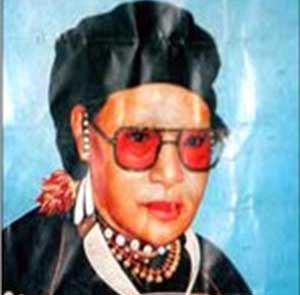
In the beginning, Rani Gaidinliu was a Naga spiritual leader as a follower of her cousin Haipou Jadonang. At the age of 13, she joined the Heraka religious movement. Herakareformist religion recognises supremacy of one God who is behind creation of nature be it air, water or earth. The movement later turned into a political movement seeking to drive out the British from Manipur and the surrounding Naga areas. Within the Heraka cult, she came to be considered an incarnation of a goddess.
The reformist religious movement steadfastly turned out to be a political movement against the British Raj. Sensing this, the British first caught Haipou Jadonang and then hanged him to death on charges of treason in 1931. Rani not to be cowed down by this heinous act took over the leadership. She urged the people not to pay taxes and not to work for the British which were the practices of the freedom struggle at that time. She even went underground and led many attacks on the British administration.
The British authorities launched a manhunt for her so much so that monetary awards were put on her head for information to facilitate her arrest. This included a declaration that any villager providing information on her whereabouts will get a 10 years tax break, a great offer that time. But she continued to fight the Assam Rifles which was under the British administration then in armed conflicts in the region.
In October 1932, Gaidinliu moved to the Pulomi village, where her followers started building a wooden fortress. While the fortress was under construction, an Assam Rifles contingent launched a surprise attack on her and Gaidinliu, along with her followers, was arrested.
In December 1932, her followers from the Leng and the Bopungwemi villages murdered a Kuki chowkidar (watchman) of the Lakema Inspection Bungalow in the Naga Hills, suspecting him to be the informer who led to her arrest. Gaidinliu was taken to Imphal, where she was convicted on the charges of murder and abetment of murder after a 10-month trial. She was sentenced to life imprisonment by the Political Agent's Court for abetment of murder. Most of her associates were either executed or jailed.
From 1933 to 1947 Rani stayed in Gauwhati, Shillong, Aizawl and Tura jails. Many rebels proclaimed her and Jadonang to be their inspiration in refusing to pay taxes to the British.
Jawaharlal Nehru met her at Shillong Jail in 1937, and promised to pursue her release. In a statement, Nehru described Gaidinliu as a daughter of the hills and he gave her the title 'Rani' or Queen of her people. Nehru wrote to the British MP Lady Astor to do something for the release of Rani Gaidinliu but the Secretary of State for India rejected her request stating that trouble may rise again if Rani was released.
After the Interim Government of India was set up in 1946, Rani Gaidinliu was released on Prime Minister Nehru's orders from Tura jail, having spent 14 years in various prisons in 1947. Even after release she continued to work for the upliftment of her people after her release. She stayed at Vimrap village of Tuensang with her younger brother Marang till 1952. That year, she was finally allowed to move back to her native village of Longkao. In 1953, Prime Minister Nehru visited Imphal where Rani Gaidinliu met and conveyed to him the gratitude and goodwill of her people. Later she met Nehru in Delhi to discuss the development and welfare of Zeliangrong people.
Gaidinliu was opposed to Naga insurgency who advocated secessionism then from India. Instead, she campaigned for a separate Zeliangrong territory within the Union of India. The rebel Naga leaders criticized Gaidinliu's movement for the integration of Zeliangrong tribes under one administrative unit. They were also opposed to her working for the revival of the traditional Naga religion of animism or Heraka.
Gaidinliu's struggle did not end with India getting freedom. In order to defend the Heraka culture and to strengthen her position, she went underground in 1960 again. She organized a private army of about a thousand men equipped rifles to defend and press for her demand for a single Zeliangrong district.
In response to Phizo's declaration of the "Naga Federal Government", she set up her own quasi-administration named the "Zeliangrong Government of Rani Party". In 1964, the overground Zeliangrong leaders in consultation with underground leaders led by Rani Gaidinliu, demanded "a separate Zeliangrong Administrative Unit or Political Unit" within the Union of India.
In 1966, after six years of hard underground life in old age, under an agreement with the Government of India, Rani Gaidinliu came out from her jungle hideout to work for the betterment of her people through peaceful, democratic and non-violent means. She went to Kohima in January 1966, and met the Prime Minister Lal Bahadur Shastri in Delhi a month after, demanding the creation of a separate Zeliangrong administrative unit. On 24 September, 320 of her followers reached an understanding with the Governmentand some of them were absorbed into the Nagaland Armed Police.
During her stay at Kohima she was conferred "Tamrapatra Freedom Fighter Award" in 1972, the Padma Bhushan (1982) and the Vivekananda Seva Award (1983). She was also conferred the Birsa Munda award posthumously and Government issued a postal stamp in her honour in 1996. The Government instituted Stree Shakti Puruskar in honour of five prominent Indians, one of them being Ranigaidinliu. So much so an in shore patrol vessel named after her was launched by the Hindustan Shipyard at Visakhapatnam in 2010.
In 1991, Gaidinliu returned to her birthplace Longkao, where she died on 17 February 1993 at the age of 78. Then Governor of Manipur, Chintamani Panigrahi, the Home Secretary of Nagaland, officials from Manipur and many people from all parts of the North Eastern region attended her funeral at her native village. In Imphal, the Chief Minister of Manipur RK Dorendro Singh, Deputy Chief Minister, Rishang Keishing and others paid floral tributes and a general holiday was declared by the State Government.
Rani Gaidinliu continues to be remembered in the annals of history as the brave freedom fighter from the North-east.
In the commemorative function held in New Delhi recently, Prime Minister Narendra Modi released two coins of ₹100/- and ₹5/- denomination in her memory. The commemorative function saw a galaxy of national leaders and hundreds of her admirers. Besides several cabinet ministers, Chief Ministers of both Manipur and Nagaland were present. The DoNER Ministry has also announced setting up of a library cum museum at Kohima on Rani’s life and work at a cost of one crore rupees.
(Author is a senior journalist)
Related Items
Rani Laxmi Bai, The warrior queen of Jhansi…
Sharan Rani, the ‘First Woman Sarod Player’
Rani Chennamma: First Indian Ruler To Lead Armed Rebellion Against British