
 Brij Khandelwal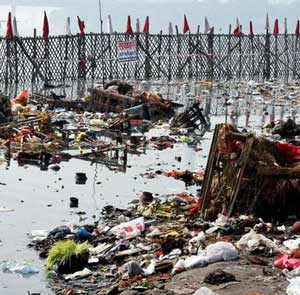
Agra/Vrindavan: The heavily polluted and dry Yamuna, the lifeline of the Braj Mandal, has caused deep anguish and concern among Sri Krishna devotees and the green activists in the Taj city.
“When the UP chief minister Yogi Adityanath visited Mathura to announce a slew of development projects, on Wednesday, we were hoping that he would also respond to persistent demands to rejuvenate the dying Yamuna, but he didn’t touch the subject,” lamented Jagan Nath Poddar, convener of Braj Vrindavan Heritage Alliance.
The Pandas of Mathura have expressed their anger and frustration through social media and several videos that show the pathetic state of the river Yamuna is in. The popular ghats are without water and heaps of filthy slush emit stinking odor. “The pilgrims who visit the holy ghats can not take achman, nor bath,” says Vishram Ghat panda Kishan Choubey.
In Gokul, the holy ghats have only stink and slush. Boating in Vrindavan and Gokul has become difficult, as the river bed is becoming dry, each day.
In the Taj city, the river Yamuna is reduced to a vast sewage canal. “What is flowing down is not water but highly toxic and polluted waste, industrial effluents, and sewage,” says environmentalist Devashish Bhattacharya.
The River Connect Campaign team members have sent a charter of demands, both to the prime minister and the UP Chief minister. The local MLAs and MPs have also been informed of the sorry plight of the river.
Green activists are concerned that the toxic flow of the river could be damaging the foundation of the Taj Mahal and other Mughal monuments on the river banks.
The activists have demanded thorough dredging of the river bed, and immediate release of freshwater from upstream barrages.
“It is sad and shocking that while work on the Agra Metro project is continuing full steam, not one baby step has been taken to construct a barrage on the Yamuna, downstream of the Taj Mahal, as announced repeatedly. The elected representatives do not listen to us, and the Archaeological Survey of India staffers are totally indifferent and pretend as if a river never existed at the rear of the Taj Mahal,” said Pradip, president of Agra Eco Club.
Recent studies have pointed out that the release of noxious gases from the polluted water could be affecting the surface of the Taj Mahal, as has been suspected for decades.
Mughal emperor Shah Jahan built the Taj Mahal at the present site because of the beauty of the river and the vast reserve of fresh water at the rear of the monument. The river flowed majestically touching the wall of the structure, providing it support and safety. Unfortunately, says Surendra Sharma, president of the Braj Mandal Heritage Conservation Society, the mandarins in the ASI are insanely immune to the threats and challenges that a dry and polluted Yamuna poses to the safety of the Taj Mahal, the Agra Fort, Etmauddaula, Babar’s Aram Bagh, Chini ka Roza, Mehtab Bagh, and other structures.
Both the prime minister and transport minister Nitin Gadkari, had in 2014 and 2015, had promised appropriate steps to save the Yamuna and fill it with water. Gadkari had in fact promised to start a ferry service between Delhi and Agra, but both have now conveniently forgotten their promises, says Pandit Jugal Kishore, of the River Connect Campaign.
With assembly elections round the bend, Yamuna could become a major emotional issue that BJP contestants could find hard to convince and explain their inaction to the people in Mathura, Vrindavan, and Agra, warns Vedic Sutram president Pramod Gautam.
Related Items
Yamuna carries sewage, Government watches in silence
10 countries, 17 destinations and one Yamuna in the heart…
Land of Lord Krishna crying for every drop of water