
 Brij Khandelwal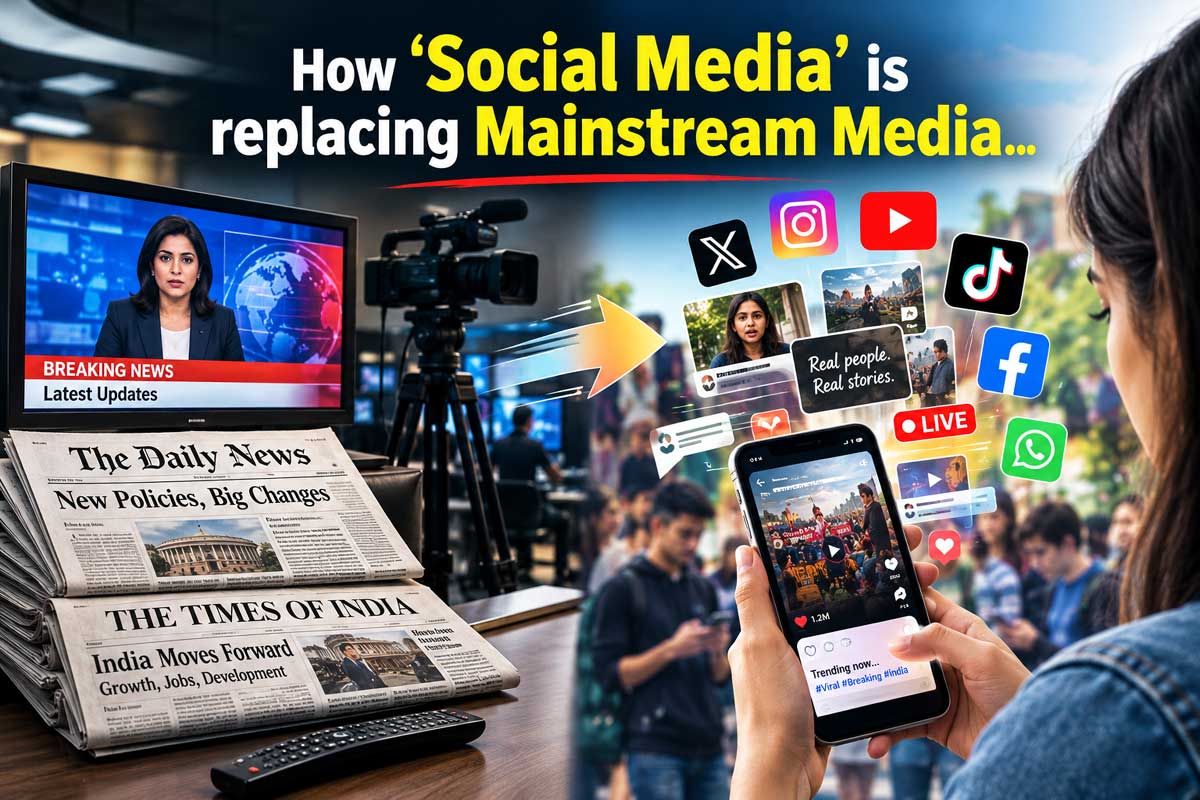
The biggest story in India is not what television debates shout about every night. It is what they carefully avoid.
A democracy suffers not only when governments censor the press. It also suffers when journalists stop asking difficult questions. Much of India’s mainstream media has slowly given up its role as a watchdog. Instead of challenging those in power, it often echoes them.
The media was once called the ‘Fourth Estate’. It exposed corruption, questioned governments and defended ordinary citizens. Today, much of it appears more interested in protecting the establishment than holding it accountable. The watchdog has become the lapdog.
This did not happen overnight. Ownership of major media houses is now concentrated in large corporate groups with business interests beyond journalism. News has become a business, and editorial independence often takes second place to profits and political connections. Advertising has deepened the problem. Most media organisations depend on corporate and government advertisements. When your income comes from the powerful, investigating them becomes risky. Silence pays. Tough questions do not.
Public commentator Paras Nath Choudhary says, "Television debates have also become predictable. The same politicians, spokespersons and familiar faces dominate every discussion. Farmers, workers, teachers, researchers and ordinary citizens rarely get heard. The powerful set the agenda while everyone else watches.
Many journalists who refuse to follow the script allegedly face lawsuits, online abuse, financial pressure and organised trolling. Fear creates self-censorship. You no longer need official censorship when journalists begin censoring themselves."
Prime-time television increasingly creates outrage instead of understanding. Loud arguments replace reporting. Slogans replace facts. Celebrity gossip often gets more attention than unemployment, inflation, education, public health, the environment and farmers’ problems, which disappear behind political theatre.
Media scholars Edward S Herman and Noam Chomsky explained this long ago in Manufacturing Consent. They argued that ownership, advertising, sourcing and political influence shape what people see and what they never get to see. The result is not always fake news. It is selective news.
The popular phrase ‘godi media’ reflects this growing public distrust. Whether or not one agrees with the label, millions of Indians no longer believe television news speaks for them. Ironically, many media organisations now seem to speak more to governments, advertisers and investors than to citizens. Their biggest crisis is no longer falling ratings. It is falling credibility. Once trust disappears, it is difficult to win back. As mainstream media lost public confidence, social media stepped into the gap.
The recent and ongoing Jantar Mantar protests by the Cockroach Janta Party showed this dramatic shift. What began in mid-May as a satirical online campaign, sparked by a controversial courtroom remark by the Chief Justice of India comparing certain unemployed and activist youth to ‘cockroaches’, quickly grew into a national youth movement powered almost entirely by social media. It focused on exam irregularities, including the NEET-UG paper leak, demands for accountability from the education system, and the resignation of Education Minister Dharmendra Pradhan. Young people did not wait for newspapers or television channels to tell their story. They told it themselves.
Instagram Reels, YouTube Shorts and X carried speeches, memes, videos and protest slogans across the country within minutes. Anyone with a mobile phone could record events, expose police action, create satire or broadcast a speech to millions. The movement spread without the permission of editors or television producers. Its humour travelled faster than traditional journalism. Funny memes, sarcastic posters and self-mocking ‘cockroach’ slogans reached audiences that serious editorials never could. Founder Abhijeet Dipke’s return from the US and later participation by figures such as activist Sonam Wangchuk further amplified the on-ground presence at Jantar Mantar.
Social media is not perfect. Algorithms reward outrage, rumours spread quickly and fact-checking often lags. Yet it has opened the public square to millions who once had no voice.
The change is now impossible to reverse. India’s Gen Z no longer waits for the 9 pm television debate or tomorrow’s newspaper. They create, share and challenge stories in real time.
Mainstream media has become increasingly marginalised among young audiences. Social media is no longer just an alternative platform. It has become the main stage where politics, public opinion and protest now unfold.
A free press should question the powerful, not applaud them. If mainstream media refuses to reclaim that role, citizens will continue to build new platforms where their voices cannot be ignored.
Related Items
From 'Beacons' to 'Landmarks', India’s changing ‘Lighthouse’ story…
Kishore’s voice and the story of ‘Sargam’ in ‘Pag Ghungroo Baandh’
When a classical melody wove an immortal love story on screen…