
 Brij Khandelwal
What if a foreign company could disrupt India’s military communications during a war? What if a few clicks thousands of miles away could affect our drones, weaken our defences and give an enemy the upper hand? Should India throw open its doors to Elon Musk without asking some tough questions? Can the glitter of high-speed internet blind us to the dangers of handing over a vital national lifeline to a private company?
Ukraine has delivered a powerful lesson. Depending too heavily on a foreign satellite network can become a serious national security risk. Reports of restrictions affecting military-grade Starshield services in October this year have raised fresh concerns about the vulnerability of military communications. India's cautious approach to Starlink may have its critics, but perhaps New Delhi deserves credit for refusing to rush headlong into an uncertain deal.
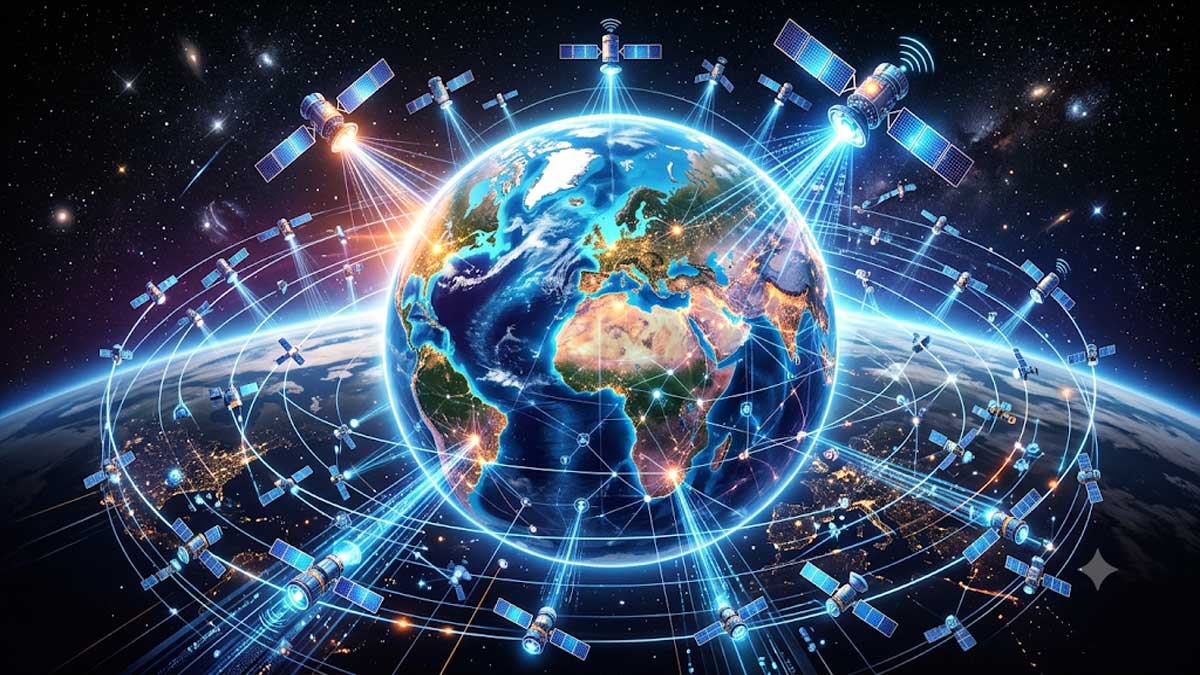
Sometimes, a delay is not a failure. It is a sign of wisdom. Starlink, operated by Elon Musk's SpaceX, is undoubtedly a remarkable technological achievement. Thousands of satellites orbiting relatively close to Earth provide internet connectivity in remote areas. Places beyond the reach of conventional mobile networks can suddenly join the digital world.
For villages, mountains, islands and isolated border settlements, this technology could prove invaluable. It can support education, business, emergency services and disaster relief. During natural calamities, when conventional communication systems collapse, satellite internet can become a lifeline.
But every shiny new technology comes with a price. Sometimes, the real cost becomes visible only when the stakes are dangerously high. European affairs expert Prof PN Chaudhary points out that Starlink played an important role during the Ukraine war. Ukrainian forces used the network to communicate, coordinate logistics and operate drones amid Russian attacks. However, this dependence has also exposed a serious vulnerability.
Reports emerging recently indicated that speed-related restrictions affecting Ukraine's military communications through Starshield created difficulties for certain high-speed drones. Some operations aimed at countering Russian drones and other aerial threats were reportedly affected. Later reports indicated that communications had been restored.
The precise circumstances and responsibility for these restrictions remain disputed. Musk has said that Starshield, designed for military use, operates under the control of the US government, with American officials making decisions about its operation. But the larger issue goes beyond Musk, Washington or the precise details of the Ukrainian episode.
Can a country truly remain independent if its military depends on a communication network controlled by a foreign company or subject to another government's decisions? That is the million-dollar question.
In wartime, even a brief communication breakdown can have devastating consequences. A drone may lose contact with its operator. A mission may fail. Soldiers may lose coordination, and an adversary may gain a crucial advantage. A technology that proves invaluable during normal times can suddenly become a weak link during a crisis.
Private companies may operate satellite networks, but they do not function in a political vacuum. Their services are subject to national laws, government policies and security restrictions. Coverage can be limited, access can be suspended, and operating conditions can change.
Allies may cooperate today, but tomorrow's interests may differ. International friendships are important, but national interests ultimately call the shots. India must understand this reality.
Imagine a serious military confrontation with China or Pakistan. What happens if a foreign provider restricts satellite services at the wrong moment? What if a diplomatic dispute affects access to a crucial communication network? Can India afford to leave its military communications at the mercy of decisions made thousands of kilometres away? This is not about hostility towards America or mistrust of every foreign company. It is about recognising that national security cannot rest on goodwill alone.
A retired military officer recalls that the 1999 Kargil War exposed limitations in India's access to foreign satellite imagery and related capabilities. Such experiences reinforced the need to develop indigenous technological resources instead of depending entirely on others.
India subsequently strengthened its satellite and navigation capabilities. Its homegrown navigation system, NavIC, represents an important step towards greater technological independence. The same principle must guide India's approach to Starlink.
Of course, India should welcome better internet connectivity. People living in remote villages and border regions deserve the same opportunities as those in metropolitan cities. Businesses need reliable connections, students need access to knowledge, and emergency responders need dependable communication.
Starlink could help bridge the digital divide and introduce greater competition into India's internet market. But enthusiasm must not become blind faith.
India needs clear rules governing satellite internet services, data protection, security compliance and government oversight. Establishing gateways on Indian soil may improve regulatory control, but it does not automatically give India command over satellites orbiting in space.
The distinction is crucial. The connection may reach Indian territory, but if someone else can decide when it works and when it stops, our digital independence remains incomplete.
Technology expert TP Srivastava argues that India need not shut the door on Starlink. Instead, it should proceed carefully, allowing foreign companies to operate within clearly defined rules while strengthening domestic capabilities.
That sounds like a sensible middle path. India should not surrender strategic independence in the name of technological progress. The government must avoid excessive dependence on any single provider. Fibre-optic networks, mobile broadband and indigenous satellite services need continued investment. Secure military communications and independent drone-control systems deserve special priority.
Most importantly, India must develop reliable alternatives that remain operational even if a foreign provider suddenly withdraws or restricts its services.
A country with multiple options is better prepared for a crisis than one dependent on a single technological lifeline.
Ukraine's experience offers a timely reminder. Technology can multiply a nation's strength, but excessive dependence can turn that strength into a vulnerability.
After all, a slower internet connection can be tolerated for a while. A temporary digital blackout may cause inconvenience and economic losses.
But when a nation's security depends on somebody else's switch, the price of misplaced trust can be far too high.
Related Items
Emerging pillar of India’s clean energy transition
India's new-age space technologies on next level…
Western Media is ‘tough’ on India but ‘soft’ on China!