
 Brij Khandelwal
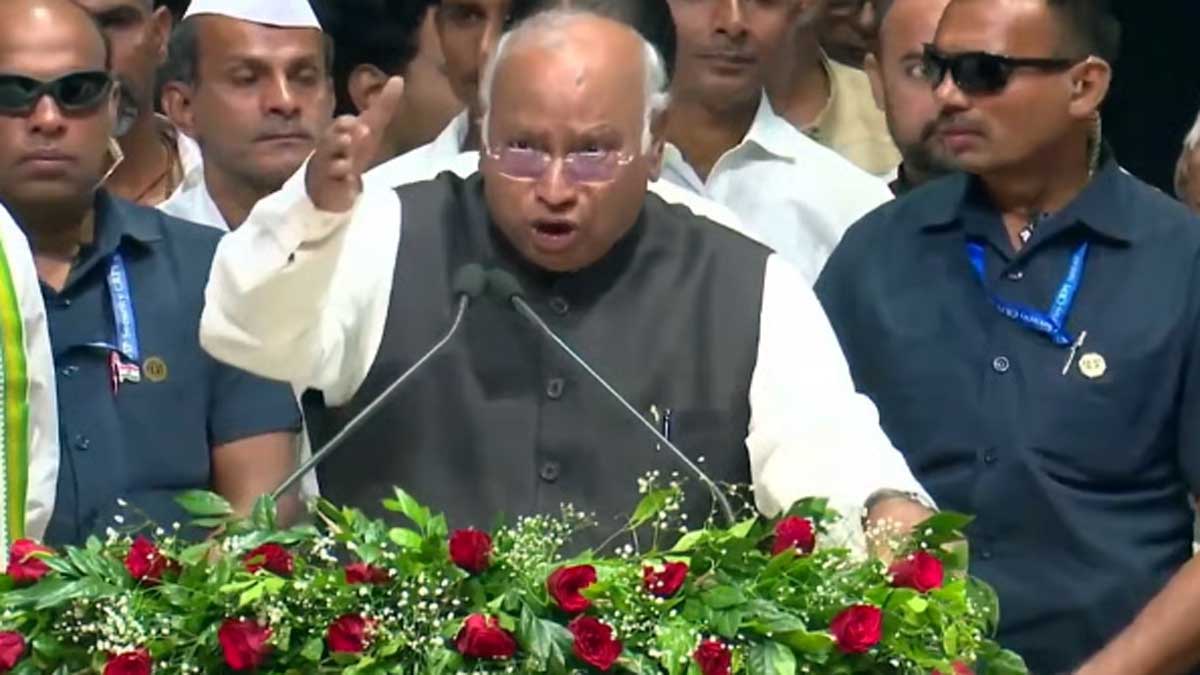
What has happened to our political leaders? Democracy demands questions, arguments and accountability. Governments must face scrutiny, and opposition parties must challenge those in power.
But look at the latest Indian political circus! Issues have vanished, policies have taken a back seat, and personal attacks are enjoying their fifteen minutes of fame. Parliament and election rallies increasingly resemble wrestling arenas. The wrestlers wear political badges, television cameras provide the entertainment, and the public is expected to cheer from the sidelines.
The latest war of words between Congress president Mallikarjun Kharge and Prime Minister Narendra Modi offers another glimpse into this disturbing decline. At a rally in Patna on October 25, Kharge reportedly declared, “Even Modi’s father will go,” responding to a remark that Modi would never relinquish power. The political temperature shot up instantly. Home Minister Amit Shah condemned the remark as a violation of democratic decorum. BJP leaders compared the language to that of hooligans.
Fair enough, but here is the million-dollar question: Was dragging a deceased father into the argument really necessary to explain that power is temporary? Has the shortage of political arguments become so severe that even dead relatives must be summoned to election rallies?
Consider the controversy surrounding remarks about Modi's late mother, Heeraben. During the 2025 Bihar election campaign, objectionable language directed at Modi and his mother was allegedly used at platforms associated with the Congress-RJD Voter Rights March. The controversy triggered protests, explanations and political counterattacks.
But will insulting a leader's mother create jobs for unemployed youngsters? Will it bring down inflation or improve farmers' incomes? A mother's humiliation is no substitute for accountability. It is merely an attempt to collect applause by exploiting emotions.
Oppose the leader, by all means. But leave the family out of the election poster. Then comes the familiar label, “merchant of death,” once used against Modi. Such dramatic expressions make excellent television headlines and travel at lightning speed across social media. Supporters cheer, opponents rage, and political entertainers collect their rewards.
But where is the serious debate on national security, economic policy and government decisions? Declaring somebody a villain is easy. Presenting a better policy is hard work. Insults are free; credible alternatives require homework!
Another favourite has been the sarcastic reference to Modi as a chaiwala. Since when did selling tea and earning an honest living become a national embarrassment? Millions of Indians run tea stalls, push carts and sweat through long working days to feed their families.
Mocking their struggle reflects social arrogance, not political wisdom. Criticise the Prime Minister's performance, certainly. Question employment figures, inflation and development claims. But turning his humble beginnings into an insult is hardly a shining example of democratic debate.
Rahul Gandhi, too, has contributed to the theatre of political mockery. In August, he reportedly poked fun at Modi's diplomatic style, theatrically imitating his embraces with foreign leaders.
Political satire has its place. Indeed, democracy without humour would be as dull as Parliament without microphones. But satire should expose policy failures and question results. Reducing foreign policy to a series of hugs is like analysing a cricket match by examining the players' jerseys.
The Leader of the Opposition must ask tough questions. But turning every serious issue into a comedy show does little to strengthen accountability. People need results, not merely clever punchlines.
Take the opposition's allegations of ‘vote theft’. Questions about electoral rolls, suspicious addresses, duplicate entries and bulk registrations deserve proper investigation. Protecting electoral integrity is a democratic responsibility.
But serious allegations require solid evidence. Suspicion alone does not prove conspiracy. Complaints must be investigated, documents examined and responsible institutions made to answer. Election reforms cannot be achieved through slogans. Public trust comes from facts, not the decibel level of a microphone.
The BJP cannot claim a spotless record either. Who popularised the mocking label “Pappu” for Rahul Gandhi? Political name-calling, personal taunts and controversies surrounding institutions have also damaged the democratic atmosphere.
Those in power carry greater responsibility, not less. Accountability begins with the willingness to hear criticism without reaching for the political boxing gloves.
Social activist Padmini Iyer raises an important question, “Why do unemployment, Centre-state relations, institutional independence and social harmony receive so little serious discussion?” Every day brings a fresh insult for television headlines. Meanwhile, ordinary citizens return to the same queues, carrying the same worries.
Bihar political commentator TP Srivastava makes a relevant distinction. Disagreement is the strength of a free society; contempt is its poison. When leaders drag families into political fights, ridicule personal backgrounds and make sweeping electoral allegations without adequate proof, reasoned debate becomes the casualty.
Democracy is not a wrestling tournament where pinning an opponent to the ground guarantees victory. Real victory comes when people's lives improve.
The opposition must question the government. The government must provide answers. Both must support their claims with evidence. That is how democratic institutions earn public trust.
Public commentator Prof Paras Nath Chaudhary puts it bluntly, “Voters have not bought tickets to watch a political circus. They want jobs, decent roads, clean air, better hospitals and a secure future. They expect a contest of policies inside Parliament, not an exhibition of oversized egos.”
And that brings us to the final question: Will democracy prevail, or will the verbal wrestling match continue?
If our leaders refuse to put a leash on their tongues, the cheering crowds may keep growing. Television studios may enjoy record ratings, and social media influencers may celebrate another viral clip.
But when the lights go out and the cameras move on, the real losers will be the people. The nation needs governance, not verbal gymnastics; solutions, not slogans; and leaders with ideas, not merely loud mouths.
Related Items
The law that gave the right to ask questions…
Menopause can drain women leaders yet deepen their empathy
'GDN' documents the industrial and political challenges of GD Naidu's era