
The BRICS nations have been growing and China and India today are consuming higher levels of fuel to sustain their growing economies. The overall energy requirement in India is likely to increase from 549 Million tonne oil equivalent (mtoe) in 2011-12 to 1433 mtoe by 2031-32, a 2.6 fold increase.
The transport sector which currently consumes 86 mtoe which is about 16% of the energy consumption is likely to increase to 360 mtoe by 2031-32 and would be 25% of the total energy consumption. The transport sector would grow by 4.2 times. The transport sector consumed 57% of the oil in 2011-12 and this would go up-to 73% by 2031-32 in the business as usual scenario. About 97% of the fuel basket for transportation is based on petroleum and the balance 3% is equally shared by CNG, bio-fuels and electricity.
As per the current trends this mix would continue even in 2031-32. If we look at the consumption pattern in the transport sector, the road vehicles consume 93% of the oil, 3% each is consumed by Railways and Airways and the balance 1% by waterways.
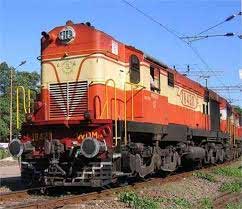
Indian Railways (IR) today has the largest passenger operation in the world and carries about 23 million passengers every day. Recently it has also entered the billion tonne club and is expected to carry more than 1100 million tonne of freight traffic in the current year. For providing transport services Indian Railways consumes 2.7 billion liters of high speed diesel and 13.9 billion units of electricity. Most of the electricity consumed is also produced using fossil fuels like coal, diesel etc. Higher use of fossil fuels means higher carbon foot prints in transpiration. It is in this context that IR has envisaged in its vision 2020 to ensure that 10% of its energy needs are met through renewable. Bio-diesel is a substitute for diesel and can be sourced from various raw materials. It is green and renewable and can be blended with diesel and used without any modification to the locomotives. Use of B5 blend translates into a requirement of about 0.13 billion litres. However, volatility of the oil market also impacts the demand/supply of bio-diesel since it is a substitute for diesel.
In this context a bio-fuels 2014 conference which was recently held in Delhi on 5th November, 2014 was relevant for the transport sector. The theme of the conference was “Energize Growth & Business opportunities in Biodiesel Sector in India”. It provided opportunity for policy makers, researchers, consultants, industry professionals, consumers, manufacturers and sellers from both private and public sector to interact and share their views on a common platform. The inaugural address was delivered by the Union Minister of Railways, The Union Minister for Shipping Road Transport and National Highways, Rural Development and Panchayati Raj the Minister of State for Railways and Dr. Suresh Prabhu, ex. Power Minister, Government Of India. The meeting was also attended by the Chairman, Railway Board, Member Staff/Member Electrical, Ministry of Railways and other senior officials. They stressed the importance of alternate fuels especially bio-fuels to reduce oil imports and carbon emissions.
Indian Railways has already conducted trials with 20% blending on diesel engine test bed at RDSO. Field trials have also been done with B5/B10 and many units like Shakurbasti, Kharagpur, Perambur etc. have manufactured bio-diesel using small plants of upto 2000 literes per day. Railways also tried to plant Jatropha trees along the tracks but were not very successful.
Issues of transportation, blending, storage and dispensing were deliberated during the conference. The manufacturers gave their prospective on raw material, bio-diesel plants and technology for production. Singapore based manufacturers JOil provided ideas on how to improve the yield and adopt best practices in production of seeds. Bio cube from Australia show cased their technology for off grid bio diesel production with zero discharge. The socio-economic impact of bio-diesel was also deliberated upon by looking at linking science, living hoods and polices for sustainable bio fuels. The conference tried to outline the road ahead for proliferation of bio fuel in the transport and Railway sector.
Railways being the single largest bulk consumer have to set an example in the use of green fuels for sustainable transportation. These efforts are essential as it is estimated that climate change mitigation and adaptation measures will cost around 5% of the world GDP and the developing countries would be worst affected.
(Author is Director E&R, Railway Board)
Related Items
An Indian traveller’s eye-opening lessons in the ‘Art of Living’
Are Indian borders just lines on a map!
How the 'Indian Solar Revolution' is transforming rural lives…