
 Samiksha Bharti News Service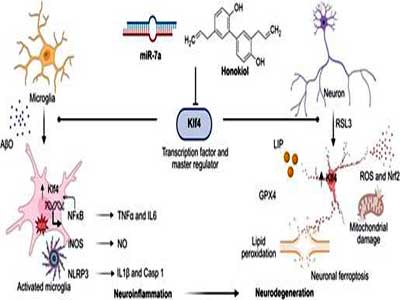
Alzheimer's Disease, which steals away mental faculties and debilitates to daily life of patients, may soon have a game-changing path for not just its treatment, but also a potential cure for this devastating condition.
The path involves a novel therapeutic target and treatment options based on RNA and small molecules, which could potentially accelerate the drug discovery process. Read in Hindi: अल्जाइमर रोग के संभावित उपचार की जागी नई उम्मीदें...!
Alzheimer’s disease is a debilitating condition affecting numerous people worldwide, with its prevalence expected to increase significantly in the future. It accounts for 70-80 per cent of dementia cases and is the 5th leading cause of death, posing a substantial socioeconomic burden on the healthcare sector and society. The disease is characterised by the accumulation of protein clumps in the brain, memory loss, and cognitive deficits.
Currently, there are very few therapeutics available in the market, most of which provide only temporary relief. Recently, a few antibody-based drugs have been approved, but they offer limited benefits to patients.
While the role of various proteins in the development and progression of AD has been well studied, the role of microRNAs, the discovery of which received the Nobel Prize in Physiology or Medicine last year, in AD is poorly understood.
Addressing this, researchers from Jawaharlal Nehru Centre for Advanced Scientific Research, an autonomous institute of the Department of Science and Technology, explored altered miRNAs in the AD brain and also probed the potential of miRNAs to be biomarkers for early, specific and accurate clinical diagnosis of AD. Since miRNAs are small non-coding RNAs, they are known to target multiple mRNAs to regulate pathways linked to health and diseases, as well as multiple disease pathologies linked to AD.
Madhu Ramesh and Prof Thimmaiah Govindaraju used a double transgenic AD mouse model to discover novel miRNAs involved in AD development and progression and identified various miRNAs that are altered in the AD brain compared to the normal brain, which could potentially trigger the disease.
The study published in NAR Molecular Medicine unveiled various miRNA-mRNA pathway networks altered in AD, which could potentially reveal various pathways to target for drug development.
They discovered a significant increase in miR-7a, which targets the protein Klf4, a master regulator of various gene expressions involved in AD. Their detailed study showed that the miR-7a-Klf4 axis regulates neuroinflammation, a major cause of AD pathology. This axis also regulates an iron-mediated neuronal cell death mechanism involved in AD called ferroptosis.
“The current study offers valuable insight into Alzheimer’s disease by uncovering the regulatory role of miR-7a in controlling neuroinflammation and ferroptosis via Klf4 targeting,” said Prof T Govindaraju, one of the researchers involved in the study. The researchers have developed a miRNA-based therapeutic that targets Klf4 to prevent neuroinflammation and ferroptosis.
They carefully modified miR-7a to synthesise a mimic that significantly silenced Klf4 levels and rescued disease pathologies. They used Honokiol, a small molecule and natural product for pharmacological modulation of the miR7a–Klf4 axis.
Honokiol is a natural product found in bark and seed cones of the Magnolia tree that targets Klf4 to stall neuroinflammation and ferroptotic cell death involved in AD. This demonstrates that the miR-7a-Klf4 axis is a novel target for AD and warrants further exploration to develop better therapeutics for the disease.
The research shows that miR-7a suppresses Klf4, alleviating neuronal damage by modulating inflammation and ferroptosis-related pathways. Targeting this axis with a blood–brain barrier-permeable compound like honokiol demonstrates therapeutic potential,” said Prof Gireesh Gangadharan, Department of Ageing Research, Manipal School of Life Sciences, Manipal Academy of Higher Education.
With clinical evaluation, the developed miRNA mimic and small molecule, if proven safe and effective, could potentially cure AD, benefiting both patients and caregivers. The study unveiled the panel of upregulated and downregulated miRNAs in AD, which might serve as potential biomarkers for early clinical diagnosis of AD.
The results would significantly reduce the large socio-economic burden posed by this disease and would pave the path to treatment of neurodegenerative and neuroinflammatory disorders by targeting neuroinflammation and ferroptosis.
Related Items
From 'Beacons' to 'Landmarks', India’s changing ‘Lighthouse’ story…
India’s Curious Double Life; Clouds, Computers and the Sacred Fire…
From the ‘Tree of Life’ to ‘Global Prominence’...