
 Brij Khandelwal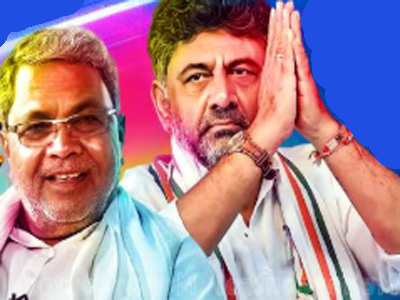
Karnataka today resembles a feudal court. At the breakfast table, the Chief Minister and his deputy are not quarrelling over idli–vada but over the throne, a slow-motion knife fight, while the Congress high command in Delhi watches nervously from the corridors, hesitating like a modern-day Dhritarashtra.
The state, meanwhile, is bleeding from a thousand cuts. Siddaramaiah and DK Shivakumar circle each other like rival lions, claws sheathed but ambition unmistakable. Delhi’s pleas sound hollow; the once-mighty high command appears like a fatigued emperor seeking mercy from rebellious satraps.
This is not mere factionalism; it is a succession battle disguised as ideological concern. Every leaked letter, midnight meeting and veiled barb is both an attack on the rival and a reminder of the high command’s diminishing authority.
The tragedy is that voters handed Congress a decisive mandate for schools, hospitals, and jobs, not palace intrigue. Governance has slowed to a crawl: files gather dust, ministers’ postures, and resources are spent on shoring up loyalties instead of development. Public trust has slipped below 50 per cent. The NDA, meanwhile, is watching and waiting.
Unless Delhi musters the courage to either reaffirm Siddaramaiah’s leadership or initiate a structured transition to Shivakumar, this government risks suffocating slowly. Karnataka’s mandate stands trapped between the ambitions of two men and the paralysis of one high command.
After its sweeping 2023 victory, 135 of 224 seats, the Congress projected Siddaramaiah and Shivakumar as a perfect balance of experience and energy. That formula now threatens to sink the government as the assembly session begins on December 8.
The crisis stems from the infamous unwritten ‘rotation formula’: Siddaramaiah was to serve the first 30 months, with Shivakumar succeeding him. With the halfway mark reached in November, Shivakumar’s camp—backed by 50–55 MLAs—has intensified pressure, arguing that honouring the promise is essential to consolidate the Vokkaliga base.
Siddaramaiah, now 82, denies any such pact. His loyalists insist that stability demands continuity. They have offered a second Deputy CM, cabinet expansion, and senior appointments—but the Shivakumar camp sees these as half-measures. For them, the real issue is the transfer of power.
The conflict burst into the open last month: pointed remarks in press conferences, daily provocations on television, frequent trips to Delhi, and even the much-publicised “idli diplomacy” of November 29. Beneath the smiles, reconciliation remains fragile. Siddaramaiah hints at a transition in 2028; Shivakumar insists, “If not now, when?”
Caste and legacy are central to the contest. Siddaramaiah seeks to conclude his long political journey on his terms. Shivakumar, twice denied the top post, believes this may be his final chance.
Delhi, grappling with crises in Himachal, Telangana and the capital itself, is reluctant to intervene. Choosing one leader risks a revolt; delaying the decision only deepens the damage. The absence of a written agreement has made the high command both helpless and responsible.
The BJP waits patiently. The opposition’s 85 MLAs, including the JD(S), sense an opening; whispers of rebellion and no-confidence motions circulate.
Governance is the real casualty. Flagship schemes like Griha Jyoti and Anna Bhagya are lagging. Irrigation projects remain stalled. Bengaluru’s urban work has slowed as funds and clearances freeze. Officials privately admit that when ministers are busy guarding their chairs, files move only in circles. Rural schemes are halted; urban congestion worsens; public frustration grows.
Both leaders, however, remain indispensable to the Congress. Siddaramaiah is the pillar of the AHINDA vote; Shivakumar is the unrivalled organiser in Vokkaliga-dominated South Karnataka. Weakening either risks eroding the party’s electoral foundations.
Delhi is now exploring a ‘middle path’: allow Siddaramaiah to complete three years and then oversee a peaceful transfer of power before 2028.
But the central question remains: Can the Congress rein in personal ambition and rescue its collective mandate?
Related Items
Congress at crossroads, RG leading or pushing it into the abyss…
Fight is for ‘Justice’, not ‘Samosas’ and ‘Kachoris’
BRICS’ evolution, cooperation and India's leadership…