
 Brij Khandelwal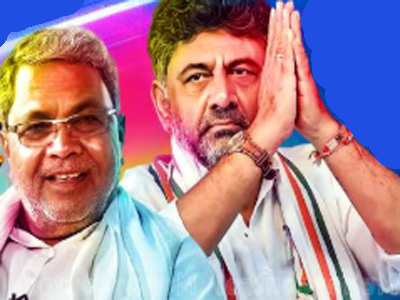
At the start of 2026, Karnataka is navigating a strange paradox. On one hand, the state's politics is mired in leadership struggles, factionalism, and power tug-of-war within the Congress party, while on the other, the economy is charging ahead at full speed. The cool but persistent tension between Chief Minister Siddaramaiah and Deputy CM DK Shivakumar has kept the political atmosphere on the boil, yet the engine of development hasn't stalled.
Karnataka's industrial landscape is reassuring. Under the New Industrial Policy 2025–30, the state has set ambitious targets of ₹7.5 lakh crore in investments and 20 lakh jobs. Notably, over 70 per cent of these investments are now flowing into areas ‘beyond Bengaluru'.
Read in Hindi: राजनीतिक उलझनों के बीच कर्नाटक में बह रही है विकास की बयार
Tumakuru's Industrial Smart City, Vijayapura's Food and Solar Park, Chitradurga's Drone Park, and EV clusters in Chikkaballapur and Dharwad, these are signs that Karnataka is moving beyond a single-city economy. Cities like Mysuru and Nanjangud are also emerging on the industrial map.
The state's financial health appears robust for now. Karnataka's own tax revenue surged 20.97 per cent to ₹1,34,109 crore during April–November 2025–26, the highest growth rate in the country. Total revenue receipts are projected at ₹2.92 trillion for 2026.
Exports are booming too. In FY 2025, Karnataka's exports reached ₹2,31,888 crore. Electronics, IT, aerospace, and engineering products remain the state's strengths. This is why young entrepreneurs and traditional industrial houses are eager to set up new units.
In stark contrast to this economic momentum, politics resembles a chaotic intersection where every faction believes the road belongs to them. Congress looks strong on paper with 136 MLAs in the 224-member assembly. The 2023 victory gave it a clear mandate, but internal discord has sapped the government's energy.
Siddaramaiah holds power on the strength of experience and social equations. Supporters see him as the symbol of AHINDA, Minority–Backwards–Dalit, politics, while critics call his chair "on lease." DK Shivakumar is the party's organisational pillar, but the question of a 2.5-year power-sharing deal hangs in limbo. Intrigues at the Delhi durbar, rumours of leadership changes, and potential cabinet reshuffles are injecting uncertainty into governance.
Caste remains the decisive thread in Karnataka politics. The government's ₹3.71 lakh crore budget and 'guarantee schemes', like Griha Jyoti, providing free electricity to two crore homes, are extensions of AHINDA politics. The opposition brands them divisive, yet can't escape caste arithmetic itself. The result? Identity noise drowns out development talk.
Outside Vidhana Soudha, the picture isn't as shiny. Bengaluru generates 38 per cent of the state's revenue and hosts 40 per cent of India's unicorns, but the rural economy lags. Agriculture employs 55 per cent of the population, yet growth is limited. Over 1,200 farmer suicides in 2025 testify to this imbalance.
Guarantee schemes are popular but costly. The state's debt has ballooned to ₹4.2 lakh crore, and the revenue surplus has turned into a nearly ₹25,000 crore deficit. GST evasion and spendthrift politics are mounting financial pressure.
Bengaluru today tells a tale of opportunities laced with exhaustion. Traffic jams cost ₹19,000 crore annually, severe water shortages persist, and uncontrolled urban sprawl is giving investors pause. Tourism is taking a hit too, with bookings plummeting in Bandipur after the 2025 incidents.
Local body elections are around the corner. Karnataka now needs less factionalism and more governance. Rising above caste slogans to focus on economic dreams, jobs, sustainable cities, and balanced development is essential.
Karnataka's real test lies here: Can it convert its rapid economic pace into political stability and inclusive growth, or will noisy politics smother the voice of development?
Related Items
'Race for Development' or 'March toward Destruction'!
The biggest ‘Cosmic Con’ of ‘Power Brokers’
Congress at crossroads, RG leading or pushing it into the abyss…