
 Brij Khandelwal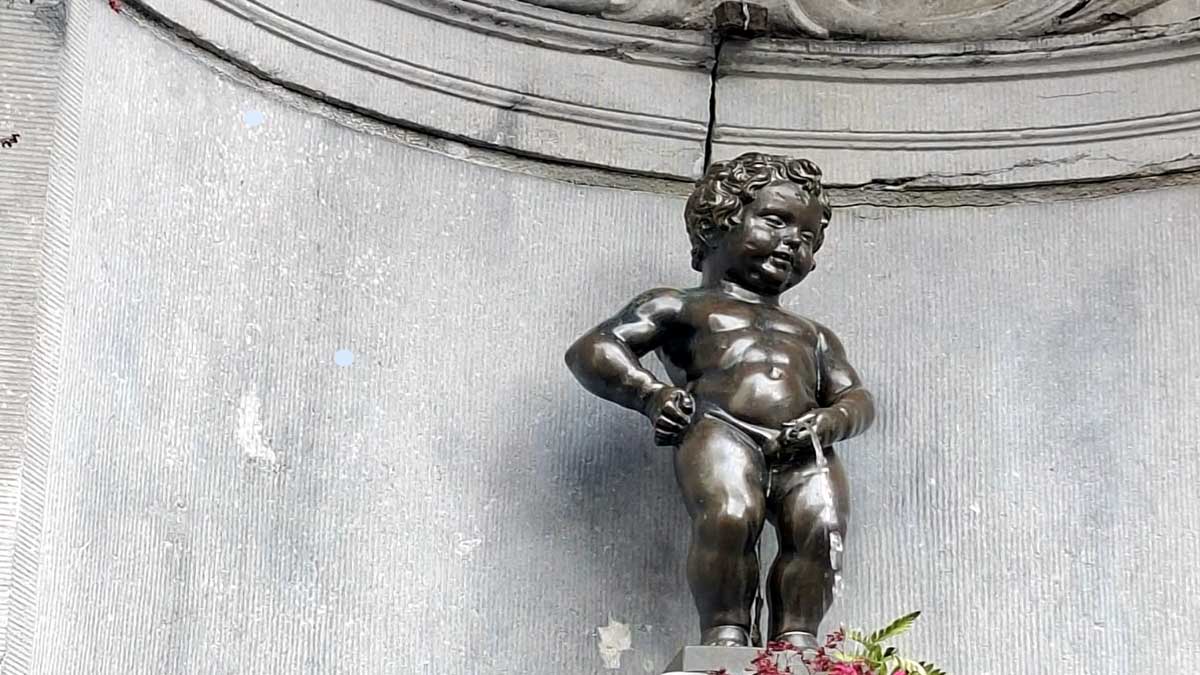
Students marched. Cockroaches protested. And somewhere in between, an Indian tourist was desperately searching for a free toilet.
Welcome to Brussels, where Europe debates billion-euro questions, students march for affordable education, cockroaches become symbols of civic anger, and a simple washroom visit can require financial planning.
Also read: ब्रसेल्स में छात्र सड़कों पर और €2 का टॉयलेट टिकट
What happens when people feel they are not being heard? They take to the streets. And when even the streets become uncomfortable, well, Delhi’s cockroaches apparently know what to do.
This week, Brussels witnessed students marching against rising university costs. Thousands of kilometres away, New Delhi had its own unusual civic drama, with cockroaches becoming unlikely symbols of anger over educational reforms.
One group carried placards. The other carried antennae. Both somehow crawled into the headlines. Hundreds of French-speaking students marched through central Brussels on September 16, just two days after the new academic year began. They protested higher university fees and stricter rules governing academic progress.
Police estimated the crowd at around 750. Organisers claimed nearly 2,000. The disagreement over numbers was perhaps the only thing nobody could settle that day. The students’ concern was simple. University education is becoming expensive, while young people already face high costs for rent, food and transport.
More than half of Belgium’s students now face enrolment fees approaching €1,200. Add living expenses, and a year of study can cost between €8,100 and €13,600. That is a heavy bill for young people already carrying the weight of their future. Their message was equally clear. Education should not become a privilege reserved for those who can afford it.
Brussels has its student marches. Delhi has its cockroach uprising. One is an organised protest. The other is a wonderfully absurd metaphor. But both remind us of an old truth. Neglected problems have a habit of eventually crawling into the headlines.
Student fees are not the only concern here. Security has become another major issue. Belgium’s Interior Minister has proposed expanding joint police and military patrols in neighbourhoods affected by drug-related violence, following shootings and explosions in the capital. Then comes the really big money.
Belgium is also at the centre of a major legal and diplomatic debate over frozen Russian assets held at Euroclear. Around €200 billion in Russian assets are frozen there, putting Brussels at the heart of discussions over their possible use for Ukraine.
Education needs money. Security needs money. Public services need money. And the Treasury, unfortunately, cannot manufacture euros out of Brussels sprouts.
Walking through Brussels, you quickly realise that this is not merely Belgium’s capital. It is one of Europe’s great political crossroads. The city began as a modest settlement on the Senne and gradually became an important medieval centre. In 1695, French forces under Louis XIV bombarded Brussels, badly damaging the Grand Place. Brussels rebuilt itself. Today, the Grand Place remains one of Europe’s great architectural treasures.
Belgium became independent in 1830, and Brussels expanded with grand avenues, railway stations, public buildings and imposing civic architecture. Today, Brussels hosts the European Commission, the European Council, the Council of the European Union and part of the European Parliament. NATO also has its headquarters here.
A walk through Brussels can therefore feel like strolling through a global political directory. Diplomats, European officials, journalists, lobbyists, students and tourists share the same streets.
The city is wonderfully cosmopolitan. The Brussels region has about 1.2 million residents representing roughly 180 nationalities. Our tour leader Martha Gomes kept reminding us that Brussels is not only about European institutions and serious-looking people in dark suits. It is also about chocolate, waffles, comics, Art Nouveau, surrealism, cafés, restaurants, museums and festivals.
Then came Mini-Europe. Here, Europe stops arguing about borders and becomes a miniature garden. Padmini summed it up perfectly: “Here, Europe stops arguing about borders and becomes a miniature garden.”
The park contains around 350 miniature European monuments, reproduced at a scale of 1:25. Moving models and animations bring the continent to life. For two hours, we travelled across Europe without passports, immigration queues or lost luggage. The drizzle was light as we hurried back towards the café. That alone felt like a diplomatic breakthrough.
While exploring Brussels, we also came across a boy who has been doing the same thing for centuries. Peeing! This is the famous Manneken Pis, literally “the little peeing boy.” A tiny bronze statue, but so famous that tourists from all over the world come to see him. We did too. The boy was completely carefree. He had no worries about the €2 toilet fee, nor about finding loose change. He simply stood there, doing his business openly. I thought, “Brother, you’re lucky. Nobody here asks you for a toilet ticket.”
We Indian tourists, on the other hand, were searching for a place to relieve ourselves by paying €1 or €2, while this boy in Brussels was doing his job for free. Where is equality in democracy? A bronze boy gets it for free. An Indian tourist pays €2!
There is another interesting thing about Manneken Pis. His clothes keep changing. People from around the world send outfits for him. Sometimes he is dressed as a soldier, sometimes as a representative of a country, and sometimes as a guest for a special occasion. When we saw him, he was simply Brussels’ most famous little boy. He said nothing. But his message was clear: “Brother, don’t overthink it. Nature’s call has its own constitution.” Perhaps that is why he is even more popular than the city’s politics.
After seeing Manneken Pis, we encountered the biggest cultural shock of our European trip. Toilets. Yes, toilets! You have to pay €1 or €2 to use one. For an Indian tourist, this was an experience no less memorable than buying a museum ticket. €2 is roughly ₹220. In India, you could get tea, a samosa, and sometimes even a small breakfast for that amount. Here, the moment nature calls, your wallet starts calling too. Padmini had to face this problem twice. She had a €100 note, but no small coins.
The toilet needed coins. Banknotes were of no use. European banking may have become so modern that sometimes even a €100 note feels useless. And that was when we realised that Europe’s real crisis is not frozen Russian assets. It is finding change. We remembered Manneken Pis. He was doing his job for free, while we were struggling to put together €2. For the first time in history, it felt as if a tiny statue had taught an Indian tourist the biggest lesson in economics.
Back home, petrol pumps, dhabas, hotels and Sulabh toilets often come to the rescue. Sulabh may charge peanuts. Europe sometimes charges what feels like the price of a full meal back home for the same basic privilege. And then there is the old Indian male habit of finding a convenient wall.
In Europe, that shortcut can invite more trouble than a parking ticket. Martha therefore became our group’s unofficial Toilet Minister. Her most important briefing was sometimes not about palaces, museums or monuments, but about where to find the nearest washroom.
We came to see Europe’s great landmarks. Martha made sure our kidneys survived the tour. That, too, is diplomacy.
In Brussels, Europe can be experienced in three very different ways. In the European Quarter, it is debated, negotiated and sometimes endlessly argued over. At Mini-Europe, it becomes small enough to understand. And on the streets, democracy becomes wonderfully unpredictable.
Sometimes it marches with students. Sometimes it crawls out from under a cupboard. And sometimes it simply asks for €2 before allowing you to pee.
Brussels, it seems, has something for everyone. For politicians, there are negotiations. For students, there are protests. For tourists, there are waffles. For children, there is Mini-Europe. For cockroaches, apparently, there is politics. And for Indian tourists? A map of free toilets.
Related Items
An Indian traveller’s eye-opening lessons in the ‘Art of Living’
Are Indian borders just lines on a map!
How the 'Indian Solar Revolution' is transforming rural lives…