
 Brij Khandelwal
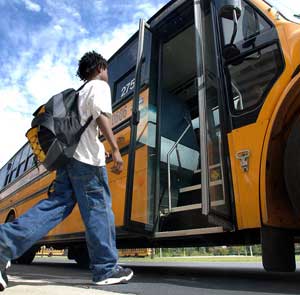
It is barely dawn. Sleepy children, carrying heavy school bags, are being herded into yellow school buses. Their faces tell a sad story. A stern-faced driver keeps looking at his watch. A latecomer gets an angry frown. No smile, no welcome, no warmth. Just a sharp command: “Hurry up! Get inside!”
Some children rub their sleepy eyes. Others stare silently through the windows. A few look irritated, while some are still missing the warmth of home. The bus moves, only to stop again a few minutes later. Another lane, another stop, another sleepy child.
This ritual will continue for an hour or even longer. No conversation, no interesting activity, no discovery. Just engine noise, traffic fumes and endless boredom.
Is this how a child's school day should begin? Is a school bus merely a vehicle to transport children from home to school? Or can it become a moving classroom, where every journey offers something to learn, enjoy and remember?
Thousands of Indian children lose precious hours every school day. These hours belong neither to classrooms nor playgrounds. They disappear into traffic jams.
Our cities are spreading faster than our roads can cope. Schools are moving farther away from residential areas. Buses crawl through crowded streets, flyovers and construction zones. For many children, the school day begins long before the first bell and ends long after the last one.
Consider a child who travels 40 minutes each way. That means 80 minutes daily and nearly 267 hours a year. In other words, more than 33 full working days of eight hours each are spent sitting inside a bus!
For many children, the situation is worse. A mobility study covering 42 schools along Bengaluru's SH-35 corridor reported an average daily bus journey of 112.3 minutes. That adds up to nearly 374 hours annually, or about 53 eight-hour days.
Imagine a school announcing that it would waste 53 days of every child's year. Parents would be furious. Yet we silently accept this loss, morning after morning and afternoon after afternoon.
What do children do during these long journeys? Many doze off, quarrel, fidget, or simply stare at the passing road. Boredom wins without even putting up a fight. Surely, we can do better!
Imagine a school bus where the morning begins with a cheerful folk song. Then comes a short story, a surprising science fact and a new word of the day. A three-minute conversation could focus on road safety, kindness or cleanliness. Children could hear inspiring stories about scientists, sportspersons and freedom fighters.
This is not a travelling examination hall. Nor should it become a noisy entertainment centre. It should be a friendly space where young minds discover something new every day. Uplifting patriotic songs can also add energy to the morning journey.
Children learn more from stories, songs and interesting ideas than from long lectures. A three-minute story can teach what a lengthy sermon cannot. A beautiful folk song can connect them with their roots. One fascinating fact can keep curiosity alive throughout the day.
The return journey can follow a different mood. After hours of classroom learning, children need relaxation. Wildlife films, animated science programmes, adventure stories and educational entertainment can make the ride home the happiest part of their day.
Education is much bigger than textbooks, homework and examinations. Listening, questioning, sharing and exploring also shape young minds.
Audiobooks and storytelling improve listening skills, vocabulary and understanding. Children who struggle with reading often discover a love for stories through listening. Programmes about rivers, forests and wildlife can awaken tomorrow's environmental champions.
Good content encourages children to talk, ask questions and exchange ideas. Nobody is suggesting that we stuff more lessons into childhood. The aim is simple: make better use of time that is already being wasted.
Some may argue that children already spend too much time before screens. That concern is genuine. But the answer is not a complete ban. It is sensible use and proper discipline.
Morning programmes should rely mainly on audio. Stories, music and information need no screens. In the afternoon, short, carefully selected, age-appropriate videos may be considered. Indian languages must receive generous space.
The Indian Academy of Paediatrics has recommended limits on recreational screen time. Schools can respect these guidelines through purposeful, supervised content.
Children should also become active participants. They can record announcements, share interesting facts, tell stories and take part in short quizzes. Variety is essential. Nobody wants another boring lecture on wheels!
This idea does not require huge investments. Schools can begin with good speakers, a small media system and carefully selected content. Any screens installed must be safely positioned.
Teachers, parents and child-development experts should jointly select the material. Every week can have a fresh theme: science, nature, Indian literature, folk tales, inspiring personalities, health, environment and road safety.
Morning and afternoon programmes should be different. Children should also suggest topics. Their interests and age groups must guide the choices.
One rule is non-negotiable. The driver's attention must remain entirely on the road. No programme should interfere with safe driving. A trained attendant can supervise children and manage the activities.
Better route planning, improved roads, staggered school timings and neighbourhood schools can reduce unnecessary travel. These reforms are essential, but they may take years. Children are travelling today. Their childhood cannot wait for traffic reforms.
We must distinguish between unavoidable travel and avoidable waste. The journey may be unavoidable. Wasting it is not.
A school bus is not just a yellow vehicle carrying passengers. It carries young minds, endless curiosity and the country's future. Why leave this enormous opportunity untapped?
School management, parents, educators and transport authorities face a simple challenge. Start a pilot project on just one bus route this academic year. Observe the changes in children's curiosity, happiness, conversations and behaviour.
After all, why should a child lose another precious hour of childhood to traffic every day? If the road cannot become shorter, make the journey a richer experience. Turn the school bus into a moving classroom of joy, discovery and imagination!
Related Items
From 'Beacons' to 'Landmarks', India’s changing ‘Lighthouse’ story…
Kishore’s voice and the story of ‘Sargam’ in ‘Pag Ghungroo Baandh’
When a classical melody wove an immortal love story on screen…