Latest News: Prime Minister performs Mahapuja and Kumbhabhishek at the Somnath Temple * India conducts successful flight-trial of Advanced Agni missile with Multiple Independently Targeted Re-Entry Vehicle system * Nation salutes armed forces on one year of Operation Sindoor

 Variety

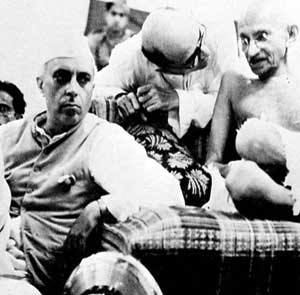
The year was 1942. Monsoon winds from the Indian Ocean had already arrived. With them the news of vigorous naval battles also came. World had become bipolar, India too was on the boil, waiting to unshackle the chains of age old slavery. At this juncture Sir Stafford Cripps came with an offer of dominion status in return of India's support for the war. The British offered allegiance to Queen in lieu of self-rule but did not realize the likes of Bhagat Singh and Chandra Shekhar Azad hadn't sacrificed their lives for dominion status. Demand of freedom fighters across the country was unanimous and it was for 'Poorna Swaraj', total independence. Therefore, on the eve of 8th August, 1942 Gandhi ji gave a clarion call to the nation. He said, "Here is a mantra, a short one that I give you. You may imprint it on your hearts and let every breath of yours give expression to it. The mantra is: 'Karo ya Maro', ‘Do or Die’."

Read More

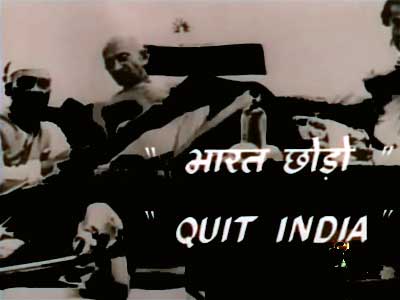
"Quit India" resolution of 8th August, 1942, marked a decisive moment in the history of India's freedom struggle. Gandhiji found the tenet of Truth and nonviolence put to most severe test. (Read in Hindi: अगस्‍त क्रांति : 'भयावह' स्थितियों में लड़ाई का 'अहिंसक' तरीका)

Read More

Quit India Movement or the August Movement was launched by Mahatma Gandhi on August 8, 1942 to gain independence from British rule. Gandhiji gave call to the British to withdraw from India. He decided to launch a mass civil disobedience movement 'Do or Die' call to force the British to leave India. The Cripps Mission and its failure also played an important role in Gandhi's call for the Quit India Movement. The British government on 22nd March 1942, sent Sir Stafford Cripps to negotiate terms with the Indian political parties and secure their support in Britain's war efforts. A Draft Declaration included terms like establishment of Dominion, establishment of a Constituent Assembly and right of the Provinces to make separate constitutions. These would be granted after the cessation of the Second World War.

Read More

Dadabhai Naoroji (1825-1917) – one of the makers of modern India- passed away on June 30, in year 1917. His death centenary is an apt occasion to revisit his legacy. Two features of his long and distinguished career stand out prominently a) sustained advocacy of Indian cause abroad and b) use of statistics to shape public discourse.

Read More

There is no better feeling than to feel one with one’s inner self. For centuries Yoga is known to awaken in one, the inner peace and tranquility we often go looking for in material things.

Read More

There is nothing better on a hot summer day than a refreshing dip in a pool, stream, lake or ocean.

Read More