For the first time, researchers have carried out a large-scale analysis of victims of internet denial-of-service (DoS) attacks worldwide. And what they found is, in a phrase from their study, “an eye-opening statistic”.
Read More




For the first time, researchers have carried out a large-scale analysis of victims of internet denial-of-service (DoS) attacks worldwide. And what they found is, in a phrase from their study, “an eye-opening statistic”.
Read More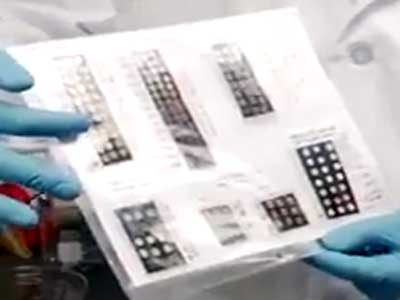
A bite of bad yogurt or sip of spoiled milk could be a thing of the past thanks to a new sensor developed by Clarkson University Professor Silvana Andreescu. The innovative “smart label” is a low-cost, portable, paper-based sensor that can determine when food or cosmetics spoil and has the ability to transform the commercial marketplace.
Read More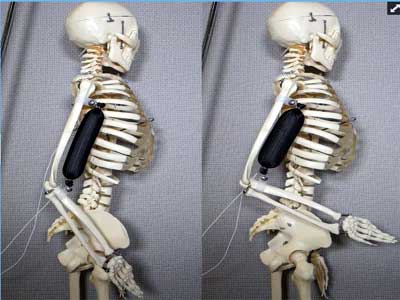
Researchers at Columbia Engineering have solved a long-standing issue in the creation of untethered soft robots whose actions and movements can help mimic natural biological systems.
Read More
Evolution of technology has been the foundation stone of progress and has over the centuries changed the way societies function. Technological inventions have revolutionized each sector of the society by reducing human labour, brining efficiency and increasing productivity. Be it introduction of information communication technologies in education, digitization in the media and services sector, automated devices for health care; each sphere of society gets a boost with the touch of technology.
Read More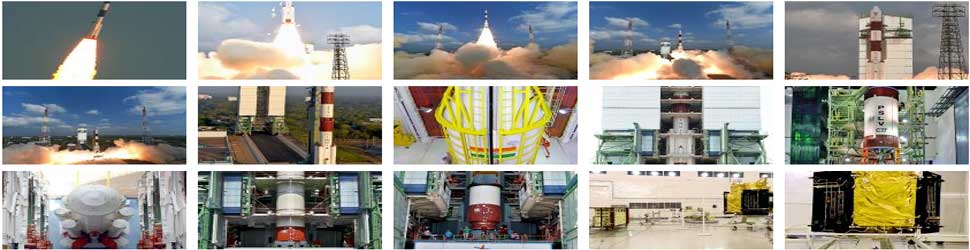
The inception of modern science in India and its passage has left its lasting imprint for the posterity to dwell upon the subsequent proliferation of science. Indian scientists were not given the credits of discoveries which were passed on to British officers even if they didn’t have anything to do with the discovery. Scientific fingerprinting was born in India but the laurels were heaped on others, the naming of Everest was not justified among many such other instances.
Read More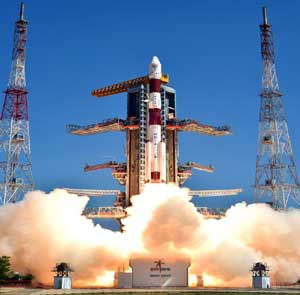
More than 53 summers ago, India had successfully put its first signature on space by launching the US-made ‘Nike-Apache’ two-stage sounding rocket (the first rocket) from Kerala’s obscure fishing hamlet Thumba.
Read More