Latest News: Indian share markets will be open for trading on Sunday, February 01, as the Union Budget is being presented on that day * Key Highlights of Economic Survey 2025–26: GDP & GVA Growth Estimates for FY 2026: First advance estimates at 7.4% and 7.3% respectively * India’s Core Growth Projection: Around 7%, with real GDP growth for FY 2027 expected between 6.8% and 7.2% * Central Government Revenue: Rose to 11.6% of GDP in FY 2025 * Non-Performing Assets: Declined to a multi-decade low of 2.2% * PMJDY Accounts: Over 552 million bank accounts opened by March 2025; 366 million in rural and semi-urban areas * Investor Base: Surpassed 120 million by September 2025, with women comprising ~25% * Global Trade Share: India’s export share doubled from 1% in 2005 to 1.8% in 2024 * Services Export: Reached an all-time high of $387.6 billion in FY 2025, up 13.6% * Global Deposits: India became the largest recipient in FY 2025 with $135.4 billion * Foreign Exchange Reserves: Hit $701.4 billion on January 16, 2026—covering 11 months of imports and 94% of external debt * Inflation: Averaged 1.7% from April to December 2025 * Foodgrain Production: Reached 357.73 million metric tons in 2024–25, up 25.43 MMT from the previous year * PM-Kisan Scheme: Over ₹4.09 lakh crore disbursed to eligible farmers since inception * Rural Employment Alignment: “Viksit Bharat – Jee Ram Ji” initiative launched to replace MGNREGA in the vision for a developed India by 2047 * Manufacturing Growth: 7.72% in Q1 and 9.13% in Q2 of FY 2026 * PLI Scheme Impact: ₹2 lakh crore in actual investment across 14 sectors; production and sales exceeded ₹18.7 lakh crore; over 1.26 million jobs created by September 2025 * Semiconductor Mission: Domestic capacity boosted with ₹1.6 lakh crore invested across 10 projects * Railway High-Speed Corridor: Expanded from 550 km in FY 2014 to 5,364 km; 3,500 km added in FY 2026 * Civil Aviation: India became the third-largest domestic air travel market; airports increased from 74 in 2014 to 164 in 2025 * DISCOMs Turnaround: Recorded first-ever positive PAT of ₹20,701 crore in FY 2025 * Renewable Energy: India ranked third globally in total renewable and installed solar capacity * Satellite Docking: India became the fourth country to achieve autonomous satellite docking capability * School Enrollment Ratios: Primary – 90.9%, Upper Primary – 90.3%, Secondary – 78.7% * Higher Education Expansion: India now has 23 IITs, 21 IIMs, and 20 AIIMS; international IIT campuses established in Zanzibar and Abu Dhabi * Maternal & Infant Mortality: Declined since 1990, now below global average * E-Shram Portal: Over 310 million unorganised workers registered by January 2026; 54% are women * National Career Service Portal: Job vacancies exceeded 28 million in FY 2025 and crossed 23 million by September 2026

Cat Bites Dog: The Number One Prey For Leopards Is Man’s Best Friend


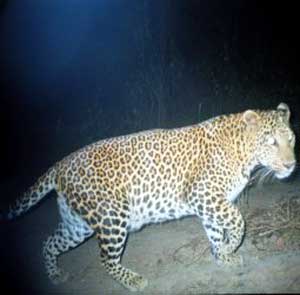
The study, which looked at scat samples for leopards in India’s Ahmednagar’s district in Maharashtra, found that 87 percent of their diet was made up of domestic animals. Domestic dog dominated as the most common prey item at 39 percent and domestic cats were second at 15 percent.

Seventeen percent of the leopard’s diet consisted of assorted wild animals including rodents, monkeys, and mongoose, and birds.

Livestock, despite being more abundant, made up a relatively small portion of the leopard’s diet. Domestic goats, for example, are seven times more common than dogs in this landscape, yet only make up 11 percent of leopard’s prey. The author’s say this is because goats are less accessible and often brought into pens at night, while dogs are largely allowed to wander freely. Cows, sheep, and pigs were also eaten, but collectively made up less than 20 percent of leopard’s food. Most domestic cattle in this region are too large to be preyed on by leopards.

The author’s of the study say that the selection of domestic dogs as prey means that the economic impact of predation by leopards on valuable livestock is lower than expected. Thus, human-leopard “conflict” is more likely to be related to people’s fears of leopards foraging in the proximity of their houses and the sentimental value of dogs as pets.

Study co-author Ullas Karanth, WCS Director for Science-Asia, said: “During the past two-to-three decades, legal regulation of leopard hunting, increased conservation awareness, and the rising numbers of feral dogs as prey have all led to an increase in leopard numbers outside of nature reserves in agricultural landscapes. While this is good news for conservation and a tribute to the social tolerance of Indian people, it also poses major challenges of managing conflict that occasionally breaks out. Only sound science can help us face this challenge.”