
 Brij Khandelwal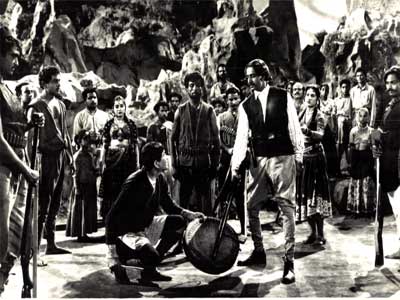
Chambal. Merely uttering the name once made the heart skip a beat. Straddling the borders of Uttar Pradesh, Madhya Pradesh, and Rajasthan, the ravines of Chambal were no ordinary geographical feature. They resembled the torn chest of the earth itself, deep, twisting, mysterious. Even sunlight seemed hesitant to descend fully there, as if afraid it might never return. Dust rose in clouds, each particle carrying the weight of an unfinished story. In places, the silence was so thick it rang in the ears; elsewhere, a sudden sound from an unknown direction would quicken the pulse.
The 1960s and 1970s marked an era when Chambal was not merely a river but a state of mind. Roads seemed to end abruptly there. The law existed only on paper. The reach of governance dissolved into the depths of the ravines.
Read in Hindi: बीहड़ों की धूल, बंदूकों की गूंज और आत्मसमर्पण की आहट
Walking in those badlands was treacherous. The soil shifted underfoot at every step. What lay beyond the next bend remained unknown. Thorny bushes, steep gorges, the rustle of snakes, and vultures circling overhead created a natural fortress that no human had built, yet one that had reshaped humans in its own harsh image.
It was in these ravines that rebels, the baghis in local parlance, often labelled simply as dacoits, were born. Reducing their stories to that single word does them an injustice; the reality was far more complex. Some were farmers crushed by landlords. Others were young men turned insurgent by police brutality. Many had been denied justice and, in despair, picked up the gun.
In the ravines, the statute book held no sway. What ruled was the barrel of the rifle and the fire of revenge. Yet no tale is composed solely of darkness. Somewhere, a spark of light always emerges.
In Chambal, that light arrived through dedicated Gandhians and Sarvodaya leaders, notably Acharya Vinoba Bhave and Jayaprakash Narayan. Frail in build, serene in expression, they carried no weapons and displayed no fear, only a profound faith in humanity’s capacity for change. This conviction propelled them into the ravines, where even the police hesitated to tread. They walked barefoot, and their efforts breathed new energy into the movement as more people joined.
The narrative unfolded like a film script, yet it was a stark reality. Messages arrived from the dacoits: they wished to surrender, but would not tolerate humiliation.
Then came the historic day when the ravines witnessed an unprecedented scene. A stage was erected. Crowds gathered. Police and administration stood present. One by one, the rebels stepped forward, rifles in hand but heads bowed. They laid down their arms. No shots were fired that day. Instead, applause rang out. This was not merely a surrender; it marked the end of one era and the dawn of another.
The mass surrender, facilitated largely by Jayaprakash Narayan, took place in April 1972 at the Mahatma Gandhi Seva Ashram in Jaura of Morena district in Madhya Pradesh. Over 200 dacoits, including notorious figures like Madho Singh and Mohar Singh, laid down arms on 14 April 1972, with further groups following in subsequent ceremonies. Earlier efforts by Vinoba Bhave in 1960 had already inspired smaller surrenders and influenced cultural portrayals.
This extraordinary chapter profoundly influenced Indian cinema. Films such as Jis Desh Mein Ganga Behti Hai (1960), Ganga Jumna (1961), Mujhe Jeene Do (1963, starring Sunil Dutt), and later Pan Singh Tomar (2012) captured the Chambal landscape and the human stories behind the banditry, often portraying dacoits as broken individuals shaped by circumstance rather than innate evil. Cinema did not merely romanticise the region; it attempted to understand its underlying social realities.
As a young journalist in the 1970s, I traversed the Chambal valley closely. Walking through the ravines felt as though time had frozen. Every turn held a story, some recorded in history, others lost to oblivion. Yet the pain was universal.
In a 1977 travelogue published in Singapore’s New Nation (16 January 1977, page 8, under the byline “By Brij Khandelwal, Gemini News, London”), I described the lingering atmosphere of risk and tension in the region just a few years earlier: “FOUR years or so ago If you travelled in a train or a bus through the Chambal valley region in Central India you might have found a notorious dacoit disguised as a superintendent of police sitting beside…” The piece captured the pervasive sense of danger and the unique social fabric of the valley during that turbulent period.
I had written then that India had not merely defeated the dacoits in Chambal; it had reclaimed its own wayward sons. When hundreds of hardened rebels surrendered in the Morena region, it seemed like a tale from another world, yet it unfolded on our own soil.
In today’s India, as society faces fresh tensions and divisions, the Chambal story gains renewed relevance. It teaches that no problem is too vast to solve, provided there is faith, dialogue, and patience.
The Chambal River and its ravines endure. The badlands remain. Yet today, one hears not the fear of gunfire but the echoes of history. When the wind sweeps through the gorges, it seems to narrate an old tale, one of rifles and blood that ultimately ended in the triumph of humanity.
Related Items
Yamuna carries sewage, Government watches in silence
From 'Beacons' to 'Landmarks', India’s changing ‘Lighthouse’ story…
Are Indian borders just lines on a map!