Brij Khandelwal

Brij Khandelwal is an Agra-based senior journalist.

Bangalore Airport, A plumber from Agra clutches a bag of wedding jewellery that will never reach his sister’s hands in Hathras.  Across the terminal, the Ramaswamy family stares at a pile of suitcases and cancelled hotel vouchers. Hundreds of bleary-eyed passengers sleep on newspaper beds. Children wail for milk that never comes. Screens glow blood-red: CANCELLED. DELAYED. CANCELLED.

Read More
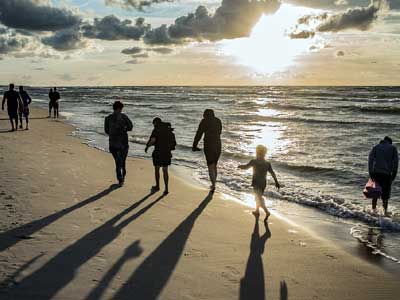
At dawn in a village in Maharashtra’s Satara district, beneath an ancient banyan, ASHA worker Sangeeta opens her blue kit. Sunlight spills across the sugarcane fields as she speaks softly to a circle of women, some cradling infants, others asking questions they dare not voice before their husbands. With patience and compassion, she explains how spacing births can save lives. In this simple morning ritual lies the true story of India’s population revolution: not in files or slogans, but in trust, dignity, and the quiet empowerment of women.

Read More

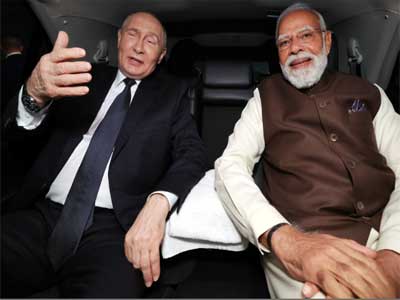
Delhi’s brutal winter suddenly felt a degree warmer as Vladimir Putin’s aircraft touched down and the capital basked in the diplomatic glow of a ‘Putin Yatra’. The Russian leader’s 2025 visit did more than thaw the December chill; it reignited one of the world’s most durable partnerships and signalled India’s return to the global centre stage with striking self-assurance.

Read More

India has never been held together by sword or statute alone. What truly bound this vast land, across centuries and kingdoms, is an invisible thread spun by its saint-poets: a living gospel of compassion, equality, and the oneness of all souls.

Read More

Imagine a winter morning so cold and so choked with smog that the Taj Mahal’s white marble appears ghost-grey, almost spectral. The stench in the air burns your lungs with every breath. And right behind the Taj, the Yamuna, once the river that reflected Mughal glory, has turned into a frothing graveyard of toxic foam. It feels as if the Taj itself is mourning a slow, suffocating death.

Read More

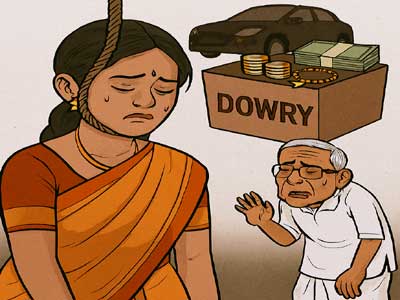
On 28 November, the Supreme Court delivered a judgment that shook the country to its core. The court cancelled the bail of a man accused of poisoning his wife to death barely four months after marriage, and in doing so, it issued a moral and legal reprimand of rare sharpness. A bench of Justices BV Nagarathna and R Mahadevan stressed that ignoring the statutory presumption under Section 113B of the Evidence Act in dowry-death cases is an “unjust and distorted approach.” The judges made it unmistakably clear that dowry killing is not a personal family tragedy; it is a public crime, a blow to the collective conscience, and a direct assault on the very idea of humanity.

Read More