
 Brij Khandelwal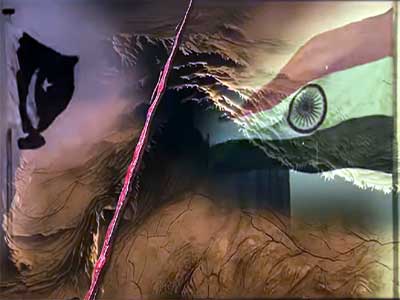
The Partition of 1947 remains one of the deepest wounds in Indian history. Millions were displaced. Countless families were torn apart. The flames of violence and hatred engulfed the subcontinent. Even today, memories of that period evoke profound sorrow and anguish.
Yet history is not shaped by emotion alone. At critical moments, nations must make decisions guided not by sentiment, but by political realities. Sometimes, the choice is not between good and bad, but between two deeply painful alternatives. The Partition of India was one such choice.
Nearly eight decades later, an important question continues to resonate: had India remained undivided, could it have evolved into a stable and cohesive nation? Would it have been able to preserve its cultural identity and civilizational heritage? Or would it have become mired in persistent communal tensions, political deadlock, and constitutional instability?
Partition was not a triumph. It was an acknowledgement of a difficult reality. In June 1947, the Congress leadership accepted the Mountbatten Plan after years of failed negotiations. By then, the political situation had deteriorated sharply. The Muslim League remained steadfast in its demand for a separate homeland, arguing that Hindus and Muslims constituted two distinct political nations.
Several proposals for power-sharing, federal arrangements, and constitutional compromise were explored, but none succeeded. The violence that followed the 1946 Direct Action Day demonstrated that a peaceful transfer of power was becoming increasingly unlikely.
Riots spread across Bengal, Punjab, and other regions. Bloodshed intensified. The Congress leadership faced an agonising choice: risk a prolonged civil war or accept a painful compromise and move forward. As the saying goes, a wound left untreated can become fatal; sometimes, surgery is the only remedy.
Partition was that surgery. According to the 1941 Census, Muslims comprised nearly one-quarter of British India's population and formed majorities in several strategically important regions. In an undivided India, questions of power-sharing, provincial autonomy, and religious identity could have generated recurring political conflict.
No one can say with certainty how such a nation would have evolved. However, the circumstances preceding independence suggest that the prospects for stable shared governance were becoming increasingly fragile.
After Partition, India emerged with a clear demographic majority and a stronger political centre. The new republic adopted a secular Constitution while remaining rooted in a civilizational tradition stretching back thousands of years.
Critics may argue that these conclusions are speculative. Yet it is equally plausible that identity-based politics would have become more intense in a united India. Constitutional bargaining, regional grievances, and separatist pressures might have repeatedly tested the resilience of democratic institutions.
In that sense, Partition created one immense tragedy, but it may also have prevented several larger conflicts. The sharp decline in Hindu and Sikh populations in Pakistan, and later in Bangladesh, has added another dimension to this debate. Many historians argue that demographic balance plays an important role in the continuity and security of civilisations.
Meanwhile, India preserved its diversity while strengthening democratic institutions. This stability helped lay the foundation for the Green Revolution, economic liberalisation, technological advancement, and the emergence of a robust democracy.
Some observers also contend that the Hindu cultural revival and renewed civilizational confidence visible in India today might have taken a very different shape in an undivided nation.
One thing, however, is clear: Partition was not a victory to be celebrated. It was a safeguard adopted in response to political circumstances that could no longer be ignored.
For those who view India as the historical homeland of Hindu civilisation, Partition ensured that the majority community would not face a perpetual political struggle to preserve its cultural identity. The wounds of Partition remain unhealed. Its pain endures across generations.
Yet history often confronts nations with impossible choices. It may well be that, among the options available in 1947, Partition was the least destructive path. Sometimes, nations must harden their hearts to secure their future.
Related Items
An Indian traveller’s eye-opening lessons in the ‘Art of Living’
Are Indian borders just lines on a map!
How the 'Indian Solar Revolution' is transforming rural lives…