
 Brij Khandelwal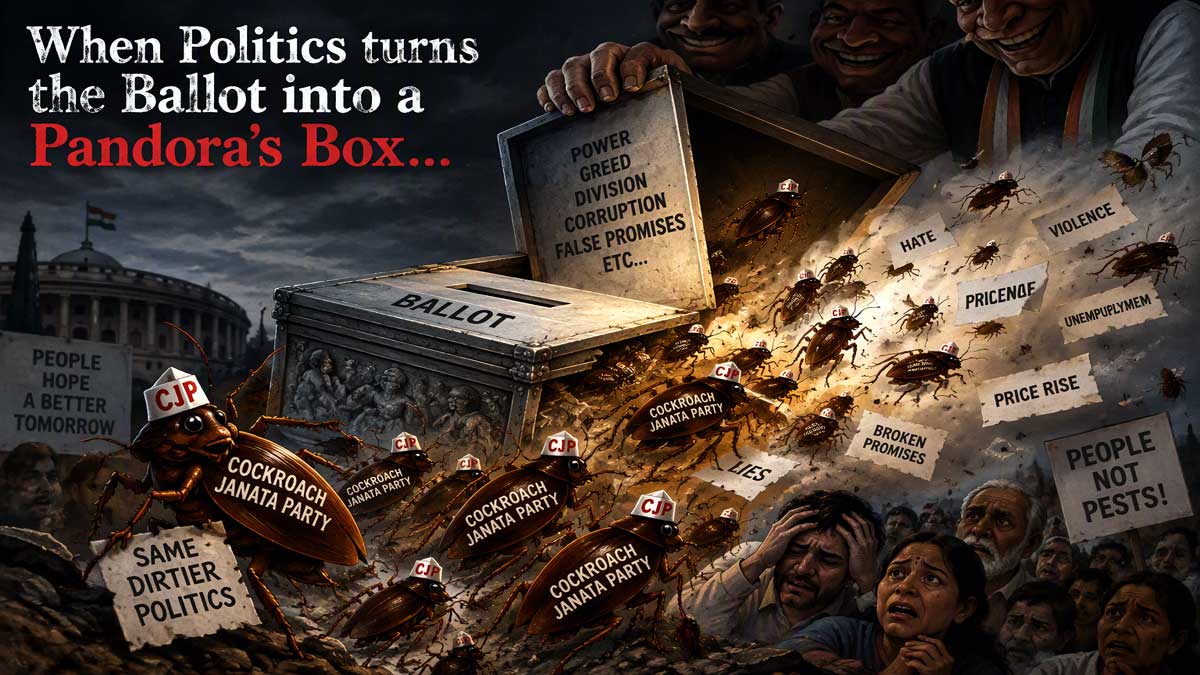
The cockroaches now crawling across India’s political landscape deserve close scrutiny. These self-appointed tribunes of ‘simmering discontent’ appear to have no clear programme or principles: only noise, invective and an appetite for disruption. Calling themselves the Cockroach Janta Party, they claim to speak for an outraged public. Critics, however, see them as a proxy for an opposition unable to defeat the Modi government at the ballot box.
Their apparent strategy is to turn every domestic dispute into a national crisis, borrowing the language of upheaval seen elsewhere. In doing so, they serve the agendas of anti-India interest groups abroad, some of which still struggle to accept that the world is becoming multipolar.
India has repeatedly made clear that its foreign relationships will be guided by national interests. That stance has challenged the expectations of those who prefer compliant alignment. The cockroaches, wittingly or otherwise, amplify every internal friction, feeding the discomfort of those unwilling to accept New Delhi’s independent course.
What defines this politics is its impatience with due process, institutions and established conventions. Its advocates treat the Supreme Court, the Election Commission and other constitutional bodies as obstacles to be brushed aside rather than institutions to be engaged. They place street mobilisation, social-media reels and memes above elections as measures of public legitimacy.
That is not a substitute for politics. It may attract attention and provoke a momentary thrill, but it cannot create lasting change. More dangerously, it can weaken the habits of restraint and mutual recognition that help a diverse democracy hold together.
History offers a warning: when mistrust, hatred and violence become the preferred language of politics, the damage falls first on the weak and innocent. Stability suffers, economic growth is put at risk, and the democratic institutions that agitators claim to defend can themselves be undermined.
India holds frequent elections. That is where political claims should be tested. Those seeking change must contest elections, earn public confidence and then pursue their programme in office. Winning votes is demanding work; staging a noisy spectacle for media attention is easier. The preference for the latter is telling.
The government has responded firmly to the demonstrations at Jantar Mantar, deploying a substantial police presence and preventing a mass gathering. Its message is clear: demands for the removal of Gyanesh Kumar, who holds a constitutional post, cannot be settled through street pressure. The agitators should await the Supreme Court’s decision. If they enjoy genuine public support, they can demonstrate it at the polls. Until then, their street protests remain performance, not politics.
Much of the public continues to support Prime Minister Modi. Opposition leaders, Rahul Gandhi among them, have yet to present an alternative vision or a coherent strategy capable of winning over voters and defeating the NDA. Hatred is not a programme. Invective is not a manifesto. And street agitation cannot replace the hard work of democratic persuasion.
India’s institutions have weathered serious challenges before. They can weather this one, too, if the constitutional order is defended—and if its freedoms are not mistaken for permission to dismiss its procedures. The cockroaches may continue to scuttle and screech. The republic’s answer should be firmness, patience and faith in the ballot box.
Related Items
From 'Beacons' to 'Landmarks', India’s changing ‘Lighthouse’ story…
When students march, cockroaches protest and toilets charge €2...
“Only five minutes…” has shaken France and forced India to think…