
 Brij Khandelwal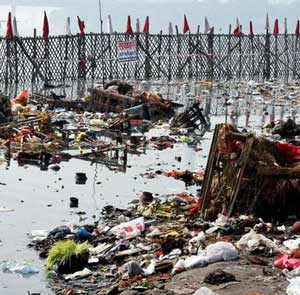
Agra: Three decades after the Supreme Court verdict on the pollution threat to the iconic Taj Mahal, the pathetic plight of river Yamuna that sustains the Taj, shows no signs of healthy change.
Despite promises by Prime Minister Narendra Modi and Union Minister Nitin Gadkari in 2014 and 2015, the river Yamuna, considered an integral part of the architectural plan of the Taj Mahal complex, continues to suffer from official apathy.
Green activists in Agra have raised the environmental crisis, ahead of the 2024 Lok Sabha elections. River activists accuse the political leaders of dragging their feet on resolving serious issues in the eco-sensitive Taj Trapezium Zone spread over 10,400 sq km.
Concerned over the continuing neglect of the Yamuna River in Braj Mandal, the activists have shot out missives to the concerned authorities, to shake them up from slumber.
The Taj City activists have again highlighted the plight of the dry and polluted Yamuna River which for centuries has sustained a mythological culture woven around Shri Krishna and has nourished precious Mughal monuments along its banks.
Members of the River Connect Campaign have presented a memorandum to the divisional commissioner and other senior officials demanding urgent attention to long pending demands for the restoration of the glory of Yamuna by initiating action to contain major sources of pollution.
Environmentalist Devashish Bhattacharya said "One of the major concerns is the lack of adequate sewage treatment plants in Agra. The untreated sewage and industrial effluents continue to be directly discharged into the Yamuna River, contributing to its pollution and degradation. Immediate steps need to be taken to address this issue by establishing and upgrading sewage treatment plants to effectively treat and manage the wastewater before it is released into the river."
Despite several action plans and after incurring huge expenditures, nearly a hundred small and big drains were discharging untreated waste, including sewage, Bhattacharya said.
Campaign members said that open drains discharging effluents and sewage directly into the Yamuna River were a matter of grave concern. "This not only adds to the pollution of the river but also poses serious health risks to the local population. It is imperative to implement a comprehensive plan to channelize and treat the sewage and effluents from these open drains to prevent further pollution of the river."
The main Yamuna Kinara road that once sited a row of pucca ghats and temples had been encroached upon, activists said. Despite a series of orders, the district authorities had failed to shift hundreds of transport companies outside the city to decongest the road and lower air pollution levels. The delay in the relocation of transport companies and dhobi ghats from the riverfront has been a persistent challenge. Their activities have been a significant source of pollution and encroachment on the riverbanks, impacting the overall health of the Yamuna River.
River activists highlighted the poor rate of discharge of water from upstream barrages which has been inadequate to maintain a minimum flow of water in the Yamuna river. This has serious implications for the ecological balance and sustenance of aquatic life in the river. Measures should be taken to ensure a regular and sufficient discharge of water from upstream barrages to maintain a healthy flow in the river. Orders of the NGT and state pollution control board should be implemented.
The green activists wondered why the authorities were indecisive and dragging their feet to start construction of a rubber check dam downstream of the Taj Mahal, even when funds had been cleared by the state government. "The construction of the proposed Yamuna barrage downstream of the Taj Mahal has been facing delays, further impeding the efforts to regulate and rejuvenate the river. It is crucial to expedite the construction process and allocate necessary resources to ensure the timely completion of the barrage, which will play a pivotal role in managing the flow and quality of the river water."
Agra residents feel that "The restoration and preservation of the Yamuna River is not only essential for the environmental well-being of the region but is also integral to the cultural and historical significance of Agra. Therefore the district authorities should immediately take appropriate steps to prioritize and expedite the implementation of measures to clean and rejuvenate the Yamuna river in Agra." The activists lamented the indifference of the statutory bodies to launch action against encroachers of the Yamuna flood plains.
It was shocking that the administration paid no heed to persistent demands of the stakeholders to desist and dredge to river bed to clean up the pollutants and increase the water-holding capacity of the river which was critical for the safety of monuments like the Taj Mahal, the Agra Fort, Etmauddaula in Agra, the ancient ghats in Mathura and Vrindavan, the activists said.
Related Items
Yamuna carries sewage, Government watches in silence
10 countries, 17 destinations and one Yamuna in the heart…
Can a city die of thirst while a river flows past its doorstep!