
 Dharmendra Kumar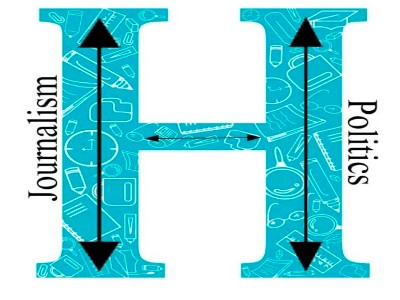
In Indian democracy, the relationship between journalism and politics has always been a subject of debate. The duty of journalism is to question power and present the truth in the interest of the people, while the duty of politics is to acquire power and preserve it. The clash and cooperation between the two form the true heartbeat of democracy.
Journalism and politics often appear to run parallel. Yet journalism’s scope is far wider than politics. In journalistic terms, politics is merely a ‘beat’. But since politics is the most dominant subject of public interest in our country, journalism inevitably remains under its influence.
Read in Hindi: पत्रकारिता और राजनीति के बीच ‘एच’ का पेंच
Journalism and politics are like two streams flowing from different directions, yet at times converging at the same bank. The voice of journalism is the voice of questions; the voice of politics is the voice of authority. Their confluence can sometimes be harmonious, sometimes toxic.
The English letter 'H' is a striking symbol of this relationship. The two vertical lines represent journalism and politics, while the horizontal line in between is the 'bridge' that connects them. This bridge sometimes carries journalists into politics, and at other times allows politicians to don the cloak of journalism. But the bridge is one‑way. It leads from journalism to politics, not back again.
Speaking of the West, many journalists in the United States have also entered politics. There are several examples of television anchors who went on to become senators. However, American society places strong emphasis on maintaining a clear wall between journalism and politics.
In European countries, the entry of journalists into politics is relatively rare. There, the tradition of keeping journalism independent and impartial is much stronger. In contrast, in India, politics tends to dominate journalism more heavily.
History bears witness. During the freedom struggle, journalism gave politics the strength of public opinion. Newspapers awakened the masses and carried leaders to the people. During the Emergency, politics tried to silence journalism, and censorship struck directly at freedom. Today, in the modern era, the bridge has grown busier than ever—journalists step into politics, while leaders use diverse media platforms to present themselves as journalists.
In recent years, many journalists have entered politics. Some succeeded, others failed. Yet once a journalist crosses into politics, returning to journalism becomes nearly impossible. The greatest asset of journalism is its impartiality and credibility. Once immersed in politics, that impartiality inevitably comes under suspicion.
This raises a pressing question in the public mind: will the journalism of these former leaders remain an independent voice, or will it become an extension of their political ambitions? If journalists continue to shuttle back and forth between politics and journalism, the credibility of journalism will suffer a deep wound. Politics may gain from it, but journalism only stands to lose.
The ‘H’ of journalism and politics is not merely a play of letters—it is the struggle for the soul of democracy. Journalism must safeguard its dignity, or else this bridge will drown it in the crowd of politics.
Related Items
The biggest ‘Cosmic Con’ of ‘Power Brokers’
An Indian traveller’s eye-opening lessons in the ‘Art of Living’
When Politics turns the Ballot into a Pandora's Box…