
 Dharmendra Kumar
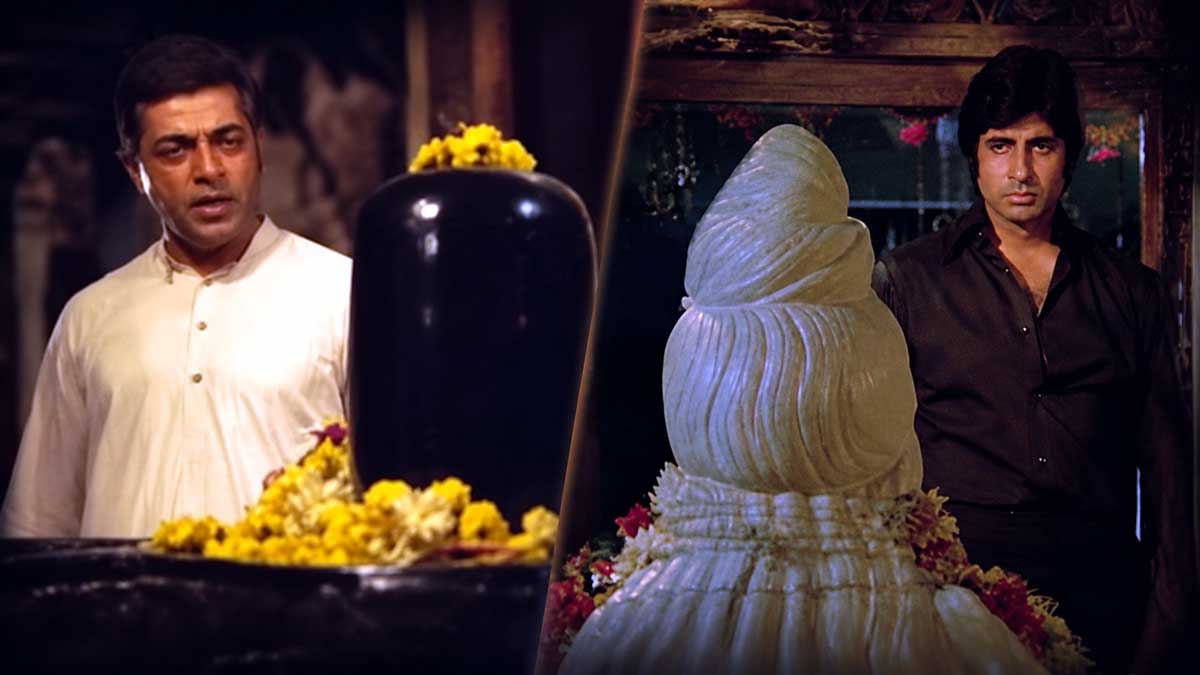
In Bollywood films, faith in God is often expressed through prayers, devotional songs and surrender. Yet there are scenes in which heroes do not bow before their deity but instead question him. They want to know the reasons behind their suffering, seek answers for the injustices they have endured, and sometimes even hold God accountable through their reproaches. Two such scenes stand out in Hindi cinema. One is Amitabh Bachchan’s iconic “Aaj Khush To Bahut Hoge Tum…” scene in 'Deewaar', and the other is the song “Hey Shivshankar…” picturised on Girish Karnad in 'Sur Sangam'. The two scenes are presented in entirely different styles, but both convey a sense of grievance against Lord Shiva.
Released in 1975, 'Deewaar' featured Amitabh Bachchan as Vijay, a man who has carried deep resentment against his circumstances since childhood. The injustices suffered by his family and the struggles of his life have alienated him not only from the system but also from the God in whom his mother, Sumitra Devi, has unwavering faith. The mother’s devotion and the son’s rebellion represent two opposing forces in the film. Vijay refuses to visit temples or bow before God, but when his mother’s life is in danger, he is compelled to approach the very deity he has always kept his distance from.
Also read: जब भगवान शिव से 'भिड़े' बॉलीवुड के दो नायक...
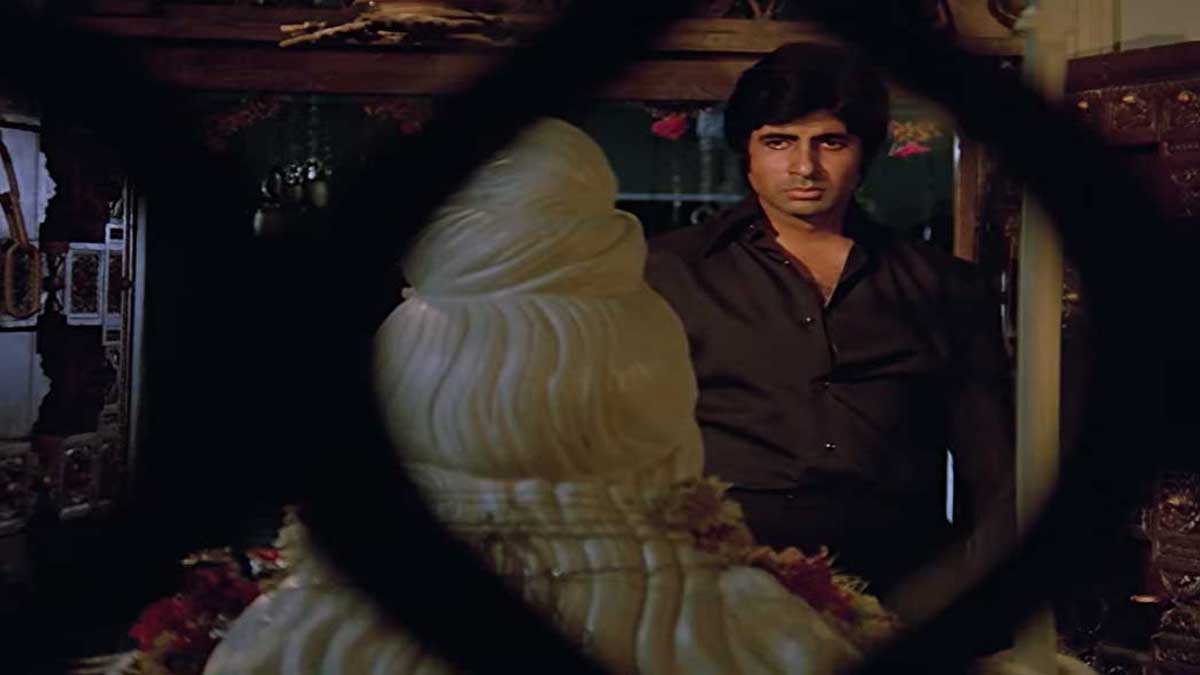
The dialogue “Aaj Khush To Bahut Hoge Tum…” spoken by Vijay as he stands before Lord Shiva in a temple is one of the most memorable scenes in Hindi cinema. It is not an ordinary prayer by a devotee but a reproach from a man who, despite being overwhelmed by his circumstances, is unwilling to abandon his resentment. He questions why his family, of all families, has had to endure so much suffering. Why must the very mother who has placed lifelong faith in God endure such pain? Vijay’s grievance carries sarcasm, defiance and years of suppressed anger. Although he has come before God to save his mother’s life, questions come before surrender.
Vijay’s behaviour is consistent with his image as Bollywood’s quintessential ‘Angry Young Man’. He does not want to reveal his vulnerability before anyone. Even as he stands before God, he tries to conceal his helplessness behind anger and sarcasm. His grievance is not limited to the immediate crisis; it encompasses all the circumstances that have brought him to this point. It is as though he wants to remind God that when everything in his life was going against him, his cries for help went unanswered. Now that he has been forced to stand before the deity, he sees this moment not only as his own defeat but also as an opportunity to question God.
In a strikingly different manner, Girish Karnad’s character, Pandit Shivshankar Shastri, expresses his grievance against Lord Shiva in 'Sur Sangam'. Here, however, the expression does not come through a dialogue written by Salim–Javed but through a beautiful song sung by Pandit Rajan Mishra. Released in 1985, the film portrays a protagonist devoted to classical music, for whom music is not merely an art form or a means of livelihood but a form of worship. Shiva resides in his musical notes, and his spiritual practice is rooted in that divine presence. But when his music and devotion encounter social prejudice and opposition, his anguish reaches Lord Shiva. It is against this emotional backdrop that the song “Hey Shivshankar…” unfolds.
In "Mere bheetar tum gaate ho, sun lo tum apna yeh swar", the character’s voice is humble, but his grievance is no less profound. He lays his anguish before Lord Shiva. The essence of his sentiment is this, if Shiva himself sings as him, and if his musical notes express the divine, how can what is happening to him be regarded as merely the suffering of an individual devotee? If Shiva resides within him and his musical devotion is dedicated to the deity, then is the humiliation of his spiritual practice an insult not merely to the musician but to Lord Shiva himself? It is as though he is asking his beloved deity: if you dwell within me, how can you remain separate from the suffering I endure? Why, then, are you silent?
The manner of his complaint is entirely different from Vijay’s. Pandit Shivshankar Shastri does not challenge God with sarcasm, nor does he turn his anger into a sharp verbal confrontation. His music speaks for him. While acknowledging the greatness of the deity, he also seeks an answer. His humility should not be mistaken for a lack of anguish. In fact, the depth of his reproach arises from his belief that God exists within him. When a devotee regards the deity as an integral part of his own existence, the injustice he experiences can compel him to question the apparent absence of divine intervention.
This is where the two scenes from 'Deewaar' and 'Sur Sangam' express the same emotion in two different forms. One speaks in a voice filled with rebellion; the other expresses a form of respectful yet intense defiance. One openly voices his resentment while standing before God, while the other uses music to make his deity a participant in his suffering and demand an answer. Yet the fundamental question behind both grievances is the same: if we place our faith in God, why must life bring so much suffering and injustice?
What makes these scenes remarkable is that neither portrays grievance as a rejection of faith. On the contrary, both protagonists remain connected to God in their own ways. Vijay comes to the temple because of his mother’s faith and his fear of losing her, while Pandit Shivshankar Shastri believes that Shiva himself resides within him. Both question God because the deity continues to matter to them. Without this connection, Vijay would have had no reason to go to the temple and express his reproach, and Shivshankar Shastri would not have tried to communicate his suffering to God through music.
Faith does not always mean silently accepting every circumstance. Sometimes, complaining to one’s deity is also an expression of a relationship in which a person expects God to understand his suffering and provide an answer. Vijay in 'Deewaar' and Pandit Shivshankar Shastri in 'Sur Sangam' represent two different faces of this deeply human emotion. One speaks with anger charged with reproach, while the other expresses anguish through a melody infused with devotion. Yet both are troubled by the same question. For them, God is not merely an object of worship but someone close enough to be asked why such suffering has entered their lives.
Perhaps this is why these two scenes continue to occupy a distinctive place in the hearts of audiences. They are not merely stories of two men standing before God; they express the anguish of human beings who, in moments of suffering, seek answers from the very source they consider their greatest support. Their approaches are different, but their cries echo the same question: “Why is this happening to me?”
Related Items
'Kabhi Tanhaiyon Mein...’, a song that still echoes in solitude...
‘Humein Tumse Pyar Kitna...’, a song of Love and Reincarnation...
Land of Lord Krishna crying for every drop of water