Latest News: Nearly 55.49 crore users onboarded on UPI as of June 2026 * Prime Minister performs Mahapuja and Kumbhabhishek at the Somnath Temple * India conducts successful flight-trial of Advanced Agni missile with Multiple Independently Targeted Re-Entry Vehicle system

 Science & Information Technology

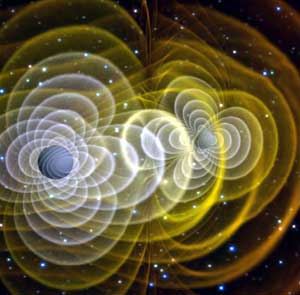
Los Alamos: Gravitational waves were predicted by Einstein’s theory of general relativity in 1916, and now, almost exactly 100 years later, the faint ripples across space-time have been found. The advanced Laser Interferometric Gravitational-wave Observatory (aLIGO) has achieved the first direct measurement.

Read More

Parth: Life on other planets would likely be brief and become extinct very quickly, say astrobiologists from The Australian National University (ANU).

Read More

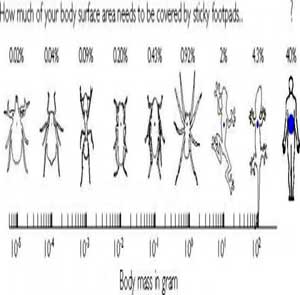
London: Latest research reveals why geckos are the largest animals able to scale smooth vertical walls - even larger climbers would require unmanageably large sticky footpads. Scientists estimate that a human would need adhesive pads covering 40% of their body surface in order to walk up a wall like Spiderman, and believe their insights have implications for the feasibility of large-scale, gecko-like adhesives.

Read More

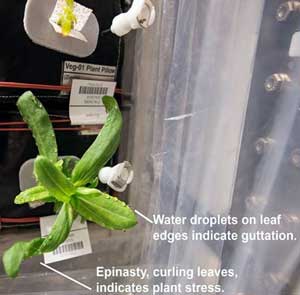
Washington: When Scott Kelly tweeted a picture of moldy leaves on the current crop of zinnia flowers aboard the International Space Station, it could have looked like the science was doomed. In fact, science was blooming stronger than ever. What may seem like a failure in systems is actually an exceptional opportunity for scientists back on Earth to better understand how plants grow in microgravity, and for astronauts to practice doing what they'll be tasked with on a deep space mission: autonomous gardening.

Read More

New Delhi: ISRO's Polar Satellite Launch Vehicle, PSLV-C31, successfully launched the 1425 kg IRNSS-1E, the fifth satellite in the Indian Regional Navigation Satellite System (IRNSS) from Satish Dhawan Space Centre SHAR, Sriharikota. This is the thirty second consecutively successful mission of PSLV and the eleventh in its 'XL' configuration. (Read in Hindi: पीएसएलवी-सी31 ने सफलतापूर्वक लांच किया आईआरएनएसएस-1ई)

Read More

Tokyo: A team of astronomers led by Tomoharu Oka, a professor at Keio University in Japan, has found an enigmatic gas cloud, called CO-0.40-0.22, only 200 light years away from the center of the Milky Way. What makes CO-0.40-0.22 unusual is its surprisingly wide velocity dispersion: the cloud contains gas with a very wide range of speeds. The team found this mysterious feature with two radio telescopes, the Nobeyama 45-m Telescope in Japan and the ASTE Telescope in Chile, both operated by the National Astronomical Observatory of Japan.

Read More