Latest News: Indian steel sector posts steady growth in H1 FY 2026–27 * Mumbai's Jawahar Dweep becomes India's first plastic-free oil terminal * Indian security forces neutralise Lashkar-e-Taiba Commander, Musa aka Asif Fauji, in an intelligence-led operation in J&K

 Agriculture / Environment / Weather

Burlington: Glaciers are commonly thought to work like a belt sander. As they move over the land they scrape off everything—vegetation, soil, and even the top layer of bedrock. So scientists were greatly surprised to discover an ancient tundra landscape preserved under the Greenland Ice Sheet, below two miles of ice.Greenland is a place of great interest to scientists and policymakers since the future stability of its huge ice sheet—the size of Alaska, and second only to Antarctica—will have a fundamental influence on how fast and high global sea levels rise from human-caused climate change.The new discovery indicates that even during the warmest periods since the ice sheet formed, the center of Greenland remained stable; “it’s likely that it did not fully melt at any time,” Vermont’s Bierman said. This allowed a tundra landscape to be locked away, unmodified, under ice through millions of years of global warming and cooling.“The traditional knowledge about glaciers is that they are very powerful agents of erosion and can effectively strip a landscape clean,” said study expert Lee Corbett. Rather than scraping and sculpting the landscape, the ice sheet has been frozen to the ground, “a refrigerator that’s preserved this antique landscape,” Bierman said.“We found organic soil that has been frozen to the bottom of the ice sheet for 2.7 million years,” said expert Paul Bierman—providing strong evidence that the Greenland Ice Sheet has persisted much longer than previously known, enduring through many past periods of global warming.The researchers expected to only find soil eroded from glacier-scoured bedrock in the sediment at the bottom of the ice core. “So we thought we were going looking for a needle in haystack,” Bierman said.Researcher planned to work diligently to find vanishingly small amounts of the beryllium—since the landscape under the ice sheet would have not been exposed to the sky. “It turned out that we found an elephant in a haystack,” he said; the silt had very high concentrations of the isotope when the team measured it on a particle accelerator at Lawrence Livermore National Laboratory.To help interpret these unexpected findings, the team also measured nitrogen and carbon that could have been left by plant material in the core sample. “The fact that measurable amounts of organic material were found in the silty ice indicates that soil must have been present under the ice,” said expert Lini. 

Read More
Madison: During the last prolonged warm spell on Earth, the oceans were at least four meters – and possibly as much as 6.5 meters, or about 20 feet – higher than they are now.

Read More

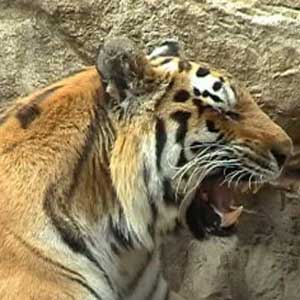
Salt lake: When lions and tigers roar loudly and deeply – terrifying every creature within earshot – they are somewhat like human babies crying for attention, although their voices are much deeper.

Read More

Knoxville: Some people may consider them pests, but ants are key to many plants’ survival.

Read More

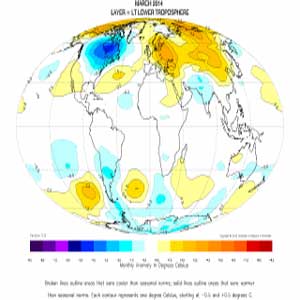
Huntsville: March was similar to February, in that warm and cold areas balanced each other in the tropics and Southern Hemisphere, according to Dr. John Christy, a professor of atmospheric science and director of the Earth System Science Center at The University of Alabama in Huntsville.

Read More

Adelaide: University of Adelaide researchers are leading an international project to help identify buildings most vulnerable to earthquakes and the best ways to strengthen them.

Read More

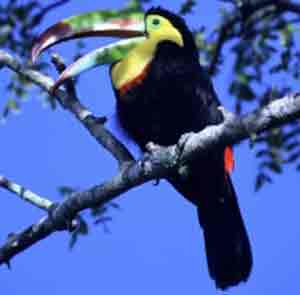
Salt Lake City: Climate change spells trouble for many tropical birds – especially those living in mountains, coastal forests and relatively small areas – and the damage will be compounded by other threats like habitat loss, disease and competition among species.

Read More

India is endowed with diverse topographical zones and rich variety of flora and fauna. During the course of industrialisation, urbanisation and other developmental initiatives, lot of changes occur in the landscape which may sometimes become the cause of natural disasters like earthquakes, flash floods, landslides, cloud burst etc.

Read More

Huntsville: Compared to global seasonal norms, May 2012 was the fourth warmest in the 34-year satellite record, according to Dr. John Christy, a professor of atmospheric science and director of the Earth System Science Center at The University of Alabama in Huntsville.

Read More

Washington: The pause in the anticipated El Niño Pacific Ocean warming event — seen in the sea surface temperatures in the Pacific during the past two months — is now appearing in the tropical upper air, according to Dr. John Christy, a professor of atmospheric science and director of the Earth System Science Center at The University of Alabama in Huntsville.  

Read More