
 Santosh Kumar / Sarla Meena / Madiha Iqbal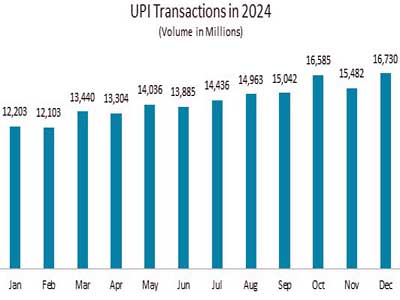
In recent years, India has witnessed an unparalleled rise in digital transactions, marking a significant milestone in its journey towards becoming a cashless society.
UPI is at the forefront of India’s digital payment revolution, with a record 16.73 billion transactions in December 2024. In addition, Immediate Payment Service (IMPS) and NETC FASTag have emerged as pivotal players, making financial transactions faster, more accessible, and more secure.
Read in Hindi: भारत में तेजी से बढ़ रहा है डिजिटल लेनदेन
Unified Payments Interface, or UPI, is a system that powers multiple bank accounts into a single mobile application of any participating bank. It merges several banking features, seamless fund routing, and merchant payments into one hood. UPI has not only made financial transactions fast, secure, and effortless but also empowered individuals, small businesses, and merchants, driving the country’s shift toward a cashless economy.
As of recent data from the National Payments Corporation of India, UPI has set a new record by processing over 16.73 billion transactions, with a staggering transaction value of Rs.23.25 lakh crore. This is a notable jump from Rs.21.55 lakh crore in November. In 2024, UPI processed around 172 billion transactions, marking a 46 per cent increase from 117.64 billion in 2023. This rise underscores a broader cultural shift toward financial inclusivity, with UPI being a central pillar.
While UPI has dominated the mobile transaction space, IMPS has long been a trusted service for instant payments between accounts. Launched in 2010, Immediate Payment Service is a real-time, 24x7 electronic funds transfer service that facilitates quick transactions across banks and financial institutions. Its versatility in supporting transactions through multiple channels, including mobile, ATM, SMS, and the internet, has made it an essential tool for businesses and individuals alike. Recent data indicates that IMPS transactions have surged, with 441 million transactions recorded in December 2024 compared to 407.92 million in November 2024. The transaction value also saw a notable increase, touching Rs 6.01 lakh crore in December, up from Rs 5.58 lakh crore the previous month.
Another important digital payment method that has grown in significance is the NETC FASTag. National Electronic Toll Collection FASTag offers a seamless, cashless way to pay for tolls on national highways, eliminating the need for vehicles to stop at toll plazas. By linking a FASTag to a bank account, drivers can pay their tolls while on the move, saving both time and fuel. FASTag transactions grew in volume to 381.98 million in December, against 358.84 million in November. The value also increased to Rs.6,642 crore against Rs.6,070 crore in November.
The surge in digital transactions through UPI, IMPS, and NETC FASTag is a testament to India's growing embrace of a digital-first economy. These technologies have not only made financial transactions easier but also more secure, ensuring that users can engage in commerce without the fear of fraud or theft. As India continues to expand its digital infrastructure and enhance its payment systems, the future of financial transactions looks brighter than ever.
Related Items
From 'Beacons' to 'Landmarks', India’s changing ‘Lighthouse’ story…
‘Saffron Surge’ or a ‘Civilisational Shift’…?
“Only five minutes…” has shaken France and forced India to think…