
 Dharmendra Kumar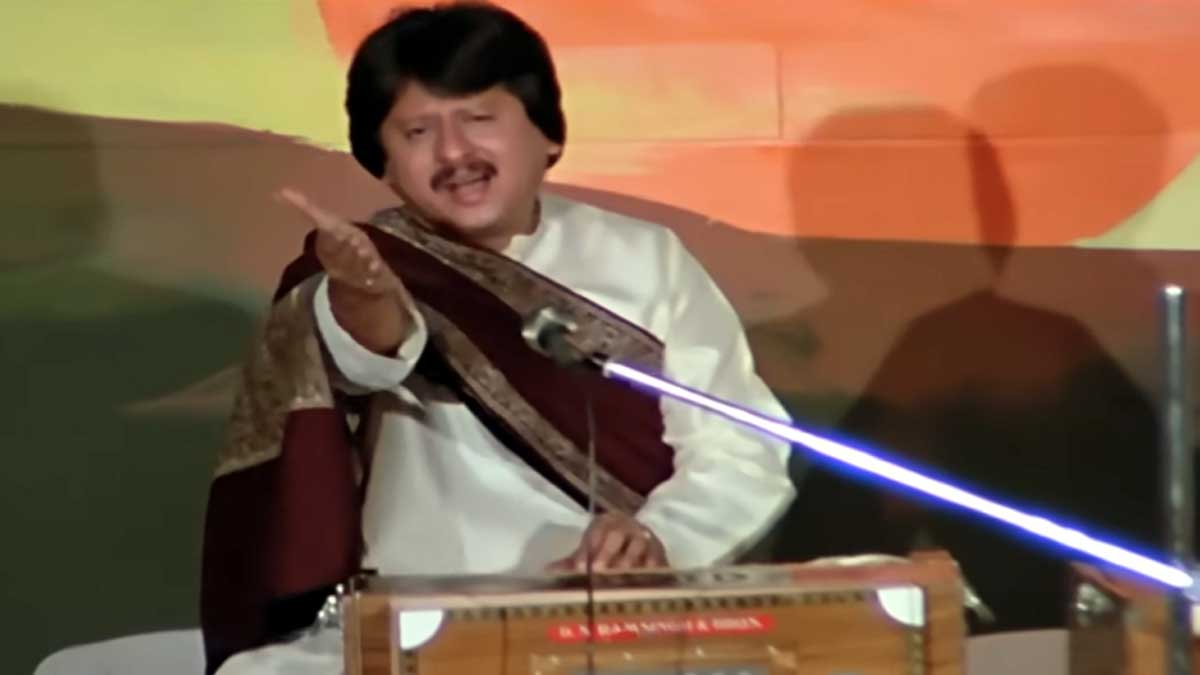
Some songs transcend popularity and become an inseparable part of people's lives. They go beyond entertainment, capturing emotions, memories and relationships. 'Chitthi Aayi Hai..., from Mahesh Bhatt's 1986 film 'Naam', is one such song. Pankaj Udhas's soulful voice, Anand Bakshi's simple yet touching lyrics, and the evocative music of Laxmikant-Pyarelal combined to create a timeless classic.
The song is more than the story of an Indian living abroad who longs to return home. It captures the feelings of millions who leave their families and homeland in search of a better livelihood. For Indians living overseas, it became an enduring reminder of home, family and their roots. Even today, its opening notes can evoke powerful memories among listeners.
Also read: एक गीत, जिसने दूर देश रहने वालों को दिलाई घर की याद...
The story behind the song's creation is equally fascinating. Mahesh Bhatt needed a song that would play a crucial role in the narrative of 'Naam'. In the film, Sanjay Dutt's character becomes entangled in the world of crime while living abroad. Separated from his family, he begins to yearn for home. The filmmakers wanted a song that could convey this emotional conflict convincingly.
Rather than choosing a conventional playback singer, they wanted someone with an established identity who could perform naturally as a ghazal singer on stage. Salim Khan, the film's story writer, suggested Pankaj Udhas's name. By then, Udhas had established himself as a prominent ghazal singer, with a substantial following in India and among Indians living abroad. He regularly performed overseas and was well acquainted with the expatriate audience.
Udhas had previously sung for the 1982 film 'Kaamna', under the music director Usha Khanna. However, neither the film nor its song had made much of an impact. He may have begun to feel that his prospects in the film industry were limited.
Salim Khan's suggestion was particularly appropriate for the film. Pankaj Udhas's voice combined the delicacy of ghazal singing with an emotional depth that suited the character's longing for home.
However, convincing Udhas to join the project was not entirely straightforward. The film's producer, Rajendra Kumar, called him and expressed his desire to cast him in the film. Udhas assumed he was being offered an acting role. Having little interest in acting, he asked for some time to consider the proposal.
During their telephone conversation, Rajendra Kumar also invited him to meet. But, several days passed, and Udhas did not turn up. Kumar was displeased with what he perceived as the singer's indifference.
The misunderstanding came to light when Rajendra Kumar met Manhar Udhas, Pankaj's elder brother, at a party. Manhar had by then become a well-known Bollywood playback singer. When Kumar complained about his brother's behaviour, Manhar asked for some time to speak to him.
Pankaj explained to his brother that he had no intention of disrespecting the great filmmaker. He simply could not understand how he could act in a film when he was a 'singer'. Rajendra Kumar, however, wanted him to appear on screen as himself. Once this misunderstanding was resolved, Udhas agreed to the proposal.
Mahesh Bhatt explained that he would simply have to perform as he did at his concerts abroad. He would not need to play another character; he only had to be 'Pankaj Udhas'.
Rajendra Kumar, Mahesh Bhatt, Salim Khan, Anand Bakshi and Laxmikant-Pyarelal were involved in the initial discussions about the song. Several meetings were held to finalise its lyrics and melody, keeping the film's narrative and the emotional requirements of the scene in mind. The creative team wanted a song with emotional depth but simple language that ordinary listeners could easily relate to.
Anand Bakshi understood the challenge. He chose an ordinary letter as the song's central theme. For generations, letters had been an intimate means of communication among Indian families. A letter from home carried more than news; it conveyed a mother's affection, a father's concern, a wife's longing and children's innocent memories. Bakshi brought these familiar emotions together in his lyrics.
Laxmikant-Pyarelal, meanwhile, wanted to preserve the distinctive qualities of Udhas's ghazal singing. They avoided excessive musical embellishments, allowing the melody, lyrics and singer's voice to carry the song's emotional weight.
Pankaj Udhas's restrained singing proved ideal for the composition. Rather than overemphasising the sadness, he allowed the words to convey the emotions naturally. Each verse presents a different aspect of life away from home, from concern for an ailing mother to the loneliness of celebrating festivals without family.
The recording at Mumbai's Mehboob Studio became a memorable experience. Laxmikant's wife Jaya Kudalkar, Manhar Udhas and Salim Khan were among those present. When Pankaj finished singing, the room fell silent. He initially thought the song had failed to impress everyone. But when he looked around, he noticed that several people had tears in their eyes.
In the film, the song is performed at a concert abroad, with Pankaj Udhas appearing as himself. Sanjay Dutt's character listens to the performance and is reminded of his family and homeland. The song strengthens his desire to return, making it an important turning point in the narrative rather than simply a musical interlude.
The song's appeal extended far beyond the film. During the 1980s, staying in touch with family members abroad was considerably more difficult than it is today. Telephone calls were expensive, and many households lacked access to them. Letters remained the principal means of communication for countless families separated by international borders.
For Indians living in the Gulf countries, Britain, the United States and elsewhere, 'Chitthi Aayi Hai...' captured the experience of being away from home. Its lyrics reminded them of their villages, parents, spouses and the festivals they celebrated without their families.
Gradually, the song became an anthem of sorts for the Indian diaspora. Its popularity grew at Indian cultural programmes and musical concerts overseas. Whenever Pankaj Udhas performed it, audiences responded with extraordinary enthusiasm. For many expatriates, it was a musical expression of their own lives.
The song also played a significant role in the success of 'Naam'. Featuring Sanjay Dutt, Amrita Singh and Kumar Gaurav, the film benefited from Mahesh Bhatt's direction and Salim Khan's story. But 'Chitthi Aayi Hai...' gave its emotional narrative a distinctive identity. Its popularity helped the film connect with audiences and contributed to its lasting recognition.
The success of 'Naam' opened a new chapter in Pankaj Udhas's film career. 'Chitthi Aayi Hai...' introduced him to a much wider Hindi film audience. His identity was no longer limited to ghazal singing, and opportunities in film music increased.
In 1988, he sang 'Aaj Phir Tumpe Pyaar Aaya Hai...' for the film 'Dayavan', alongside Anuradha Paudwal. The song showcased another dimension of his voice. He subsequently sang for films such as 'Ek Hi Maqsad', 'Gunaahon Ka Faisla', 'Hum Intezaar Karenge' and 'Tejasvini'. Songs such as 'Woh Ladki Jab Ghar Se Nikalti Hai...' further expanded his presence in film music.
Despite his success in cinema, Udhas remained firmly rooted in ghazal singing. The popularity of 'Chitthi Aayi Hai...' significantly expanded the audience for his live performances in India and abroad. His concerts attracted both established ghazal enthusiasts and listeners who had discovered him through the film.
His ability to connect with audiences was an important part of his appeal. Between performances, he would explain the meaning of ghazals, share anecdotes and interact with listeners. 'Chitthi Aayi Hai...' became a much-anticipated feature of his concerts, particularly overseas, where it often prompted enthusiastic and emotional responses.
Udhas also played an important role in popularising ghazals among mainstream audiences. His singing combined the intricacies of classical music with an accessible style. His private albums further strengthened his reputation, while the success of 'Chitthi Aayi Hai...' brought his music to an even wider audience.
The song also demonstrated Laxmikant-Pyarelal's ability to recognise and bring out a singer's distinctive strengths. They understood the warmth and melancholy in Udhas's voice and built the composition around those qualities. Its memorable melody and restrained arrangement helped ensure that the song remained relevant long after the film's release.
Today, communication technology has transformed the way people stay in touch. A phone call or video chat can connect families across continents in seconds. Yet 'Chitthi Aayi Hai...' continues to resonate because the experience of missing home has not changed. Physical distances may have become easier to bridge, but the emotional bonds between families remain just as strong.
Pankaj Udhas is no longer with us, but his voice lives on through this enduring song. 'Chitthi Aayi Hai...' remains one of the defining achievements of his career and occupies a special place in the history of Hindi film music.
A song's true success lies in its ability to transcend its time and reach successive generations. 'Chitthi Aayi Hai...' has achieved precisely that. It continues to evoke the experience of living far from home and reminds listeners of the enduring bonds between families. Above all, it stands as an enduring tribute to Pankaj Udhas, whose voice transformed a simple letter into a song that touched millions of hearts.
Related Items
‘Humein Tumse Pyar Kitna...’, a song of Love and Reincarnation...
How the 'Indian Solar Revolution' is transforming rural lives…
Income disparity between partners at home stalls women’s careers