
 Brij Khandelwal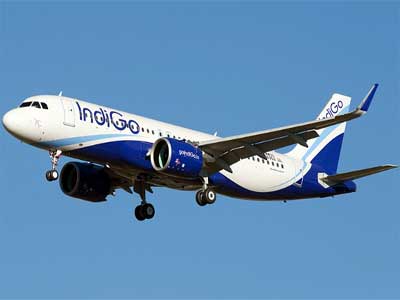
Bangalore Airport, A plumber from Agra clutches a bag of wedding jewellery that will never reach his sister’s hands in Hathras. Across the terminal, the Ramaswamy family stares at a pile of suitcases and cancelled hotel vouchers. Hundreds of bleary-eyed passengers sleep on newspaper beds. Children wail for milk that never comes. Screens glow blood-red: CANCELLED. DELAYED. CANCELLED.
India’s busiest airline—IndiGo, carrier of nearly 60 per cent of the country’s domestic passengers, just lost roughly 30–35 per cent of its daily flights in a single 48-hour avalanche. Not because of a storm. Not because of a terrorist attack. Because the engines didn’t fail. The pilots did, exhausted, stretched beyond legal limits, grounded by their own bodies after years of a scheduling model that treated human beings like replaceable parts.
Read in Hindi: जब इंडिगो का इंजन बैठा, तो सिस्टम की खुली पोल...
This was no ‘technical snag’. This was the inevitable detonation of a bomb planted in 2024. In March 2024, the Delhi High Court upheld the revised Flight Duty Time Limitations that the DGCA had notified in January, rules that finally brought India closer to global fatigue-management standards. The original implementation date: 1 June 2024. Airlines begged for time. DGCA granted a staggeringly generous delay till 1 December 2025 for some provisions.
IndiGo, the 400-aircraft behemoth, spent those 18 months doing… almost nothing.
- Zero significant net pilot hiring in 2024–25 (attrition cancelled out new joins).
- No meaningful increase in reserve crew pools.
- No serious contingency scheduling for the winter fog season, which everyone knew was coming.
When the new rules finally kicked in on 1 December 2025, IndiGo suddenly discovered it was short hundreds of pilots on any given day. Rosters collapsed. Aircraft sat idle on the apron with perfectly good engines but no legally rested crew to fly them. One airline’s self-inflicted wound became a national heart attack.
Over 1,400 IndiGo flights were cancelled in the first 72 hours alone.
Delhi, Mumbai, Bangalore, Hyderabad—every major hub turned into a refugee camp.
Connecting passengers in Doha, Dubai, and Singapore missed long-haul flights home.
Dynamic pricing algorithms smelled blood: Delhi–Mumbai spiked to ₹40,000–₹50,000 one-way, Delhi–Chennai touched ₹68,000. Stranded families paid or slept on the floor; those were the only two choices.
Smaller airlines, Akasa, Air India Express, kept flying almost normally. The message was brutal, 200-foot neon: India has become a dangerously over-dependent, one-company sky.
On 5 December, after three days of chaos, the DGCA issued a “temporary relaxation” of the very FDTL rules it had spent two years defending in court. Translation: We will let pilots fly tired again until the airline fixes its own mess. Safety was officially negotiable.
No fare caps were imposed.
No extra sections were mandated.
No special trains were coordinated.
No compensation desks appeared.
Just a press note and an “expert committee”—the standard Indian cure for a gunshot wound: a bandage made of bureaucracy.
This Wasn’t Bad Luck. This Was Policy Malpractice.
India has: No statutory cap on airfares during declared emergencies, No mandatory crisis stockpiling of crew, No published, real-time public data on airline-wise on-time performance and cancellation reasons, No independent disaster-management protocol for aviation.
A regulator that waits for courts to force change, then grants ‘relaxations’ the moment industry cries, shows the level of callousness.
Eleven crore Indians fly domestically every year now. For most of them, that ₹4,000 ticket is not a lifestyle choice; it is the difference between reaching a job interview or a dying parent in time. When the system treats their lives as acceptable collateral for one airline’s refusal to hire 400 extra pilots, something is fundamentally broken.
IndiGo will limp back to near-normal schedules in a week or two. Passengers will forget, because Indians are trained to forget. The DGCA will file its ‘expert committee’ report in a drawer next to the last ten expert committee reports.
But the next fog season is only eleven months away. The next court-ordered safety rule is already on the horizon. And the same airline, the same regulator, and the same ministry will still be pretending that ‘advisories’ are a substitute for foresight.
India doesn’t need more aircraft right now. It needs regulators who treat human lives as non-negotiable. It needs a competition policy that prevents any single carrier from holding the nation’s timetable hostage. It needs fare caps in emergencies, mandatory crew reserves, and a DGCA that enforces rules before bodies hit the floor, literal or metaphorical.
Until then, every red “CANCELLED” on those screens is not a glitch. It is an indictment. The skies went silent this week because someone, somewhere, decided that safety could wait and profits couldn’t.
Next time, the silence might be permanent.
Related Items
Vanishing newspaper, Fading TV, and the tyranny of tiny screen…
Walking, a ‘fundamental right’ but a ‘struggle’ in Agra
Agra, where the streets belong to the animals…