
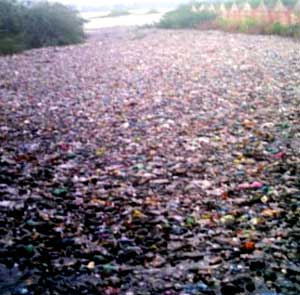
Members of the Friends of Vrindavan, Braj Bachao Samiti, Braj Mandal Heritage Conservation Society and Braj Vrindavan Heritage Alliance, at a recent meeting said a comprehensive and integrated strategy was called for addressing the problems of Yamuna river which is the life line of Braj Mandal, the leela bhoomi of Sri Krishna and Radha.
Activists said the proposed commission shall regulate, monitor and draw up future urban policies for the river banks. A permanent institution armed with legal powers, alone can solve the problems and decide future course of action to to ensure the health of the river. Committees and tribunals constituted in the past have failed to address the problems which can only assume serious dimensions in the future in view of growing demand for water and land. The commission should comprise social activists, river activists, experts, members of the judiciary and representatives of different national parties, alongwith government fuctionaries.
The jurisdiction of the Commission should extend to the Yamuna River Basin States of Haryana, Uttar Pradesh, Delhi, Uttarakhand, Himachal Pradesh, Madhya Pradesh and Rajasthan. Convener of Friends of Vrindavan Jagan Nath Poddar said, 'Basin' would be the area of land drained by the river Yamuna and its tributaries including the source, watershed, catchment area, confluence etc. Yamuna being a perennial river it should have water flowing round the year with a minimum flow. Industrial pollution and sewage discharge from urban clusters have contaminated the water of the river. "Therefore pollution abatement activities have to be promoted or undertaken to reduce or control the effluents and toxic substances," said activist Shravan Kumar Singh.
Young industrialist Anurag Goyal said that the local offices of the proposed commission should be established in all the districts through which Yamuna flows. Activists Tamal Krishna Das and Daan Bihari Sharma said the Commission should have its own river police force. Already, the Allahabad High Court has directed the Mathura district administration to form river police squads to patrol the river banks and book polluters.
In a resolution, the members said the problems of Yamuna and its tributaries have long been hanging fire and successive governments at the centre and the state have failed to come up with a fool-proof mechanism and strategy to restore Yamuna to its past glory. The Yamuna is not just a water body but a living cultural, heritage and religious entity with which the emotional bonds of millions of Sri Krishna bhakts are bonded.
Ad hoc orders and directives of the National Green Tribunal and the state High Court have not been able to prevent further degradation of ecology of the Braj region. A permanent plan with a long term perspective is the need of the hour, said Surendra Sharma of the River Connect Campaign.
Related Items
Yamuna carries sewage, Government watches in silence
10 countries, 17 destinations and one Yamuna in the heart…
Why are people drowning in the Yamuna...!