
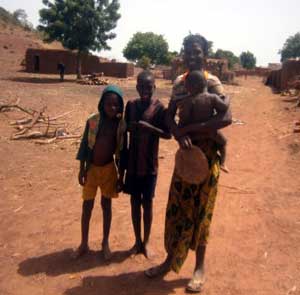
The first of its kind, the two-year project led by U geography professor Kathryn Grace examined the relationship among precipitation, temperature and birth weight in 19 African countries. Grace and her team utilized high quality, detailed climate data in conjunction with extensive health data to focus on climate change and its effects on birth weight in the developing world.
The new findings show that a pregnant woman’s exposure to reduced precipitation and an increased number of very hot days indeed results in lower birth weight.
“Our findings demonstrate that in the very early stages of intra-uterine development, climate change has the potential to significantly impact birth outcomes. While the severity of that impact depends on where the pregnant woman lives, in this case the developing world, we can see the potential for similar outcomes everywhere,” said Grace.
The other authors are Frank Davenport, Heidi Hanson, Christopher Funk and Shraddhanand Shukla. The team reported the findings in Global Environmental Change. Christopher Funk (US Geological Survey) and UC Santa Barbara Climate Hazards Group provided the climate data used in the study, and have just detailed exceptional East African rainfall declines in a new paper in Nature Scientific Data.
Impacts of low birth weight are far-reaching
With the inaccuracy of determining exactly when a pregnancy began in rural countries which lack pregnancy tests and the inability to measure characteristics like a newborn’s cognitive development, low birth weight is the most reliable measure of whether a pregnancy has been negatively affected by an external factor. Low birth weight is defined by the World Health Organization as any baby born under 2,500 grams.
Low birth weight infants are more susceptible to illness, face a higher risk of mortality, are more likely to develop disabilities and are less likely to attain the same level of education and income as an infant born within a healthy weight range.
Consequently, the financial burden of a low birth weight infant can be significant. The costs of newborn intensive care unit stays and services, re-hospitalization and long-term morbidity can add up quickly, and in developing countries where such support services are less common and physical disability is considered a social stigma, low birth weight can be particularly impactful.
The first continent-wide analysis
In 2013, Grace and colleagues combined health data from Demographic and Health Surveys, which is funded by the United States Agency for International Development to collect and disseminate data on health and population in developing countries, and growing season data, with temperature and rainfall data from a variety of sources.
The team collected growing and livelihood zone information from the U.S. Agency for International Development’s Famine Early Warning System program and precipitation data from the Climate Hazards Group InfraRed Precipitation with Station data set.
In total, the team examined nearly 70,000 births in 19 African countries between 1986 and 2010 and matched these births with seasonal rainfall and air temperatures, as well as variables describing the mother and mother’s household, such as education level and whether the household had access to electricity.
This is the first time researchers utilized fine-resolution precipitation and temperature data alongside birth data to analyze how weather impacts birth weight.
To generate precipitation records for each birth, the team calculated the average precipitation for a given month within 10 km of the child’s birth location. This was done for each month up to one year prior to each child’s birth. The values were then summed over each trimester.
The same method was used to generate temperature records for each birth. The team first calculated the maximum daily temperature for a given calendar day within 10 km of a child’s birth location. From there, the number of days in each birth month where the temperature exceeded 105 F and 100 F as the maximum daily temperature were summed over trimesters.
Evidence and impact of climate change
The results show that an increase of hot days above 100 F during any trimester corresponds to a decrease in birth weight. In fact, just one extra day with a temperature above 100 F in the second trimester corresponded to a 0.9 g weight decrease; this result held with a larger effect when the temperature threshold was increased to 105 F.
Conversely, higher amounts of precipitation during any trimester resulted in larger birth weights. On average, a 10 mm increase in precipitation during a particular trimester corresponds to an approximate increase in birth weight of around 0.3-0.5 g.
“While the results are dependent on trimester and location, the data shows that climate change—a combination of increased hot days and decreased precipitation—correlate to lower birth weights,” said Grace.
“At the end of the day, the services we invest in to support these developing countries won’t reap the same level of benefits as long as climate change continues. Services such as education, clean water efforts and nutrition support won’t be as effective. We need to work faster and differently to combat the evident stresses caused by climate change.”
Related Items
Divorce late in life can improve men’s mental health
Wealthy protect themselves from climate risks, leaving poor vulnerable
Collective action and behaviour change transforming rural sanitation